Recorded November 24, 2026
PhysicsReported finding
1.5D Photonic Crystals Cut Fluorescence Background Fivefold
By merging a Bragg mirror with a Bragg grating into a '1.5D' photonic crystal, researchers improved signal-to-background fivefold and amplified fluorescence hundreds to thousands of times — enough for a smartphone camera.
By Marcus Bennett4 min read793 words
In brief
- Integrating a Bragg mirror with a Bragg grating photonic crystal produced a fivefold improvement in signal-to-background ratio (Nano Letters, 2026, DOI: 10.1021/acs.nanolett.6c00687).
- Photonic crystal–enhanced fluorescence amplifies signals hundreds to thousands of times, targeting detection with smartphone cameras.
- A second design layers gold nanoparticles, TiO2 nanorods and graphene oxide on a Bragg mirror (Advanced Optical Materials, 2026, DOI: 10.1021/acs.nanolett.6c00687 is the Nano Letters DOI; the AOM DOI is 10.1002/adom.71496).
- Seemesh Bhaskar and Shivakiran Bhaktha co-authored eight earlier publications on photonic crystal technologies during Bhaskar's doctoral work in India.
- The team's book on photonic crystals, due next year, includes collaborators from India, Illinois and Italy with a foreword by Eli Yablonovitch.
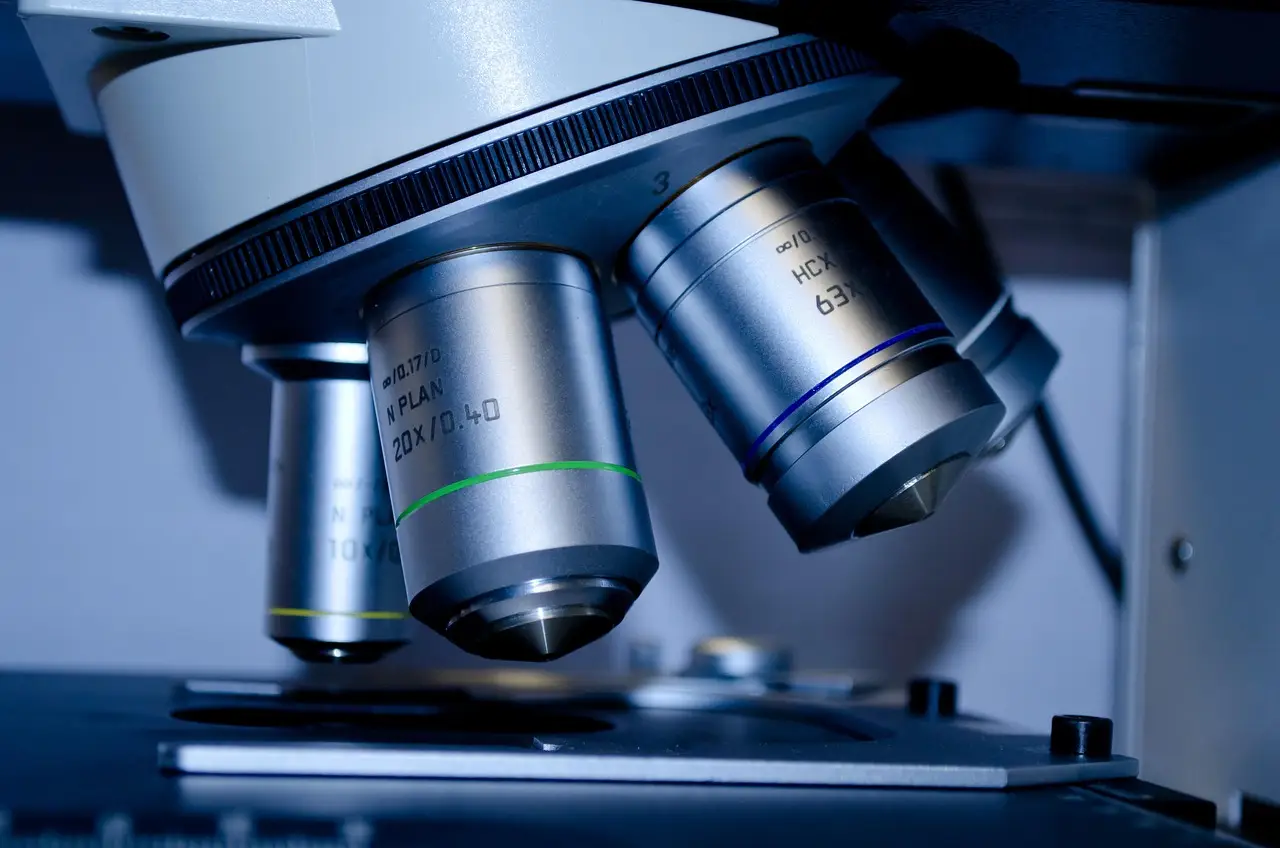
Researchers at the University of Illinois Urbana-Champaign and the Indian Institute of Technology Kharagpur have cut fluorescence background noise fivefold by merging two photonic crystal designs into a hybrid they call a 1.5D photonic crystal — a step toward molecular tests sensitive enough to count single molecules with nothing more exotic than a smartphone camera.
The findings appeared in Nano Letters earlier this year (Leyang Liu et al., DOI: 10.1021/acs.nanolett.6c00687), with a companion design published in Advanced Optical Materials (Sudha Maria Lis S et al., DOI: 10.1002/adom.71496) as a cover feature.
Why does this matter for biosensing?
Fluorescence — light emitted by dyes attached to DNA or proteins — drives a large majority of molecular and viral detection today. "Fluorescence is what's used for a large majority of detecting molecules and viruses," said Brian T. Cunningham, professor of electrical and computer engineering at UIUC's Grainger College of Engineering. The catch: the signals are often faint, and reading them demands expensive lab equipment.
Faint signal is not the only problem. Background fluorescence — stray light from the test surface itself — can swamp the signal researchers actually want. "In conventional biosensing platforms, we have the problem of very high background fluorescence," said Seemesh Bhaskar, Cunningham's postdoctoral researcher.
Takeaway: faint signals plus high background keep fluorescence testing tied to costly lab hardware.
How does the 1.5D crystal work?
The collaboration pairs Shivakiran Bhaktha's Bragg mirror with Cunningham's Bragg grating photonic crystal. A Bragg mirror is a stack of alternating material layers that reflects light at a chosen wavelength; a Bragg grating is a periodically patterned surface that directs light along it. Integrating the two yields what the team terms a 1.5D photonic crystal interface, which suppresses background while boosting the desired emission.
The result was a fivefold improvement in the signal-to-background ratio, with potential use across essentially all fluorescence-based biosensing.
The partnership has deep roots. During his doctoral studies in India, Bhaskar worked with Bhaktha, a physics professor at IIT Kharagpur, on eight publications on photonic crystal technologies. "I thought we could collaborate, because these are two different types of photonic crystals, like one-dimensional, and see how we can integrate both of them, with the broader application directions that both of our teams are chasing: biosensing and diagnostics," Bhaskar said.
Takeaway: combining the mirror and the grating in one device brightens the real signal while dimming the noise around it.
What makes the signal bright enough for a phone camera?
The second line of research, published in Advanced Optical Materials, layers gold nanoparticles, titania nanorods and graphene oxide onto a Bragg mirror made by low-cost sol-gel chemistry. These hybrid nano-assemblies — the researchers call them cryosorets — carry fluorescent material and act as tiny tags that pull in additional energy, pumping the amplification to hundreds or thousands of times.
"The heart of this entire story is actually to enhance light-matter interaction," said Bhaktha. "We are trying to make various geometries and structures so that light gets trapped in them for a longer time."
Here is the mechanism in plain terms. A fluorescent molecule struck by light normally gives off a single photon in return. Bhaktha's structures excite the same molecule repeatedly, coaxing out many photons — bright enough that even a handful of molecules registers on a smartphone camera.
Cunningham frames the goal as digital resolution detection: counting individual molecules one by one. "When you get down to that level, you can't go any further," he said. "No one's really interested in detecting fractions of molecules. So, this digital detection is what we're really seeking: super-high sensitivity but also being able to detect molecules with an inexpensive optical device, even the relatively inexpensive cameras that are in smartphones."
Takeaway: by trapping light and re-exciting each molecule, a cheap camera can see what once required a lab instrument.
What changes for practitioners?
Cheaper cameras mean broader access to fluorescence-based testing. The tests could run handheld in clinics and in the field, including veterinary clinics — screening pets and monitoring disease threats in poultry, swine and cattle on farms.
The results remain early-stage: laboratory demonstrations of enhanced fluorescence, not validated diagnostic products, and the researchers themselves describe this as only the beginning.
The group is also consolidating the field's knowledge. Their upcoming book on photonic crystals, due out next year, gathers collaborators from India, Illinois and Italy and carries a foreword by Eli Yablonovitch, the physicist who coined the term "photonic crystal." "It's like a well-knit photonic society," Bhaskar said. The team plans to keep pushing toward tests that are cheaper, more portable, and sensitive enough to catch a single molecule.
via phys.org/rss-feed/ (Source)
More from Marcus Bennett
Show full bio
News editor covering regulation, policy and their impact on general science news at SciBeat.
604 articles