Plate Nº 18 · recorded November 10, 2026
Neuroscience & MindReported finding
78% of Psychology's Masculinity Scales Measure Only the Negative
A review of 65 masculinity questionnaires finds 78% measure only negative traits, and most ignore culture, context and diverse samples — skewing the field's picture of men.
By Marcus Bennett4 min read886 words
In brief
- 78% of 65 masculinity scales reviewed (1974–2021) used a purely deficit-based approach.
- Only 9% of questionnaires showed strong external validity; 66% used homogeneous samples.
- Pre-2000 scales make up under a third of the tools but hold nearly 77% of all citations.
- A 2020 analysis found just 15% of studies in Psychology of Men & Masculinities focused on positive functioning.
- Study published in Men and Masculinities; led by Peter Fisher, Movember Institute of Men's Health.
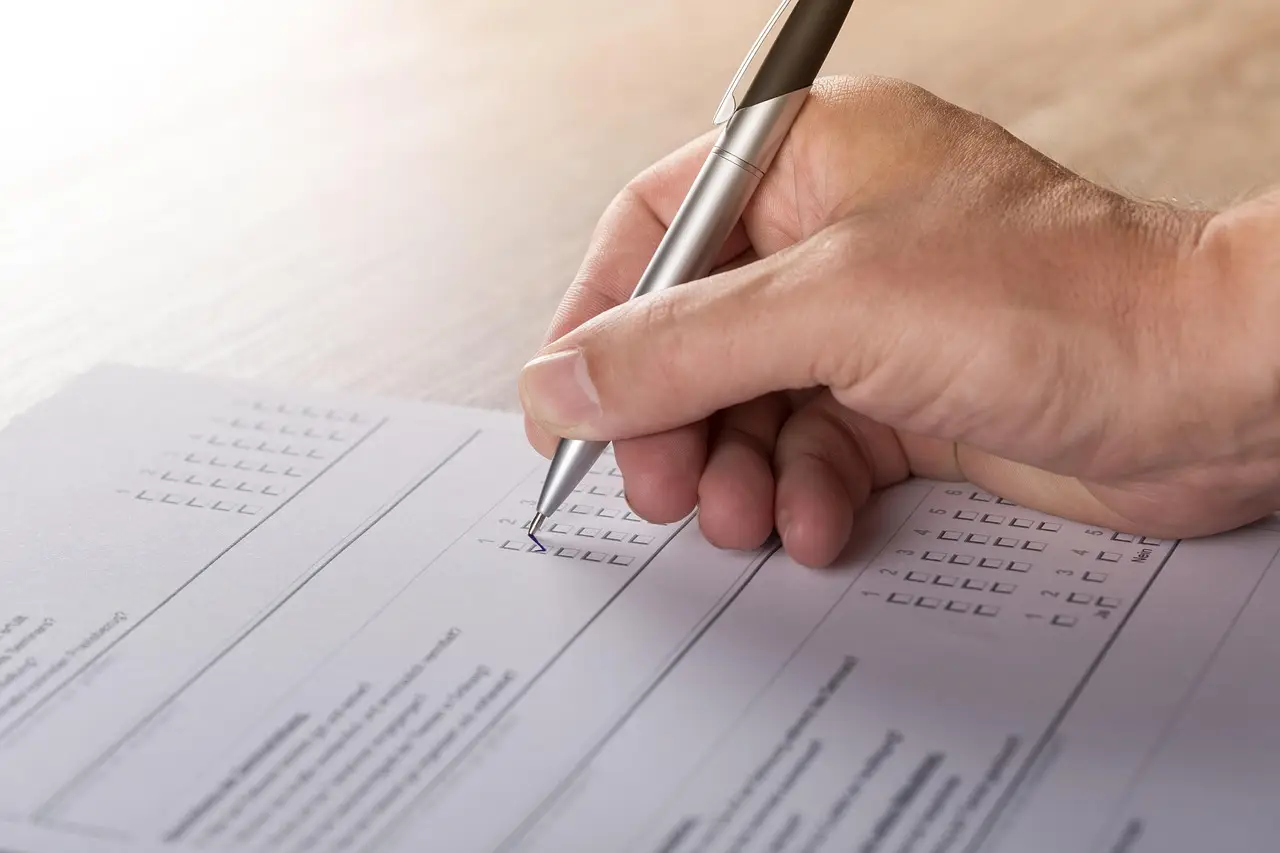
Seventy-eight percent of the standardized questionnaires psychologists use to measure masculinity frame it entirely around negative traits and harmful outcomes, according to a systematic review of 65 scales published between 1974 and 2021. The study, led by Peter Fisher of the Movember Institute of Men's Health in Santa Monica and published in Men and Masculinities, also finds that most instruments were validated on homogeneous samples and rarely account for culture or social context — gaps that may distort what researchers think they know about men.
What did the review actually do?
Fisher and seven colleagues — Brian Heilman, Ryon C. McDermott, Jasleen Chhabra, Ruben Benakovic, Kieran O'Gorman, Simon Rice, and Zac Seidler — conducted a scoping review, a method that maps the tools available in a field rather than statistically pooling results. They preregistered their search strategy and coding rules on the Open Science Framework, then searched two academic databases and a gender-measures repository in August 2024.
From 4,784 initial references, they kept 65 scales (59 originals plus 6 widely used shortened versions), each cited at least 10 times, in English, peer-reviewed, and designed for general populations. The median citation count per paper was 124. Trained reviewers scored every scale on five dimensions, resolving disagreements through group discussion.
How negative is the field's toolkit?
Very. Even with an intentionally low bar — a scale counted as "strengths-based" if it included any positive or health-promoting content at all — only 22 percent qualified. Among the 12 most heavily cited questionnaires, three-quarters took a purely deficit-based approach.
This bias has deep roots. Many modern scales grew out of gender-role strain theory, the idea that conforming to narrow expectations of manhood causes psychological distress. A 2017 meta-analysis found that men who strictly conform to traditional masculine norms report poorer mental health and are less likely to seek help. A separate 2020 content analysis of 18 years of studies in Psychology of Men & Masculinities found only 15 percent focused on positive aspects of men's functioning. Yet a survey of more than 15,000 heterosexual men in New Zealand found most held low-to-moderate problematic attitudes — 35.4 percent fell into a non-toxic group and only 3.2 percent fit a hostile toxic profile.
Relational and cultural blind spots compound the picture:
- 43 percent of scales had low relational focus, giving statements with no specified social context; only 35 percent showed high relational focus.
- 58 percent ignored cultural norms entirely, implicitly treating Western manhood as universal; only 15 percent showed high cultural attunement.
- 66 percent were validated on homogeneous samples. Among the 12 most-cited scales, none accounted for cultural norms and only one used a diverse sample.
- Statistically, 59 percent of quantitative scales showed high reliability and 77 percent moderate-or-high internal validity — but only 9 percent offered strong evidence of external validity, meaning the results generalize beyond the original test group.
"The most important takeaway is that most of those tools were designed to identify negative aspects or the problems associated with masculinity," Dr. Christian Blötner and Sören Michallek, M.Sc., of FernUniversität in Hagen, who were not involved in the study, told PsyPost. "There is a dearth of assessment tools, however, that emphasize the potential strengths concomitant with masculinity."
Has measurement improved over five decades?
Partly. Comparing the 1970s through the 2020s, average external validity ratings rose from 1.00 to 2.50 out of 3, and cultural attunement rose from 1.00 to 2.25 — though one statistical test for cultural attunement missed significance, and the 2020s category covers only 2020 and 2021. Differences in deficit-versus-strengths focus, relational focus, and sample diversity across decades were not statistically significant. Notably, scales published before 2000 make up less than a third of the sample but account for nearly 77 percent of all citations, meaning older, narrower tools still dominate actual use.
What are the caveats?
Several. The Movember Foundation, a men's health charity, funded the work, and four of the eight authors are Movember employees. The 10-citation threshold excluded scales built for specific minority groups, non-English scholarship, and new strengths-based measures that have not yet accumulated citations — a rule that could make the field look more deficit-focused than current practice. Coders also initially disagreed on the central deficit-versus-strengths category, which the authors say may reflect genuine ambiguity in the concept itself.
"The way researchers ask questions arguably influences the answers they receive," Blötner and Michallek explained. "If a questionnaire only asks about harmful attitudes and behaviors, it will mainly reveal harmful attitudes and behaviors." They warn that vague prompts can misfire: a man scoring high because he merely recognizes a stereotype "could be falsely identified as in need of professional health counseling."
The authors call for new measures developed with diverse communities, survey instructions that specify social context, and empirical tests of how different framings of masculinity affect men's willingness to engage with health programs. As Blötner and Michallek put it: "Focusing only on the problems within a research area is like rating the quality of a restaurant only by means of its poor parking opportunities."
The study is titled "What Is the Measure of a Man? A Systematic Scoping Review of 50 Years of Masculinities Scales."
via psypost.org (Source)
More from Marcus Bennett
Show full bio
News editor covering regulation, policy and their impact on general science news at SciBeat.
370 articles
Nearby plates
- Neuroscience Reports of Sex Differences Often Rest on Weak Evidence
- Gender-Fair Language Fails to Budge 'Leader Means Male' Stereotype
- 42 studies, one verdict: no single factor gets a Ph.D. finished
- Even Trained Researchers Misread Basic Statistics, Review Finds
- Lifestyle Explains 84% of China's Male-Female Cancer Gap, Just 26% in UK