Plate Nº 63 · recorded November 14, 2026
Biology & EvolutionReported finding
Bigger Day-Night Temperature Swings Mean Bigger Amphibian Fevers
A review of 47 studies across 49 species finds amphibians and reptiles from places with bigger day-night temperature swings mount stronger behavioral fevers when infected.
By James Calloway5 min read949 words
In brief
- The meta-analysis combined 47 past studies covering 49 amphibian and reptile species.
- Animals from sites with larger day-night temperature swings showed larger body-temperature rises after infection.
- Evidence for behavioral fever was stronger in amphibians than in reptiles, contrary to researchers' expectations.
- Bacterial challenges produced clearer fever evidence than fungal or viral challenges.
- The study, published in Proceedings of the Royal Society B (2026), did not test whether fever improves survival.
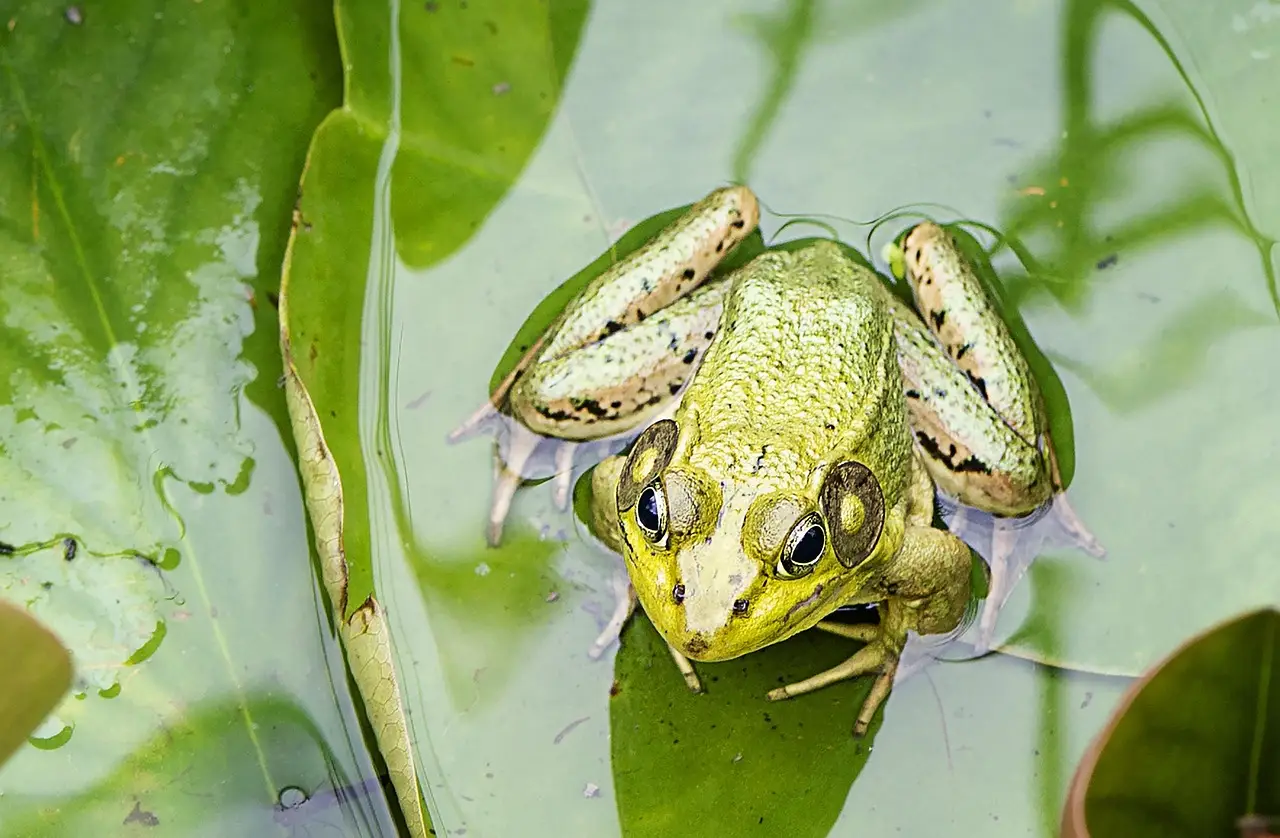
Forty-seven past studies, 49 species, one pattern: amphibians and reptiles from places with wider day-night temperature swings raise their body temperatures more aggressively when infected. That's the central result of a meta-analysis published in Proceedings of the Royal Society B: Biological Sciences in 2026, led by researchers at the University of São Paulo and São Paulo State University.
The phenomenon under study is called behavioral fever. When amphibians and reptiles pick up an infection, some seek out warmer spots — a sun-baked rock, a shallower pool — and deliberately push their body temperature above its usual level. They can't generate internal heat the way mammals do, so they borrow it from their surroundings.
The study, first-authored by Danilo Giacometti, pooled the findings of 47 earlier papers covering 49 amphibian and reptile species. For wild-caught animals, the team pulled climate records from the original collection sites and asked a direct question: do bigger day-night temperature swings at those sites predict bigger fever responses after infection? Their answer was yes.
What did the surprise finding show?
The team found stronger, clearer evidence of behavioral fever in amphibians than in reptiles. That result caught them off guard. Amphibians have thin skin that loses water easily under warming conditions, so the researchers expected them to avoid heat when sick.
"We posited that amphibians would avoid raising their body temperatures when infected primarily to avoid dehydrating conditions," Giacometti said. "Our findings raised the question of whether this has an actual biological implication, or whether this result emerged as a methodological artifact associated with differences in how thermal biology studies are conducted with amphibians vs. reptiles."
That caveat matters. A meta-analysis is only as good as the underlying studies, and amphibian and reptile experiments aren't run identically. The pattern could be biology. It could be methods. The paper itself flags both possibilities.
There was also a difference by type of pathogen. Across the reviewed studies, bacterial challenges produced clearer evidence of behavioral fever than fungal or viral ones. Why bacteria trigger stronger heat-seeking than fungi or viruses remains unexplained here.
What does this change for cold-blooded animals?
Practically, the findings point to habitat quality. Animals from more variable climates showed an enhanced capacity to raise their body temperatures after infection — which means access to a range of thermal options, warm spots and cool ones, may be part of an animal's immune toolkit.
"This result highlights the importance of preserving thermal heterogeneity, as animals that can explore different thermal resources may be better equipped to deal with immune challenges than those that live in thermally stable habitats," Giacometti said.
In plain English: a wetland or forest with varied microclimates — patches of sun and shade, warm shallows and cooler depths — may give sick animals a fighting option that a thermally uniform habitat doesn't. Flatten the landscape, and you may flatten the fever.
What the study doesn't say
Two gaps deserve attention.
- The analysis did not test whether behavioral fever actually improves survival after infection. Bigger fevers were observed, not proven beneficial.
- The amphibian-versus-reptile difference might reflect how studies are designed rather than how animals behave.
Both limits are preliminary-study caveats in the classic sense. The pattern is real across dozens of species. The interpretation still has room to move.
Where the research came from
Giacometti started the project after finishing his Ph.D. in Canada and returning to Brazil.
"When I finished my Ph.D. in Canada, I knew I wanted to move back to Brazil," he said. "I reached out to Professor Carlos Navas and suggested a postdoctoral project aimed at understanding how immune challenges influenced the thermal biology of amphibians and reptiles."
The project included both a meta-analysis and experimental work. The meta-analysis became this paper.
The team also accounted for shared traits between closely related species, a standard statistical safeguard that prevents a few well-studied branches of the family tree from dominating the result. The meta-analytical framework, Giacometti noted, lets researchers observe general patterns while estimating potential sources of bias in the data set.
What's next?
The science didn't stop at publication. Giacometti, now an assistant professor at the University of São Paulo, has students running follow-up experiments on frogs and lizards.
"I have an honors student currently exploring how closely related species of lizards that come from different habitats in Brazil (warm-dry and cool-wet) differ in their thermoregulatory responses to bacteria," he said. He also plans to recruit graduate students to study how environmental humidity mediates thermoregulatory responses to immune challenges in frogs.
That humidity question goes straight at the study's most puzzling result — amphibians febrile despite their leaky skin. If humidity shapes fever behavior in frogs, the dehydration puzzle may start to resolve.
There's history behind all this. Since the 1970s, data have suggested the physiological pathways behind fever are relatively conserved across animals, vertebrate and invertebrate alike. Seminal work in lizards argued that seeking warmth when sick has adaptive value — potentially helping animals not just fend off infections but become immune to them. Yet some past research shows sick reptiles sometimes do the opposite, moving to colder environments in a response called behavioral hypothermia. Evidence for that remains limited, but it was one of the contrasts that pushed Giacometti's team to look for biological, climatic or pathogen-related explanations in the first place.
Publication details: Danilo Giacometti et al., "When cold-bloods heat up: meta-analytical evidence that climatic variability mediates behavioural fever in amphibians and reptiles," Proceedings of the Royal Society B: Biological Sciences (2026). DOI: 10.1098/rspb.2026.1712.
via phys.org/rss-feed/ (Source)
More from James Calloway
Show full bio
Staff writer covering regulation, policy and their impact on general science news at SciBeat.
371 articles
Nearby plates
- T. rex Ran Hot: Fossil Tooth Shows 97°F Body Temperature
- Yosemite Toads Catch Deadly Fungus in Their Winter Burrows, Study Finds
- Heat Waves Are Aging Wild Fairy-Wrens Faster, DNA Study Finds
- Overnight Cooling May Not Fully Protect Older Adults From Heat Waves
- Museum Frogs Solve a 50-Year Mystery of Brazil's Vanishing Amphibians