Plate Nº 12 · recorded September 30, 2026
Health & Medicine ResearchReported finding
Cannabis Use Linked to Doubled Violence Risk in Major Review
A King's College London review of 63 studies and 265,000 people found cannabis users were twice as likely to commit violence and more likely to be victims, though causation is unproven.
By Elena Vasquez4 min read795 words
In brief
- Researchers pooled 63 studies covering more than 265,000 people, published in Psychological Medicine.
- Cannabis users in the general population were about twice as likely to commit violence; the figure rose to three to four times for criminal convictions.
- The review shows an association only — it does not prove cannabis causes violence, and confounding factors like alcohol and social circumstances may play a role.
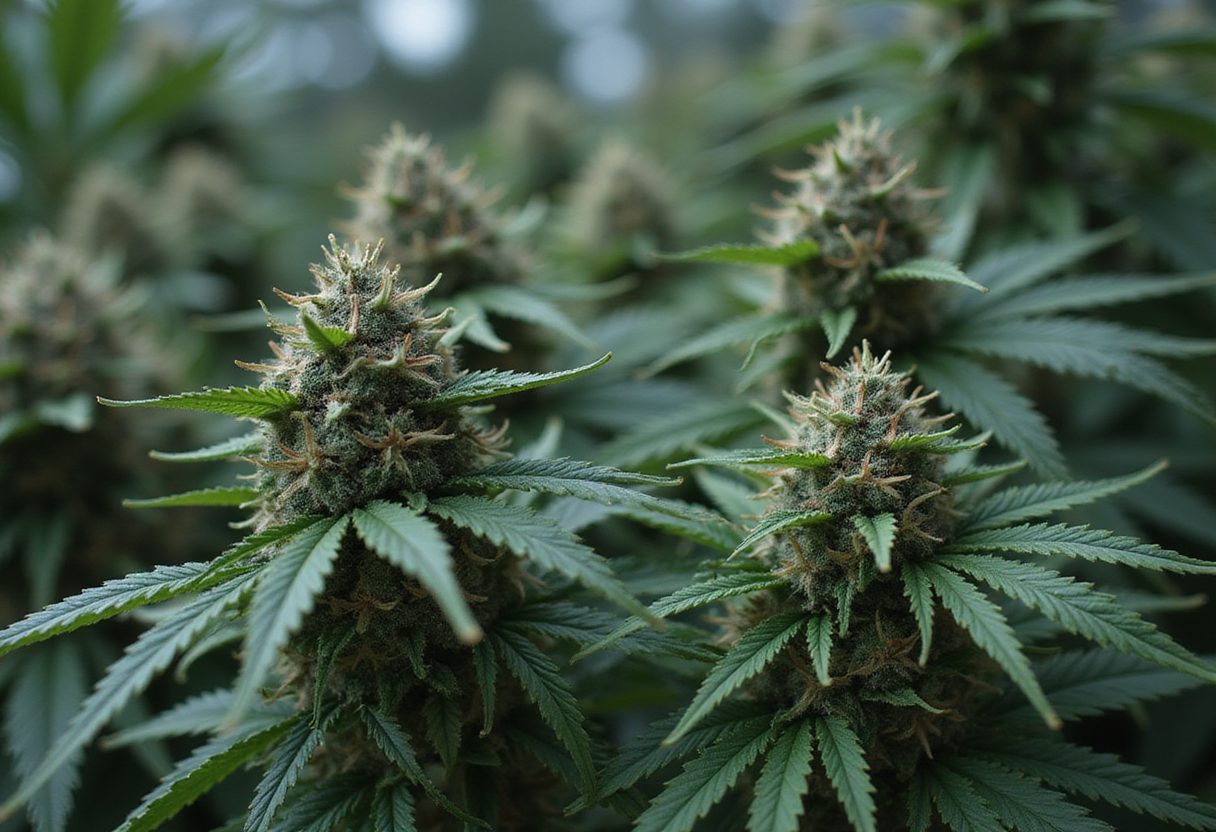
People who use cannabis are roughly twice as likely to commit a violent act as those who don't, according to a large research review led by King's College London. The same review found they are also about one and a half times as likely to become victims of violence themselves.
The findings come from a systematic review and meta-analysis — a method that pools results from many separate studies to detect patterns no single study could reveal — published in Psychological Medicine. Researchers from the Institute of Psychiatry, Psychology & Neuroscience (IoPPN) combined data from 63 studies covering more than 265,000 people. They analyzed the general population separately from people receiving psychiatric care.
What the researchers measured
The team used the World Health Organization's broad definition of violence, which covers physical, sexual and psychological violence toward another person, both inside and outside intimate relationships. They also distinguished between self-reported violence and violence that resulted in criminal convictions. When a single study measured several forms of violence, the researchers counted only the most serious type reported.
The numbers varied depending on the group and the method. In the general population, cannabis users were around twice as likely to have committed a violent act as non-users. Among people in psychiatric care, cannabis users were around two and a half times as likely to be violent as other psychiatric patients who did not use cannabis. For violence that led to a criminal conviction, cannabis users were three to four times as likely to have been convicted.
The link held in studies that followed people over time, though the association was smaller in those long-term studies than in ones that measured behavior at a single point in time.
The victimization finding — that cannabis users face about one and a half times the risk of experiencing violence — was stronger among women than among men.
What the researchers say
Professor Sir Robin Murray, senior author of the study from IoPPN, said: "In the general population, people who used cannabis were around twice as likely to have committed a violent act as those who didn't; for those in psychiatric care, cannabis users were around two and a half times as likely to be violent as other psychiatric patients who didn't use cannabis."
He added: "As cannabis becomes more commercialized and legalized around the world, the conversation about its risks has focused mostly on the person using it. This review shows that violence, both committing it and experiencing it, needs to be part of that conversation too."
Dr. Marta Di Forti, a co-author from IoPPN and South London and Maudsley NHS Foundation Trust, said: "As a clinician, I've seen how heavy cannabis use can be a factor in violence. We've been cautious for a long time about how far we could go in describing this link, but a review of this size lets us speak with more confidence about the risks, while being careful not to stigmatize people who use cannabis more broadly."
Association, not causation
The researchers stress an important caveat: the review identifies a statistical association and does not prove that cannabis itself causes violence. Cannabis use often occurs alongside other factors that can also raise the risk of violent behavior or victimization. These include alcohol use, other drug use and difficult social circumstances. Any of these, alone or in combination, could explain part of the pattern the review detected.
Notable limitations
Several constraints weaken the conclusions. Only a small number of the underlying studies measured how much cannabis people actually used or how often they used it, so the review cannot say whether heavier use carries greater risk. The criminal conviction findings rest on a relatively limited number of studies, making those estimates less reliable.
There is also a timing problem. Most of the research was conducted before high-potency cannabis became common. The researchers suggest that daily use of today's stronger products could potentially be associated with stronger effects, but this remains untested.
Practical implications
Based on the findings, the researchers recommend two concrete steps. First, mental health services should routinely ask about cannabis use when evaluating a person's risk of violence. Second, public health information about cannabis should include the possible connection with violence alongside better-known risks.
The study was supported by the National Institute for Health and Care Research (NIHR) Biomedical Research Centre: Maudsley and the Medical Research Council. The authors note that the views expressed are their own and not necessarily those of the NIHR or the Department of Health and Social Care.
The full paper, by Giulia Trotta, Victoria Rodriguez, Paolo Marino, Meklit Gurmesa, Edoardo Spinazzola, Zhikun Li, Luis Alameda, Marta Di Forti, Robin Murray and Evangelos Vassos, appears in Psychological Medicine.
via dx.doi.org (Original)
More from Elena Vasquez
Nearby plates
- Major Review Links Cannabis Use to Higher Violence Risk
- Weapons in Partner Violence Deepen Psychological Harm, Study Finds
- Smartphone-Aided ER Counseling Cuts Risky Firearm Behavior in Youth
- Gaming Disorder Is 98.9% Similar to Gambling Disorder, Study Finds
- Childhood Trauma Roughly Doubles Adult Depression Risk, Study Finds