Plate Nº 32 · recorded November 13, 2026
Space & AstronomyReported finding
Euclid's First Data Haul: 900 Million Galaxies in 2.5 Trillion Pixels
Euclid's first data release packs 900 million galaxies into 2.5 trillion pixels — a first step toward solving the mystery of the universe's missing 95%.
By Nathan Brooks3 min read664 words
In brief
- Euclid's first data set covers 900 million galaxies and 60 million quasars in about 2.5 trillion pixels.
- ESA launched Euclid on July 1, 2023; over six years it will map a third of the sky.
- Some galaxies in the release existed when the universe was only 700 million years old — 5% of its current age.
- Dark matter makes up about 27% of the universe and dark energy about 68%; visible matter is only ~5%.
- First results of Euclid's tests of gravity on cosmic scales are expected in June 2027.
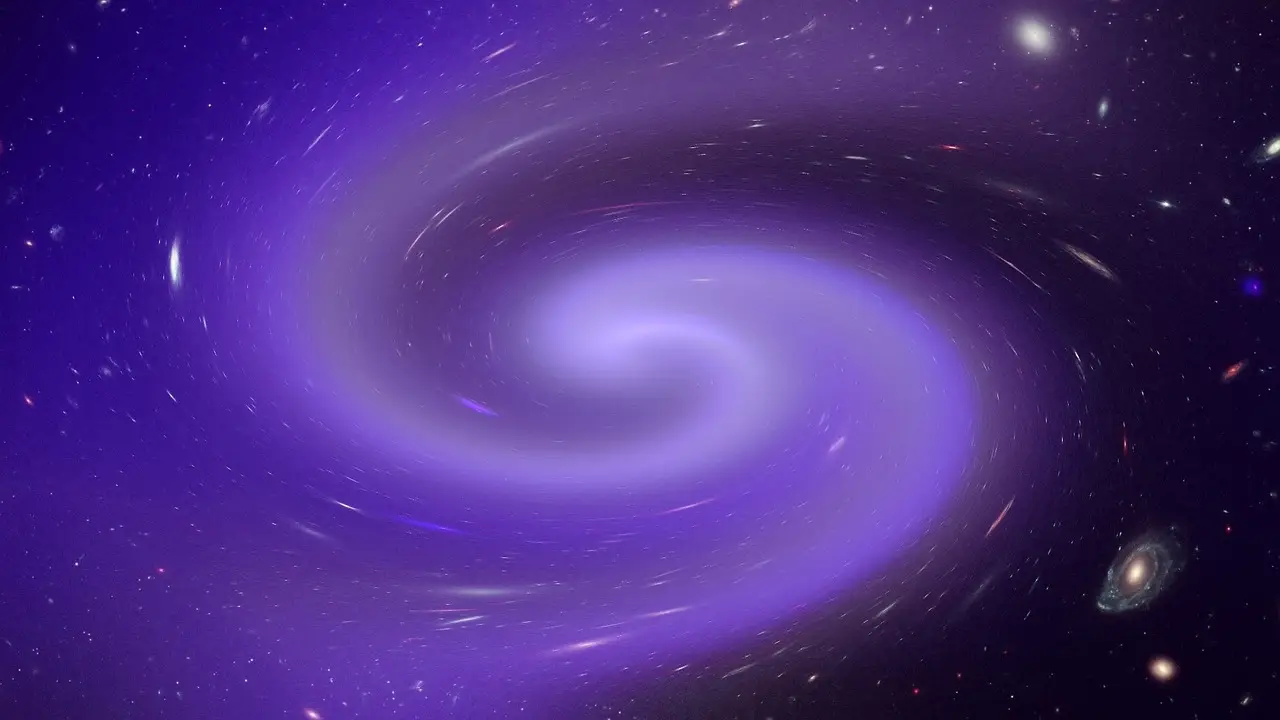
The European Space Agency's Euclid space telescope has released its first major data set: roughly 900 million galaxies and 60 million quasars, packed into about 2.5 trillion pixels. That's 1.7 million gigabytes of raw cosmic inventory, and it covers a patch of sky almost 10,000 times the size of the full moon.
ESA launched Euclid on July 1, 2023, with one ambitious job: build the largest and most detailed map of the universe ever made. "Euclid is a wide-field telescope. It sees more than 100 times as much of the sky in one image as the Hubble or James Webb Space Telescope," explains Leiden astronomer Koen Kuijken.
The numbers keep moving. Euclid produces around 20 new images every day, and over its six-year mission it will map a third of the entire sky.
How far back can Euclid see?
Far enough to witness the universe's childhood. Some galaxies in the new data set existed when the universe was only 700 million years old — just 5% of its current age. Because light takes time to travel, each image is effectively a look back in time.
That reach matters because cosmologists are chasing the biggest gap in modern physics. "We can describe the history of the universe remarkably well, but on the other hand we still do not understand what 95% of it is made of," says Leiden professor Alessandra Silvestri.
Here's the breakdown. Everything we can see — stars, planets, galaxies — accounts for only about 5% of the universe's total contents. Dark matter makes up roughly 27%; we can't see it directly, but its gravity helps galaxies form and holds cosmic structures together. Dark energy accounts for about 68% and appears to drive the universe's accelerating expansion.
"These are some of the greatest mysteries in modern physics. And Euclid — alias our dark universe detective — is designed especially with this goal in mind, to help us unravel them," Silvestri says.
What does the telescope actually measure?
Euclid attacks the problem from two directions:
- Galaxy positions. It maps where billions of galaxies sit, revealing how cosmic structures have evolved over time.
- Gravitational lensing. It measures tiny distortions in galaxy shapes caused by gravity bending light — an effect that exposes invisible matter, including dark matter.
Neither works alone, Silvestri stresses. "A single galaxy cannot tell us much about dark energy or the laws of gravity. But billions of galaxies can." By studying patterns in galaxy positions and shapes, researchers can reconstruct the universe's history and test the physics behind it.
The scale of that task is its own problem. "Statistics is the key," Silvestri says. "That is why our colleague Guadalupe Cañas Herrera, a postdoctoral researcher at Leiden Observatory, has already started developing the tools needed to tackle this statistical challenge."
Is our understanding of gravity complete?
Beyond dark matter and dark energy, Euclid will probe an even more fundamental question. "Is our current understanding of gravity complete, or not?" Silvestri asks. She wants to use Euclid's data to test whether the laws of physics behave as expected on the largest scales — the cosmic scale.
Those tests will take time. The first results are expected in June 2027, the same date slated for the mission's next major milestone: combining observations into detailed cosmological analyses.
Astronomers have already published around 20 scientific papers describing the new data and first analyses, with dozens more in the pipeline. So while this release marks an important milestone, it's only the opening chapter of a six-year campaign.
"Euclid is revolutionizing the way we study our universe, providing unprecedented insights and setting a new standard for cosmology," Silvestri says. "Euclid's images are breathtaking. Producing images with such extraordinary detail across such an enormous area of the sky has required a truly remarkable effort."
Still, she tempers any sense of a finish line. "We are only at the beginning of our journey. The real scientific adventure starts now."
via phys.org/rss-feed/ (Source)
More from Nathan Brooks
Show full bio
Market editor covering companies, deals and strategy in general science news at SciBeat.
333 articles
Nearby plates
- Euclid Telescope Finds Its First-Ever New Comet 1.3 Billion Km Away
- Euclid Telescope Finds Comet C/2026 S1 While Mapping Dark Energy
- NASA's Roman Telescope Will Image 100× More Sky Than Hubble
- AI and the Largest 2D Map of the Universe Uncover 70 New Gravitational Lenses
- JWST Detects 104 Magnified Stars in Dragon Galaxy, More Than Doubling Record