Plate Nº 27 · recorded November 10, 2026
Biology & EvolutionReported finding
Female and male mice renew skin in distinctly different patterns
A five-month microscopy study found synchronized skin renewal in female mice, linked to faster wound healing and partly shaped by testosterone and estrogen.
By Elena Vasquez3 min read687 words
In brief
- A five-month microscopy study tracked epidermal stem cells in living mouse skin.
- The epidermis is replaced every 6–7 weeks, depending on age and body part.
- Female mice showed synchronized cell renewal associated with faster wound healing.
- In male mice, testosterone sped basal-layer cell departure; estrogen loss removed most female coordination.
- The findings were published in Nature in 2026 and remain unconfirmed in living humans.
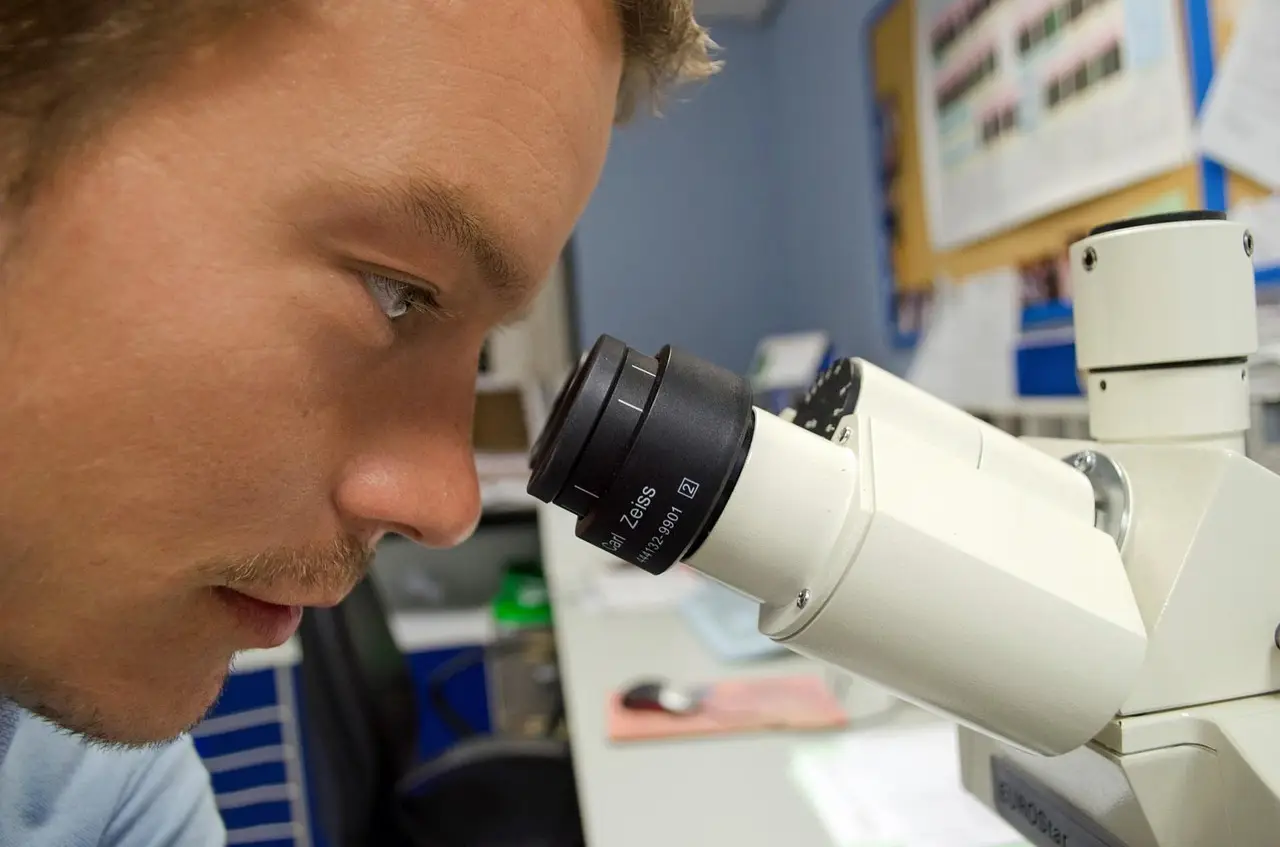
A five-month study linked synchronized skin-cell renewal in female mice with faster wound healing, but researchers have not confirmed the pattern in living people.
The body’s outermost layer, called the epidermis, is replaced every 6–7 weeks, depending on age and body part. An international team led by experts from the Université libre de Bruxelles in Belgium and the University of Cambridge in the UK published the mouse findings in Nature in 2026.
What did the five-month study find?
Using a microscopy technique that lets scientists image living cells through the skin, the team followed stem cells that develop into epidermal cells for five months. That is unusually long for this kind of study.
Stem cells supply the starting material for many different cell types in the body. At the bottom of the epidermis, they multiply and produce both new stem cells and cells destined for the surface, where they form a protective layer before being shed.
The analysis also identified an intermediate stage in which cells divide less often. This stage helps increase the number of cells produced, and scientists have long debated whether it exists.
Medical oncologist Dan Engelman from ULB said: “We initially set out to understand how the skin renews itself, and whether there is a hierarchy with stem cells at the top. We were surprised to discover strong differences in the way stem cells renew the skin in females and males.”
Takeaway: The study identified a debated intermediate cellular stage and strong sex-based differences in mouse skin renewal.
How do female and male skin cells differ?
The researchers describe the pattern as sexual dimorphism in epidermal fate, meaning male and female cells follow different developmental paths. The main differences were:
- Females: Cell division, specialization and departure from the basal layer occurred in a highly synchronized sequence. Divided cells worked in pairs and made the same choice at the same time, either dividing again or moving toward the outer layer.
- Males: Cells behaved more independently, with less coordinated timing as they divided or moved toward the surface.
The team compared the female pattern to rowers synchronizing their strokes. Additional tests in the mice suggested that coordination may partly explain why female mice heal wounds faster than males. That fits an existing observation, although scientists still do not fully understand the cause.
Takeaway: Female mouse skin renews in coordinated bursts that may help wounds close faster.
What did the hormone experiments show?
The team removed the testes or ovaries from mice to sharply reduce testosterone or estrogen production, then replaced the hormones to test their effects on skin-cell production.
- Testosterone: It increased the rate at which new skin cells left the bottom epidermal layer. Without it, male skin cells behaved more like female cells.
- Estrogen: Removing it removed most of the coordinated activity the researchers had observed in female mice.
These interventions indicate that sex hormones help shape skin renewal, though the experiments do not establish a complete molecular explanation.
Takeaway: Testosterone speeds male cell turnover, while estrogen helps coordinate female turnover.
What does this mean for people?
The evidence remains preliminary. The researchers used a small group of mice, and they have not yet established the renewal pattern in living people. Initial laboratory tests on human skin cells suggest the same mechanisms may be involved, but broader analysis is the obvious next step.
The discovery could eventually support treatments tailored by sex for burns, wounds, skin conditions and skin cancers. The researchers presented that as a possible future benefit; the study did not test a treatment.
Developmental biologist Cédric Blanpain from ULB said the result opens questions spanning fundamental stem-cell biology and clinical problems such as wound healing, cancer development and autoimmune diseases. “Sex is a parameter too often overlooked in biology and medicine,” he said. “We will now investigate the differences between males and females during the formation and progression of skin cancers, as well as the molecular mechanisms responsible for these differences.”
Takeaway: The mouse results identify a mechanism worth testing in human skin, but they do not yet justify sex-specific clinical decisions.
via sciencealert.com (Source)
More from Elena Vasquez
Show full bio
Correspondent covering money, funding and market shifts around general science news at SciBeat.
384 articles
Nearby plates
- Male and Female Skin Stem Cells Follow Different Rules, Study Finds
- Blood Cells From an 80-Year-Old Rejuvenated to Under 20 in the Lab
- Cellular Recycling Doesn't Simply Decline With Age, Study Finds
- AI-powered 'barcode' detects aging 'zombie cells' in mouse tissue
- Spatial Wnt Gradient Drives Mutant Cell Expansion After p53 Loss