Plate Nº 47 · recorded October 10, 2026
Neuroscience & MindReported finding
Fruit Fly Brain Map Complete, and It Held a Surprise
Scientists have completed a full wiring map of the fruit fly brain — every neural connection charted — and the finished diagram revealed something they did not expect.
By Priya Raman3 min read634 words
In brief
- Scientists mapped every neural connection in a fruit fly brain
- The complete wiring diagram, or connectome, revealed an unexpected finding
- The result was reported by ScienceDaily
- The map allows any neuron in the fly brain to be traced to its partners
- Interpreting the surprise will require follow-up experiments
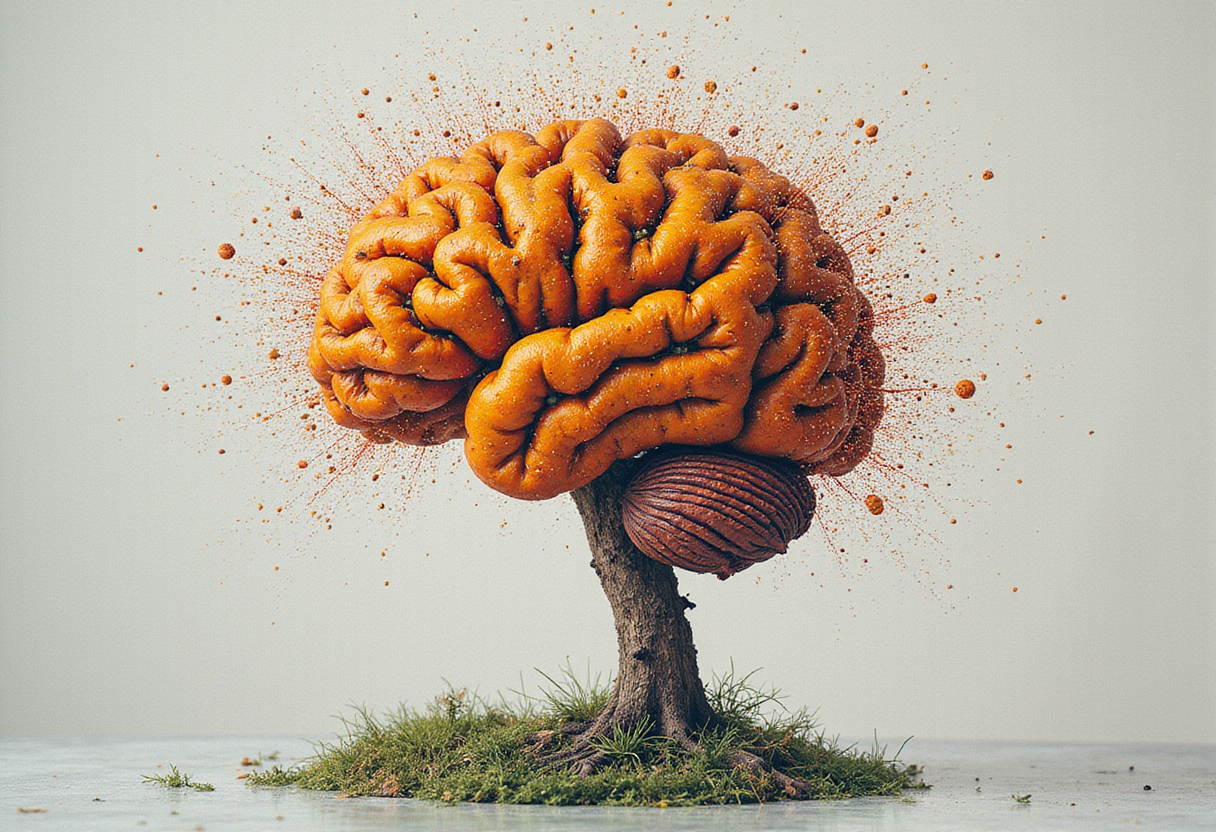
Scientists have mapped every neural connection in the brain of a fruit fly — and the complete wiring diagram did not look quite the way they expected it to.
The achievement, reported by ScienceDaily, gives researchers the first full picture of how all the neurons in a fruit fly's brain connect to one another. Such a complete map is called a connectome. Think of it as a wiring diagram: it shows which nerve cells talk to which, and where.
What is a connectome?
A connectome is a map of the nervous system at the level of individual connections. Neurons, the cells that carry information in the brain, communicate through junctions called synapses. Mapping every one of those junctions in an entire brain means recording the full wiring plan of the organ.
Fruit flies have long served as a workhorse in neuroscience because their brains are small enough to map completely, yet complex enough to control real behaviors: flying, navigating, courtship, and learning. A finished fly connectome gives scientists a reference structure they can use to test ideas about how circuits of neurons produce behavior.
Why is a complete map a big deal?
Before this, researchers had to work from partial maps. They knew the wiring in certain regions, or in larvae, but always with gaps. A complete adult map removes that uncertainty. Any neuron in the fly brain can now, in principle, be traced: what feeds into it, what it feeds, and which partners it repeats as neighbors.
That matters because neuroscience arguments often hinge on circuit details. A hypothesis about how a fly smells an odor, or steers during flight, depends on knowing exactly which cells are wired together. With the whole diagram in hand, those questions can be checked against the actual wiring rather than inferred from fragments.
What was the surprise?
According to the report, the finished map revealed something the researchers did not anticipate. Complete wiring diagrams have a stubborn habit of doing this. When earlier teams mapped far smaller nervous systems in detail, the resulting diagrams repeatedly overturned assumptions about how the circuits were organized.
The ScienceDaily report frames the finding as a surprise, which is itself informative. It suggests the fly brain's wiring deviates in some way from what prevailing models predicted. Researchers building theories of how brains work will need to reconcile their models with the actual diagram.
It is worth remembering what a connectome does and does not tell us. A wiring map shows the physical connections. It does not directly show the strengths of those connections, the chemical signals each neuron uses, or how activity flows through the network moment to moment. Those questions require follow-up experiments. In that sense, the map is a foundation, not a final answer.
What comes next?
A complete fruit fly connectome opens several practical doors:
- Researchers can now identify the full circuit behind specific fly behaviors, cell by cell.
- The map serves as a testbed for computer models that simulate brain activity.
- Comparative studies can check how consistent wiring is between individual flies.
- Methods proven here can guide larger mapping efforts in bigger brains.
The result also carries a broader lesson. Every time neuroscientists complete a wiring diagram, the finished map has forced revisions to existing ideas. The fruit fly brain, small as it is, has just repeated that pattern: nature's wiring held a surprise that the diagrams built from partial data could not predict.
For now, the finding should be read as preliminary in its implications. A map tells researchers where to look, but interpreting the surprise — what it means for how flies think, sense, and act — will take years of targeted experiments. What is certain is that the reference diagram now exists, and every future study of the fly brain will build on it.
via Google News: Neuroscience (Source)
More from Priya Raman
Show full bio
Senior reporter covering industry trends and analytics at SciBeat.
207 articles
Nearby plates
- Google Research Announces Complete Map of the Male Fruit Fly Brain
- Researchers Publish First Complete Fruit Fly Brain Wiring Map
- Scientists Map Every Connection in a Male Fruit Fly Brain
- Fruit Fly Brains Reveal How a Neural Gate Switches Memory On
- Mouse Motor Cortex Mapped Into 16 Distinct Functional Subregions