Recorded November 27, 2026
Earth & ClimateReported finding
Global River Flows Fell 5.7% in Record Heat Years 2023-2024
A Science study of 150 river basins and 1.2 million lakes found river discharge fell 5.7% in 2023–2024 and lake volumes dropped 9.5%, driven by an El Niño–North Atlantic interaction.
By Nathan Brooks5 min read973 words
In brief
- Global river discharge was about 5.7% below the long-term average in 2023 and 2024; lake and reservoir volumes fell 9.5%.
- The study covered 150 river basins, over 1.2 million lakes and reservoirs, and reconstructed water availability from 1991 to 2025.
- More than 200 pink river dolphins died at Lago Tefé in the Amazon in fall 2023 amid drought and water temperatures above 40°C.
- Austria's August 2025–July 2026 period ranked among the driest since records began in 1850, per GeoSphere Austria.
- The study, led by Yongqiang Zhang with senior author Günter Blöschl, was published in Science (DOI: 10.1126/science.aei2575).
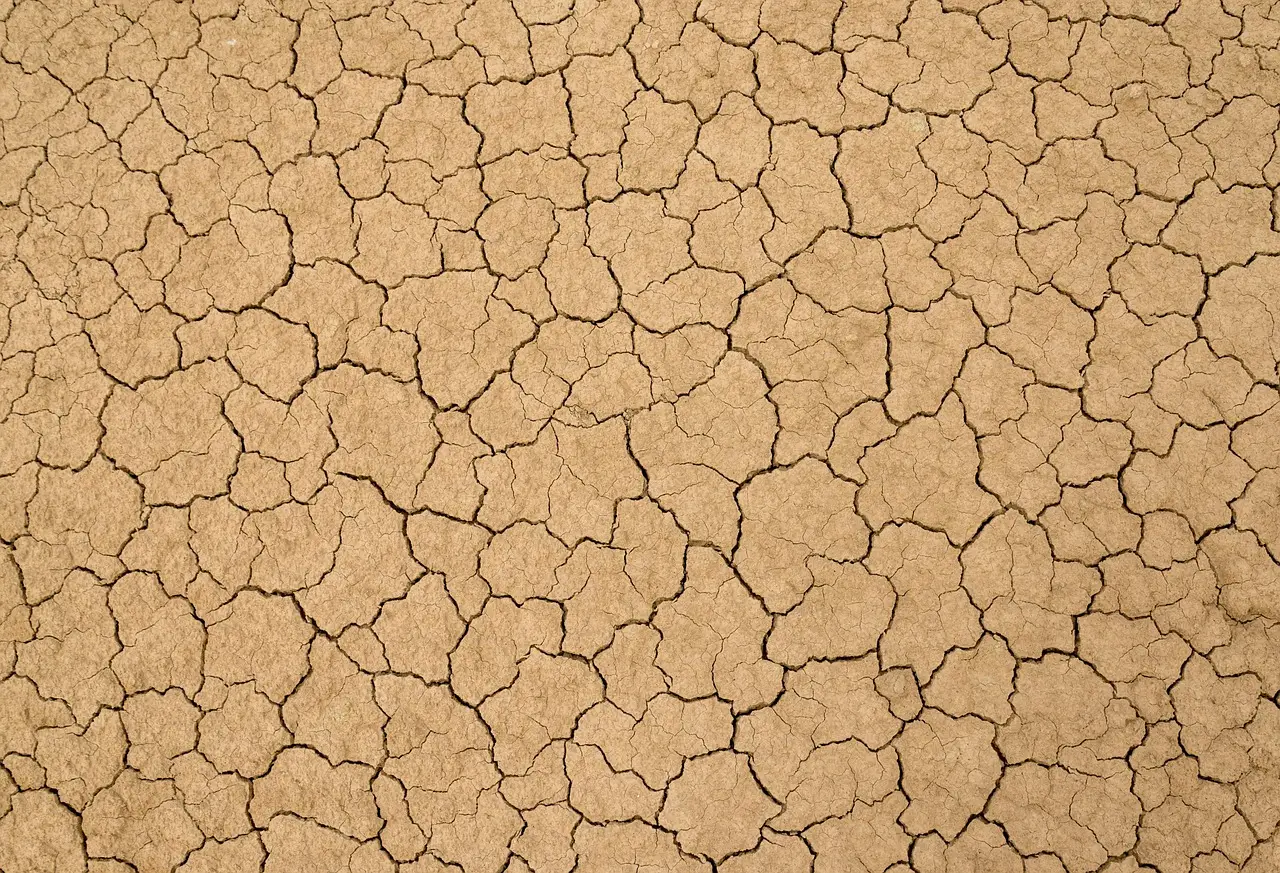
Global river discharge dropped by an average of 5.7% in 2023 and 2024, and the water stored in lakes and reservoirs fell by 9.5%. That's the headline finding of an international study published in the journal Science, and it delivers a sobering correction to a common assumption about climate change.
The intuition goes like this: a warmer atmosphere can hold more water vapor, so a warming planet should mean more rain. Günter Blöschl, senior author of the study and researcher at the Institute of Hydraulic Engineering and Water Resources Management at TU Wien, says that reasoning falls short.
"A warmer atmosphere can hold more water vapor. However, that does not in any way mean that we have more water available to us," Blöschl said. "What matters is where and when the precipitation falls, and how much water is lost again through evaporation."
How did the researchers measure it?
The team analyzed discharge measurements from 150 large river basins worldwide. They paired that with satellite data covering more than 1.2 million lakes and reservoirs. Using hydrological models and machine learning, they reconstructed global water availability for the period from 1991 to 2025 — a 34-year window.
The results were striking. A simultaneous two-year decline this sharp simply didn't appear anywhere else in the study period. South America was hit hardest of all the regions.
Both 2023 and 2024 were record-breaking global heat years. To put the numbers in perspective: for every 100 units of river water a basin's long-term average would deliver, the world's rivers carried roughly 94 units in those two years. Lakes and reservoirs lost nearly one-tenth of their active water volume.
What caused the drop?
The researchers identified the mechanism behind the decline. During the El Niño climate phenomenon, the tropical Pacific warmed up. At the same time, the tropical North Atlantic ran exceptionally warm. That unusual combination altered large-scale atmospheric circulation.
Air sank more strongly over South America, and moisture was pulled away from the region. The result: massive rainfall deficits across the continent.
"What is surprising is that it was not only traditionally dry regions that were affected, but also the Amazon region, which normally receives very high levels of rainfall," Blöschl said.
The consequences were dramatic and measurable. In the Brazilian Amazon in the fall of 2023, more than 200 pink river dolphins died at Lago Tefé, killed by extreme drought and water temperatures exceeding 40 degrees Celsius.
"Global warming is altering not only evaporation but also the large-scale distribution of water," Blöschl said. "As a result, droughts can be much more severe than one would expect based on warming alone."
Where did the water go?
One further finding stands out. During the study period, precipitation over the oceans increased overall, while it decreased over land areas. So the global water cycle may be intensifying even as rivers and lakes on land hold less water — the extra moisture is falling in the wrong place.
The recovery timeline supports the idea that temperature alone doesn't explain everything. By 2025, global river flows had returned to their long-term average. The extreme 2023–2024 decline, the researchers conclude, reflected an exceptional interplay of climatic phenomena — though ongoing warming, the study suggests, is exacerbating such events.
What does this mean for Austria?
The findings connect directly to work Blöschl's team at TU Wien has already published. A 2022 study of more than 3,200 time series of water levels and discharge in European rivers showed that hydrological droughts develop very differently from region to region. River flows are in some cases increasing in northern Europe, while declining trends dominate in central and southern Europe.
His earlier work on global water availability also highlighted growing water scarcity, particularly in the Southern Hemisphere.
Austria itself is living through the problem. The country experienced an exceptional drought in 2026, with rainfall roughly a third below the long-term average from the start of the year through the end of October. According to GeoSphere Austria, the 12 months from August 2025 to July 2026 ranked among the driest since records began in 1850 — a record stretching back 175 years. Low river flows and groundwater levels followed, and the rainfall shortfall continued into the fall.
"The large-scale atmospheric mechanisms in Austria are, of course, different from those in the Amazon region," Blöschl emphasized. "But the fundamental message is the same: when it comes to water availability, it is not just how much rainfall there is that matters, but also how much water evaporates, how much is stored in the soil and how much ultimately ends up in the rivers."
In Austria specifically, the interplay between precipitation, evaporation, snow storage and soil moisture is crucial. The study's authors argue these processes have to be considered together — including unusual combinations of climatic conditions.
Why does predictability matter now?
"It's not that it's getting drier everywhere, every year," Blöschl said. "The real problem is that fluctuations in water availability may increase. Even regions that were previously considered to have abundant water supplies may suddenly be affected by severe drought."
That presents new challenges for water supply, agriculture and energy generation, all of which must adapt to potentially more pronounced swings.
"We need to be able to better understand and predict when and where water will be available," Blöschl said. "To do this, we need to look at the entire water cycle—from the oceans, through the atmosphere, to the soil, rivers and lakes. This will be a key focus of hydrological research in the coming years."
The study, led by first author Yongqiang Zhang, appears in Science as "Abrupt surface water decline during 2023–2024 record warming" (DOI: 10.1126/science.aei2575), with findings provided by Vienna University of Technology.
via phys.org/rss-feed/ (Source)
More from Nathan Brooks
Show full bio
Market editor covering companies, deals and strategy in general science news at SciBeat.
624 articles
Nearby plates
- Some rivers lost flow between 1951 and 2020 even as rainfall rose
- 26% of the World's Cities Face Less Rain but Worse Floods
- Glacier-Fed Lakes Speed Up Ice Loss Worldwide, Study Finds
- Water-saving changes cut peak drought stress 5.6-fold in Northeast
- Hot Droughts Triple Extreme Downpour Frequency, Study Finds