Plate Nº 17 · recorded October 10, 2026
Health & Medicine ResearchReported finding
Gut microbes help set the body's inflammatory vaccine response
A study in Science ties a swimming-protein called flagellin from gut microbes to who runs a fever after a COVID-19 vaccine, with diet emerging as a possible lever.
By Priya Raman3 min read685 words
In brief
- The µHEAT study enrolled healthy adults receiving SARS-CoV-2 vaccines between 2021 and 2022.
- The study appears in the journal Science under DOI 10.1126/science.aea7733.
- Participants who later developed stronger fevers had gut microbiomes with heightened activity in bacterial motility and flagellin genes.
- In mice, transplanted microbiomes from high-fever donors caused worse vaccine inflammation, with flagellin sensing accounting for part of the effect.
- Co-author Benoit Chassaing's team found that certain food additives increased flagellin production by gut microbes in culture.
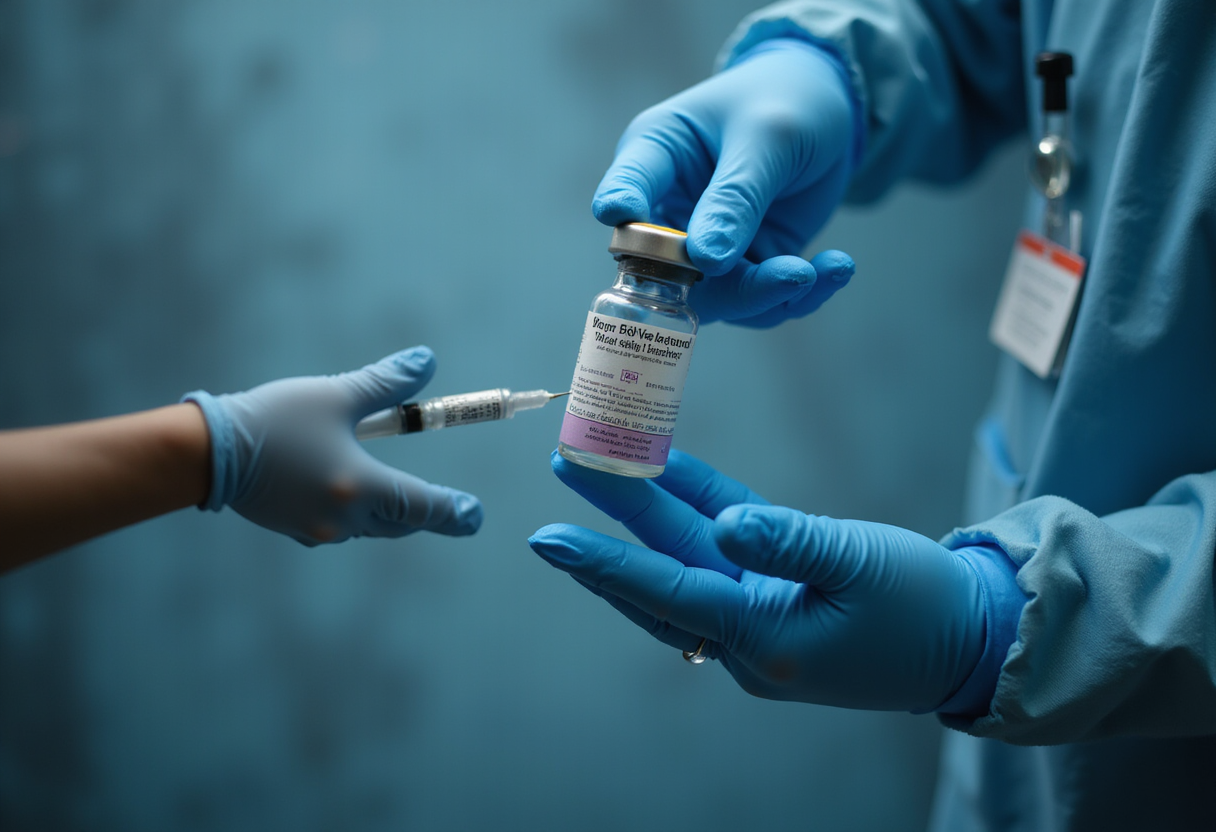
Published in Science, a multi-institutional study has linked the trillions of bacteria living in the human gut to why some people develop a fever after vaccination while others feel nothing at all.
The work, published under the DOI 10.1126/science.aea7733, draws on the µHEAT (Microbial-Human Ecology and Temperature) study led by Ruth Ley at the Max Planck Institute for Biology Tübingen. Between 2021 and 2022, researchers recruited healthy young adults receiving SARS-CoV-2 vaccines. Participants gave fecal and blood samples and logged their temperatures for a week before and after each shot.
"It was a challenging time to set up a new human study, with the pandemic ongoing," said lead author Kelsey Huus, who ran µHEAT as a postdoc in Ley's lab. "We didn't want to burden participants with too many measurements, and it was a race against time to get the study organized before everyone was already vaccinated. But it was absolutely worth it."
What did the researchers find?
Even before vaccination, the microbiomes of participants who later developed stronger fevers looked different. Their gut bacteria showed heightened activity in genes that build flagella — the tail-like structures microbes use to swim.
Bacteria build flagella from small proteins called flagellins. Because related flagellins appear on pathogens such as Salmonella, the immune system reads them as warning signals and mounts an inflammatory response. Participants with stronger post-vaccine fevers also showed elevated baseline inflammatory markers in blood and stool, suggesting flagellin-producing microbes had already pushed their immune systems into a more reactive state.
"Vaccination provides a controlled way to understand why people can respond so differently to the same immune challenge," said Ley, who directs the Department of Microbiome Science. "Our findings show that microbial flagellin is one contributor to this baseline immune state."
Could the microbiome actually cause the difference?
To test causality, the team transplanted fecal microbiomes from participants into mice raised without their own gut bacteria, then vaccinated the animals. Mice that received microbiomes from high-fever donors developed more inflammation after vaccination than those receiving microbiomes from low-fever donors. Blocking the animals' ability to sense flagellin partly erased that effect, supporting the idea that the protein — not just the broader microbiome — drives part of the response.
Does diet play a role?
The researchers also asked why some microbiomes produce more flagellin in the first place. Participants who ate plant-based diets tended to have milder fevers. In culture dishes, certain food additives increased flagellin production by gut microbes.
"We could see that certain food additives increased flagellin production by gut microbes in vitro," said Benoit Chassaing, an Inserm research director at Institut Pasteur. "These findings show that components of an industrialized diet may promote the growth of flagellated gut bacteria and increase overall flagellin production."
In mouse experiments, a high-fat Western-style diet amplified inflammatory vaccine responses. "We found that a high-fat Western-style diet enhanced inflammatory vaccine responses in mice," said co-author Hirohito Abo of Georgia State University in Atlanta.
The authors caution that the human dietary data are observational. "While we could not show that diet determines vaccine responses in humans, our study findings suggest that diet is one factor capable of modifying a pro-inflammatory microbiome," Huus said. "Interventional studies in people will be needed to determine whether dietary changes can alter microbial flagellin production in humans and, in turn, vaccine responses like fever."
What's next?
Future work should test whether reshaping the microbiome — through diet, probiotics, or other interventions — can blunt the fevers and side effects that discourage vaccination, the researchers said. "Ultimately, this work adds to growing evidence that the gut microbiome plays a central role in human immune health," Huus added. "Understanding these interactions could now open new opportunities to improve how we predict, prevent and manage individual differences in immune responses."
The study was a collaboration among the Max Planck Institute for Biology Tübingen, Georgia State University, Institut Pasteur, Inserm, the University of Manitoba, the University of California San Diego, and the Institute for Tropical Medicine at the University of Tübingen.
via Medical Xpress (Source)
More from Priya Raman
Show full bio
Senior reporter covering industry trends and analytics at SciBeat.
207 articles
Nearby plates
- Nasal Vaccine Additive Kept Mice Alive Against Flu 100 Days Later
- Hidden Cell Death Signal Linked to IBD Relapses, Study Finds
- 160-Million-Year-Old Peptides Outperform Modern Human Versions
- Small Post-Infection Costs Can Tip Vaccine Math Toward Elimination, Model Shows
- Gut Bacteria Can Spread Across Continents Within Decades