Plate Nº 14 · recorded November 13, 2026
Earth & ClimateReported finding
Half the Groundwater Sustaining US Produce Isn't Coming Back
Half the groundwater irrigating America's fruits, nuts and vegetables is pumped unsustainably, with almonds alone taking over a quarter, a new county-level study finds.
By Elena Vasquez4 min read735 words
In brief
- Half of groundwater used for US specialty crops comes from aquifers pumped faster than they refill.
- Over a quarter of aquifer-depleting irrigation went to almonds, 2008–2020.
- During the 2012–2017 California drought, groundwater's share of irrigation rose from just over 50% to nearly 70%.
- The study maps irrigation sources for 65 specialty crops at county level, the first such inventory.
- More than 90% of Central Valley specialty-crop groundwater comes from unsustainable pumping.
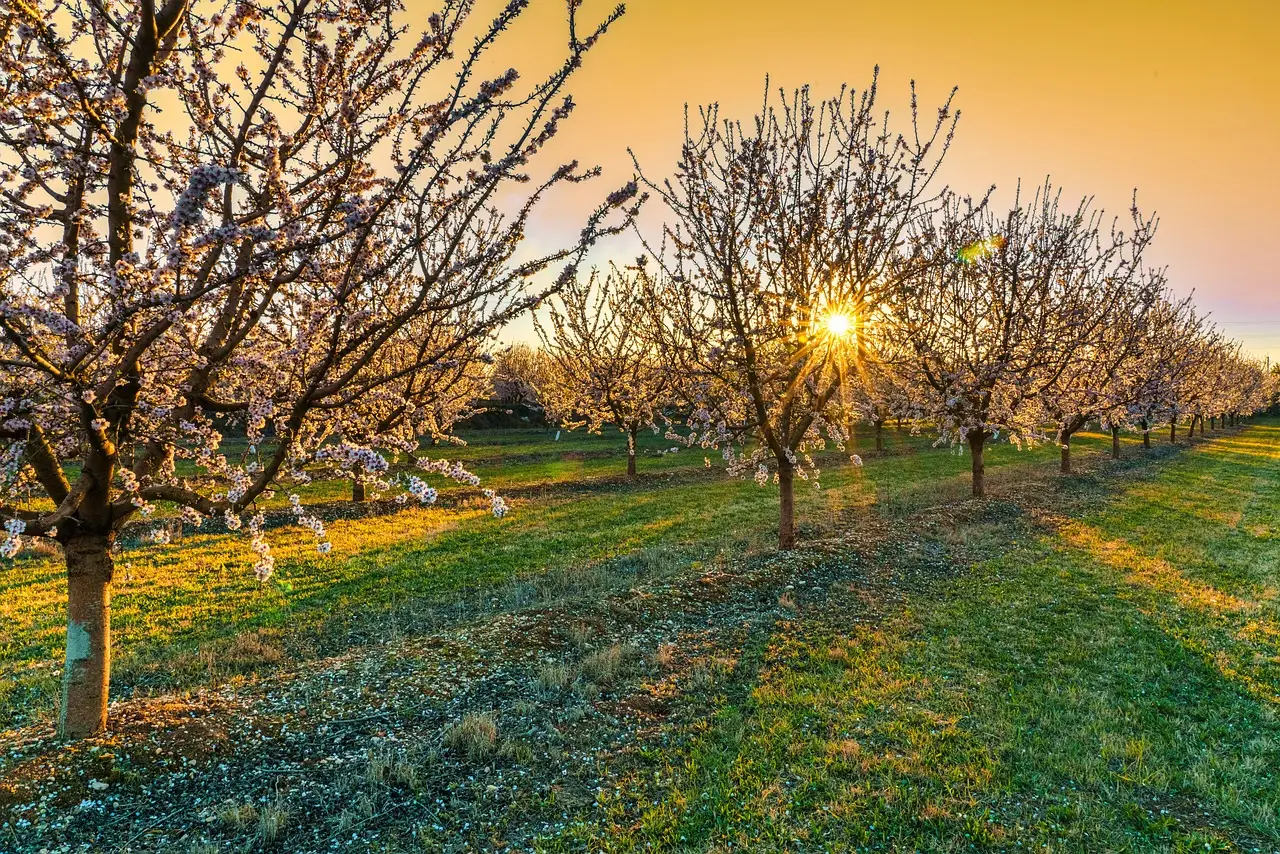
Half of the groundwater used to grow America's fruits, nuts, vegetables, seeds and greens comes from aquifers being pumped faster than they can refill. That's the central finding of a new study in Water Resources Research, which tracked irrigation sources for 65 specialty crops across every continental US county between 2008 and 2020.
The scale is striking. Roughly 75% of the water irrigating these crops during that period came from groundwater, and a large share of that pumping is unsustainable. The practice spared farms from the worst effects of recent droughts. It also set them up for a supply problem that doesn't fix itself.
"Up until this point, we've kind of been flying blind," said Jackie Hanley, a civil engineering researcher at the University of Illinois at Urbana-Champaign and the study's lead author.
Why did nobody have this data before?
Existing irrigation statistics lump crops into broad buckets like "produce." That 40,000-foot view hides the water supply risks farmers and policymakers could actually act on.
Hanley and senior author Megan Konar, a professor of civil and environmental engineering at Illinois, stitched together three data sources: satellite maps of irrigated fields, annual USDA crop maps covering 65 crops from cantaloupes to cabbage, and US Geological Survey irrigation data split into surface water, sustainable groundwater and unsustainable groundwater.
The result is the first nationwide crop-by-crop picture of where irrigation water comes from. Without it, nobody could say which specific foods depend on water that won't return.
What did the study find about California?
California dominates. It's the country's irrigation hotspot for specialty crops, and the Central Valley leans hardest on groundwater there — more than 90% of it from unsustainable pumping. Even regions with huge aquifers, like the Midwest's Ogallala and the Mississippi Embayment, send very little groundwater toward fruits, nuts and vegetables.
Florida offers the contrast. Most of its irrigation draws surface water, with 60% going to sugarcane and 32% to oranges.
"This [data] is very useful for assessing risk to different crops, because the risks differ substantially depending on whether crops are surface-water-fed or groundwater dominant," said Nathan Mueller, an environmental scientist at Colorado State University. Surface-water-fed crops face drought and shifting rainfall. Groundwater-fed crops face aquifers that eventually run dry.
Almonds sit at the top of the depletion list. Over a quarter of all aquifer-depleting irrigation went to almonds alone, and almonds — like pistachios, tomatoes, grapes, peppers and garlic — draw 90% to 100% of their groundwater from nonrenewable pumping.
"I've always heard that almonds use a lot of water, but this seemed almost too shocking to be true," Hanley said.
Berries are the other end of the spectrum. Raspberries, blackberries, blueberries and cranberries use the lowest proportion of nonrenewable groundwater.
What happened during the drought?
The 2012–2017 California drought pushed farms even deeper into the red. As surface supplies became unreliable, irrigation shifted from a little over 50% groundwater to nearly 70% — nearly all of it unsustainable pumping.
The data suggest that shift stuck. Farmers have continued the groundwater-heavy pattern since the drought ended, and combined with pumping for non-specialty crops, that raises an uncomfortable question: how long can the Central Valley's aquifers hold out?
"It's not unreasonable to say, in the short term, we are using this resource unsustainably to meet current demand," Hanley said.
What can be done with the numbers?
The study's value lies in its specificity, its authors argue. A county-level inventory lets farmers and policymakers pinpoint which crops and locations offer the biggest water savings from efficiency improvements or changing what gets grown where.
"I've come to really value place-specific data and place-specific solutions," Hanley said. "The most effective solutions are tailor-made for the environment that they exist in."
Mueller sees a role for shoppers too. "I think it's very good for consumers to be aware of the way that the products they're buying trace back to some of these sustainability issues," he said.
The study has limits worth flagging. It covers 2008–2020, so it doesn't capture the most recent dry years, and it estimates withdrawals rather than measuring every well. Still, it replaces guesswork with a map — and the map says America's produce aisle is running on water it can't replace.
via phys.org/rss-feed/ (Source)
More from Elena Vasquez
Show full bio
Correspondent covering money, funding and market shifts around general science news at SciBeat.
392 articles
Nearby plates
- U.S. Irrigation Avoids 6.86 Gigatons of Emissions via Spared Land
- A water budget reveals Rayalaseema's groundwater inequality
- Cambridge AI Maps Senegal's Smallholder Crops With 84% Accuracy
- Some rivers lost flow between 1951 and 2020 even as rainfall rose
- Why Watering Plants on the Moon Won't Work Like on Earth