Plate Nº 51 · recorded November 4, 2026
Space & AstronomyReported finding
Hubble Could Fall From Orbit by 2034. NASA Wants Private Companies to Save It
NASA expects Hubble to reenter the atmosphere by 2033-2034 unless boosted, and has asked private companies for rescue ideas by November 30.
By James Calloway4 min read723 words
In brief
- NASA predicts Hubble will reenter Earth's atmosphere between 2033 and 2034 without intervention.
- A boost mission would need to launch by 2032, per NASA's current analysis.
- NASA issued a Request for Information on October 29, with responses due 3 p.m. EST on November 30.
- Hubble has operated for more than 35 years and has no onboard propulsion to maintain its orbit.
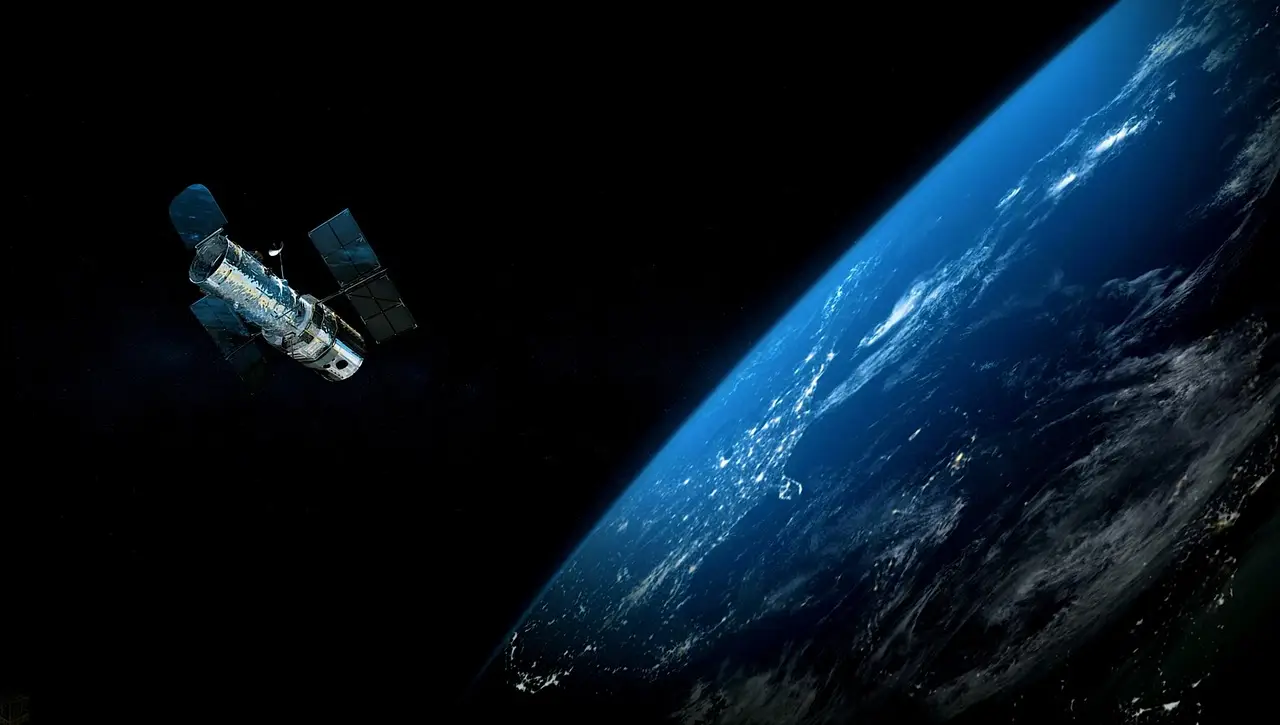
NASA expects the Hubble Space Telescope to reenter Earth's atmosphere sometime between 2033 and 2034 unless someone intervenes. That is the blunt arithmetic behind a Request for Information the agency issued on October 29, asking private space companies how they might keep the observatory alive.
The deadline for responses is 3 p.m. EST on Monday, November 30. After that, NASA will sort through whatever the market claims it can do — and the agency has promised nothing.
What is NASA actually proposing?
Nothing yet, formally. The Request for Information is an exploratory step, not an approved mission. NASA wants to know what commercial spacecraft could realistically do for an aging telescope already in orbit.
Three options are on the table:
- A boost: send a spacecraft to push Hubble into a higher orbit, countering the slow altitude loss that threatens its future and buying additional years of science.
- Servicing: upgrade the telescope's capabilities so it performs better than it does today.
- A safe retirement: guide Hubble through a controlled descent into the atmosphere, or dispose of it in orbit, once its scientific work ends.
"Hubble still has important science ahead of it, and we should be looking at every reasonable opportunity to keep it delivering for as long as possible," said NASA Administrator Jared Isaacman. "If there are innovative and cost-effective ways to extend the life of an asset already on orbit, we owe it to the American taxpayer and the scientific community to explore them."
Note the language. "Reasonable." "Cost-effective." "Explore." No commitment, no budget, no contract. This is an agency testing whether industry can offer a bargain.
Why is Hubble falling in the first place?
Simple physics, and no engine to fight it. Hubble flies in low Earth orbit, where wisps of the upper atmosphere still create drag. Hundreds of miles up, the air is thin but not absent. Over years, that faint resistance steadily strips altitude from spacecraft passing through it.
Most modern satellites carry engines and periodically raise their own orbits. Hubble does not. It has no propulsion system capable of maintaining altitude, so once it starts sliding down, it cannot stop itself. Without outside help, the decline continues into denser air — and ends in a fiery plunge.
NASA's current analysis puts reentry in 2033 or 2034. If the agency wants to prevent that with an orbital boost, it expects a mission would need to launch by 2032. That leaves roughly six years to evaluate proposals, pick a winner, build the hardware, and fly it. Tight but not impossible.
Who runs this telescope?
Hubble is a joint project between NASA and ESA, the European Space Agency. NASA's Goddard Space Flight Center in Greenbelt, Maryland, oversees the telescope and its mission operations, with additional support from Denver-based Lockheed Martin Space. The Space Telescope Science Institute in Baltimore handles the scientific operations, running the observatory on NASA's behalf through the Association of Universities for Research in Astronomy.
What does this change for astronomy?
For now, nothing concrete. Hubble keeps observing as it always has, and its data keeps flowing. What changes is the planning horizon: the community now has a formal process, a deadline, and an agency openly shopping for commercial rescue options.
"Commercial industry has rapidly evolved in recent years to offer new capabilities for in-space satellite capture and servicing," said Nicky Fox, associate administrator of NASA's Science Mission Directorate. "Given the time we have until Hubble's anticipated re-entry, we are eager to explore the breadth of possibilities to boost Hubble to a higher orbit while we develop the flagship mission to follow."
That last clause is worth a pause. NASA is simultaneously building Hubble's successor. A commercial boost would be a bridge, not a permanent fix — the telescope's instruments age even if its orbit doesn't.
For more than 35 years, Hubble has reshaped how humanity understands the cosmos, and it still produces discoveries across many areas of astronomy. The question now is whether capabilities that did not exist when Hubble was designed can stretch that legacy past the currently projected orbital lifetime.
The honest answer: we won't know until November 30, when the responses land. Then NASA has to decide whether any of them survive contact with reality — budget, engineering, and a 2032 deadline.
via sam.gov (Original)
More from James Calloway
Show full bio
Staff writer covering regulation, policy and their impact on general science news at SciBeat.
272 articles
Nearby plates
- NASA Seeks Commercial Ways to Keep Hubble Flying Longer
- Astronomers Mobilize as FY2027 Budget Request Threatens Science Funding
- NASA's Swift Telescope Is Back — but It May Have Just Weeks Left
- NASA's Roman Telescope Will Image 100× More Sky Than Hubble
- NASA's Roman Telescope launches on mission 1,000 times faster than Hubble