Plate Nº 75 · recorded November 2, 2026
Biology & EvolutionReported finding
MIT's Water-Resistant Microneedles Could Vaccinate Fish Weighing Just 1 Gram
MIT and USDA researchers built water-resistant silk microneedles that vaccinate fish as small as 1 gram underwater, without needles, sedation or a cold chain.
By Marcus Bennett3 min read691 words
In brief
- Silk microneedles delivered vaccines underwater to rainbow trout weighing 1 to 2 grams; needle injection needs fish of about 30 grams.
- The system uses food-grade silk coated in shellac and released cargos over 15 minutes to 24 hours.
- Microneedles preserved half of DNA plasmid structure after four weeks of dry storage.
- In 2021, farmed aquatic animals exceeded wild-caught ones in global food production by weight for the first time.
- The work appeared in ACS Nano and was funded partly by J-WAFS and the USDA.
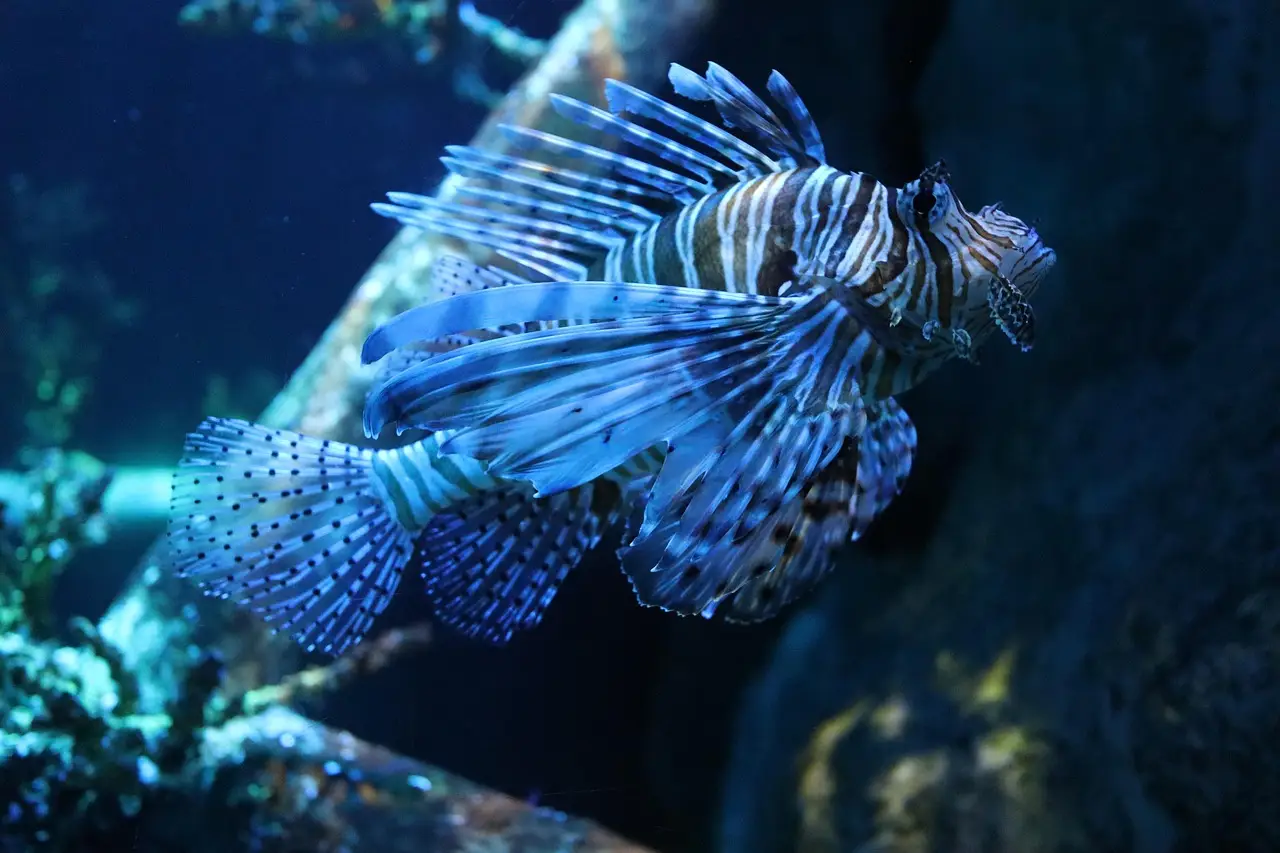
Fish as small as 1 to 2 grams — far below the roughly 30 grams needed for needle-based vaccination — can receive vaccines underwater through food-grade silk microneedles designed by MIT and USDA researchers. The team published its system in ACS Nano, showing the dissolving patches can carry bacterin and DNA vaccines and release them on timescales from 15 minutes to 24 hours.
For aquaculture operators, that gap matters. Today the smallest juveniles stay unprotected during a critical growth window because metal needles do not work well on them.
"What our research shows is food-grade silk fibroin microneedles can deliver vaccines underwater to fish as small as 1 to 2 grams," says Gregory Wiens, a researcher at the USDA's National Center for Cool and Cold Water Aquaculture. "We designed these single-use microneedles to pierce wet skin, stay attached while the fish swim, and release either bacterin or DNA vaccines in a controlled way."
Why does current fish vaccination fall short?
In 2021, farmed aquatic animals exceeded wild-caught ones in global food production by weight for the first time. Disease outbreaks still cause substantial losses on fish farms, and every existing delivery method carries a cost.
- Medicated feed may not reach every fish.
- Immersion in treated water requires far higher doses and still is not fully effective.
- Needle injection works best but demands sedation, conveyor belts and workers injecting fish one by one.
"It's high intensity, there's a risk of cross contamination of blood-borne diseases, and workers may accidentally jab themselves because they are working so quickly," explains Meng Li, an MIT postdoc and the paper's first author. "So it's labor intensive, costly, stressful for fish, and dangerous for workers."
How do the microneedles work?
Benedetto Marelli's lab at MIT had spent years developing silk microneedles to deliver nutrients to plants. Silk is classified as safe for human consumption in food coatings and degrades in the body or the environment. But early silk designs dissolved too quickly in water, releasing the vaccine immediately and failing to penetrate fish skin.
Li, a biomedical engineer who joined the lab in 2022, solved the problem by adding a thin layer of shellac — an insect-secreted resin already used in food coatings and pills. The shellac forms a moisture barrier that keeps the silk needles water-resistant until they attach to the fish.
"The material choice is critical because we're dealing with food, even though we expect the microneedle to fall out of the fish or to be degraded in their body," Li says. "Our criteria were safety for fish and humans alike."
The researchers demonstrated versions tuned for different release speeds. "In some cases, you may want the vaccine released within 15 minutes, but in others, the release can last 10 or even 24 hours," Li notes. "That could be better for other therapeutic uses beyond vaccines."
Storage data adds a practical benefit: the microneedles preserved half of the DNA plasmids' structure after four weeks in dry conditions. "Aquaculture is mostly done in rural areas," Marelli says. "This allows farmers to not need to rely on the infrastructure to maintain the cold chain."
What happens next?
The team tested the system in rainbow trout, using a DNA vaccine supplied by the U.S. Geological Survey. Li received a USDA fellowship in 2024, funding the work and building agency collaborations. The project also received support from MIT's Abdul Latif Jameel Water and Food Systems Lab (J-WAFS), after Marelli first learned of fish vaccination problems at a conference in Southeast Asia.
The researchers caution that the device is not ready for seamless use at scale on fish farms; they describe this paper as an important first step.
"We have all the components to believe this technology could be developed further," Marelli says, pointing to worker safety, animal welfare and food quality as the stakes.
Joining Marelli and Li on the paper are Jad Raad, Yunteng Cao, Yue Hu, Colleen Wolfe, Doyoon Kim, Bradley Frank and Gregory Wiens.
For now, the components are proven in trout. The next job is scaling them to the farm.
via openknowledge.fao.org (Original)
More from Marcus Bennett
Show full bio
News editor covering regulation, policy and their impact on general science news at SciBeat.
295 articles
Nearby plates
- Lab Chip With 444 Tiny Chambers Reproduces Herd Immunity
- AI-Designed RNA Vaccines Stay Stable for a Year at Room Temperature
- NEJM Publishes Trial Results for mRNA Seasonal Flu Vaccine in Adults
- MIT Automates Lipid Nanoparticle Production for RNA Therapies
- Flesh-eating screwworm resurfaces in Texas and New Mexico