Plate Nº 80 · recorded October 9, 2026
Space & AstronomyReported finding
NASA Turns Space Trash Into a Heat Shield Test Flight
NASA's KREPE-3 experiment sent 12 instrumented capsules into re-entry aboard a trash-filled Cygnus cargo ship to test heat shield materials for future Moon and Mars missions.
By Elena Vasquez4 min read724 words
In brief
- 12 experimental capsules flew on Northrop Grumman's Cygnus XL cargo spacecraft, NASA's 24th commercial resupply mission.
- The capsules test heat shield materials including 3D-printed shields, MERINO felt-like materials, and a Dragonfly-shaped aeroshell.
- Astronauts packed the spacecraft with waste and activated the capsules before undocking from the ISS.
- MERINO materials are more flexible, faster to produce, and less expensive than traditional heat shields, making them candidates for Mars landings.
- International partners, including the University of Stuttgart in Germany, contributed sensors and additional test materials.
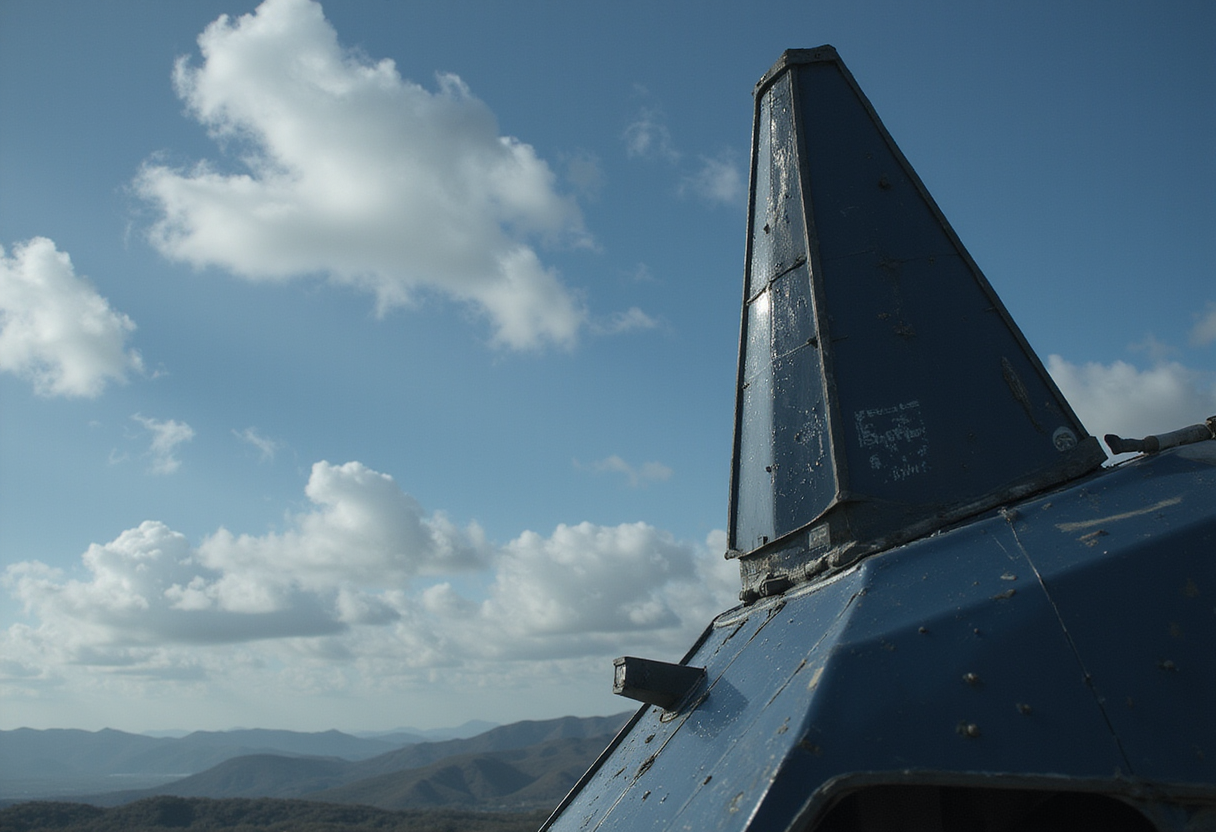
Twelve experimental capsules are set to test NASA's next-generation heat shield materials by riding a cargo spacecraft to a deliberate destruction in Earth's atmosphere. The spacecraft, Northrop Grumman's Cygnus XL, undocked from the International Space Station packed with trash and the small instrumented probes.
The experiment, called KREPE-3 (Kentucky Reentry Probe Experiment), is the third in a series of low-cost missions that squeeze science out of the final moments of a resupply vehicle's life. As the Cygnus breaks apart on its planned re-entry route, the capsules will eject and begin streaming live data via satellite to researchers on the ground.
"It's a smart way to get flight data on materials that are still in development," said Keith Peterson, a materials engineer at NASA's Ames Research Center in California's Silicon Valley. "We're essentially hitching a ride on a vehicle that's already coming back to Earth."
What exactly is flying?
University of Kentucky students designed the capsules, which carry sensors measuring temperature, pressure, motion, magnetic field, and light during the plunge through the atmosphere. The project is a collaboration among the University of Kentucky, the state of Kentucky, NASA's Established Program to Stimulate Competitive Research (EPSCoR), several NASA centers, and other federal and commercial partners.
"KREPE-3 is a great example of the goals of NASA's EPSCoR program," said David Berger, EPSCoR program manager at NASA Headquarters in Washington. "We are supporting the next generation of scientists and engineers as they develop unique projects that benefit their education and NASA's mission goals."
Each capsule tests a different thermal protection component:
- Space shuttle heritage tiles — the proven ceramic material that protected the shuttle orbiters.
- A 3D-printed heat shield from NASA's Johnson Space Center and Oak Ridge National Laboratory, developed under the Additive Manufacturing of Thermal Protective Systems project.
- MERINO coverings — a next-generation family of materials from Ames, made of carbon and phenolic fibers stitched together like felt, on two capsules.
- A dual-cone probe — the Kentucky Instrumented Conical Hypersonic Experiment, combining a tungsten tip, a cone layered with carbon and heat-resistant plastic fibers, and an aft cone wrapped in MERINO.
- A Dragonfly-shaped capsule — modeled on the aeroshell for NASA's upcoming mission to Saturn's moon Titan, covered in Phenolic Impregnated Carbon Ablator, a material that flew on Stardust, Mars Science Laboratory, and Mars 2020.
- A deployable umbrella-like shield — Adaptable Deployable Entry and Placement Technology, which unfolds to increase surface area and slow descent.
Additional capsules from domestic and international partners will test other known and new materials, including a heat flux sensor developed at the University of Stuttgart in Germany that measures how heat moves across a surface during re-entry.
Why felt-like materials matter for Mars
The MERINO materials — short for Materials Engineered for Re-entry using Innovative Needling Operations — are more flexible, faster to produce, and less expensive than traditional heat shield materials. That combination makes them promising candidates for Mars missions. Because Mars has a thinner atmosphere than Earth, spacecraft descending to the Red Planet face lower heat loads, allowing engineers to use lighter protection.
The dual-cone experiment serves a different purpose: validating computer models against real-world data. Researchers want to confirm that simulations of how shapes behave at hypersonic speeds hold up in flight.
The umbrella-shaped deployable shield addresses a different constraint entirely. At full scale, the design could fold up inside a rocket and then unfold in space, making it possible to deploy payloads larger than the rockets that launch them.
What comes next?
All of this happens on a spacecraft that was headed for destruction anyway. The Cygnus cargo ship completes its resupply duties, gets packed with station waste, and burns up over the ocean — with the KREPE capsules collecting re-entry data along the way.
The results remain preliminary until researchers analyze the flight data, and a successful test flight does not guarantee these materials will reach operational use. But if the data proves the designs sound, the findings could inform heat shields for future cargo and crew missions returning from the Moon and Mars.
"We're pushing the boundaries of what heat shields can do," Peterson said. "And we're testing them in a way that's fast, affordable, and incredibly effective."
via science.nasa.gov (Original)
More from Elena Vasquez
Nearby plates
- Crew-12 Heads Home After Months of Station Science
- NASA Picks PSI-Led Team to Probe Possible Cave Beneath Lunar Pit
- NASA's SSPICY Mission to Test Autonomous Satellite Inspection in Orbit
- NASA Details Its Role in Japan's Mission to Mars's Moons
- Life on Enceladus? Two Studies Boost the Odds on Saturn's Icy Moon