Plate Nº 43 · recorded October 29, 2026
Science Policy & FundingReported finding
NIH and NASA Offer $7.1 Million for Quantum Sensors to Test Drug Safety
NIH and NASA will award up to $7.1 million for quantum sensors that improve drug safety testing on organoids and tissue chips while reducing animal use.
By Priya Raman3 min read614 words
In brief
- NIH and NASA will award up to $7.1 million in prizes through the QuSAFE Challenge.
- Submissions open December 15, 2026 and close July 27, 2027.
- The challenge targets quantum-enabled sensing for organoids and microphysiological systems (tissue chips).
- Goals include detecting weak early toxicity signals and reducing animal use in preclinical testing.
- The challenge supports NASA's Biological and Physical Sciences Division's need for detection methods beyond traditional labs.
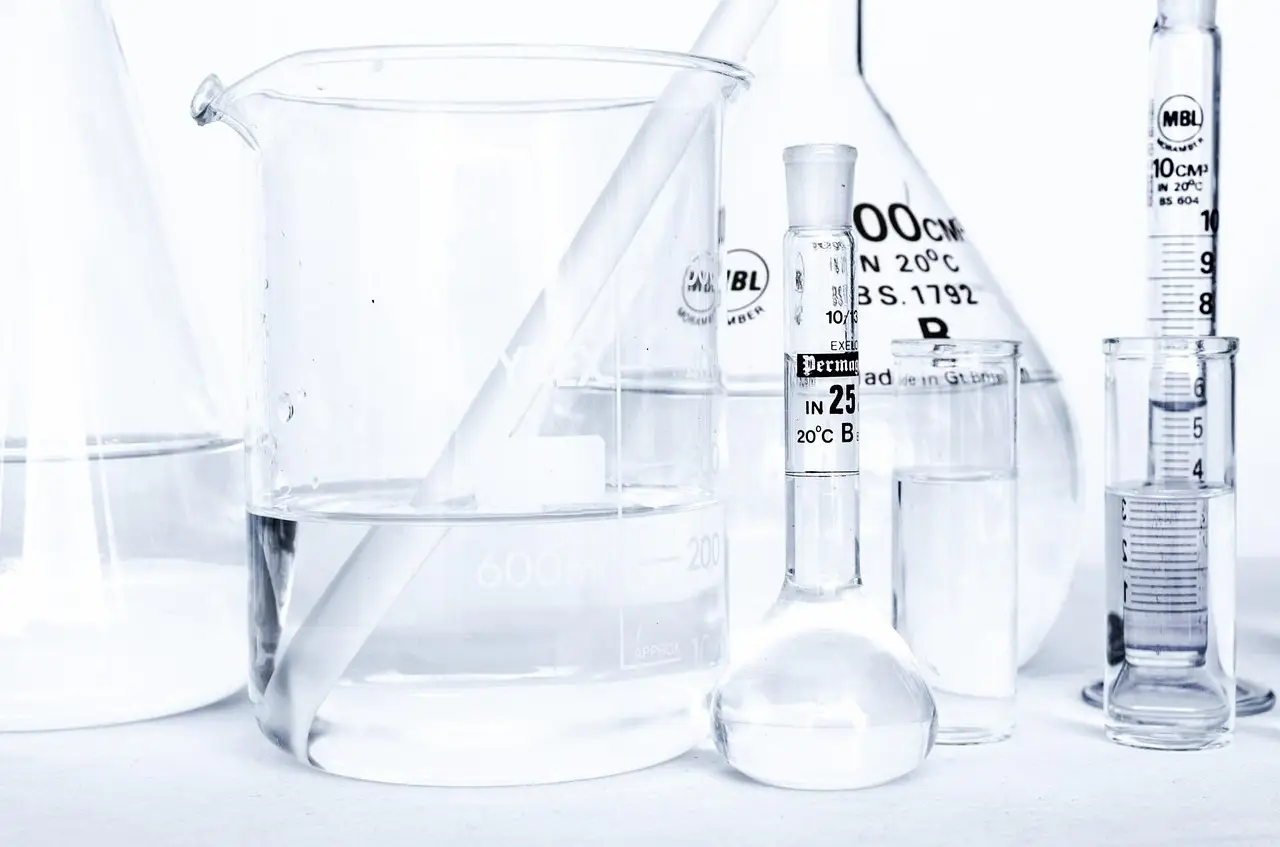
Up to $7.1 million in prize money is on offer from the National Institutes of Health and NASA to researchers who can bring quantum-enabled sensing into drug safety testing — a competition whose submissions window opens on December 15, 2026 and closes on July 27, 2027.
The Quantum-Enabled Predictive Preclinical NAMs for Toxicity and Safety Challenge, known as QuSAFE, asks scientists to pair emerging quantum sensors with new approach methodologies (NAMs) — laboratory models that replace animal testing, such as organoids (miniature, lab-grown clusters of human tissue) and microphysiological systems (MPS), commonly called tissue-on-a-chip devices.
The challenge has two goals that sit side by side. It aims to improve how drugs are screened for toxicity before they reach human trials, and to reduce the number of animals used in that screening. It also serves NASA's Biological and Physical Sciences Division, which needs detection methods that work beyond traditional laboratories — a requirement that spaceflight makes urgent.
Why do current methods fall short?
Organoids and MPS can generate human-relevant data for drug development and safety evaluation. In principle, they offer a closer approximation of human biology than animal models. In practice, the instruments used to read them out struggle.
Conventional assays and imaging techniques are often noisy, invasive, and not sensitive enough, according to the challenge's framing. That weakness has two consequences. First, weak, early, and low-abundance biological signals — precisely the signals that might flag a safety problem before it becomes serious — can go undetected. Second, because many measurements are destructive, they destroy or alter the sample, which makes it hard to monitor dynamic biological processes unfolding over time within the same model.
Quantum-enabled sensing approaches, the agencies argue, can address both problems at once. They promise:
- ultra-high sensitivity
- improved signal-to-noise performance (the ratio between a true measurement and the background interference obscuring it)
- nanoscale resolution
Together, these properties could overcome detection and measurement limitations that today's approaches cannot reach — reading faint signals from living tissue without damaging it, and tracking the same sample continuously rather than at a single destructive endpoint.
What does the challenge actually fund?
QuSAFE is a prize competition, not a grant programme. The $7.1 million purse is distributed to winning teams rather than awarded as research funding. The challenge leverages recent advances in the sensor-development research communities, drawing on progress in quantum measurement and applying it to a preclinical problem.
Full registration details, rules, and eligibility criteria are available at the challenge's official site, qusafechallenge.com. The submission period runs for a little over seven months, from December 15, 2026 to July 27, 2027.
Why is NASA involved?
The pairing of a biomedical agency with a space agency is less odd than it first appears. The challenge directly supports NASA's Biological and Physical Sciences Division, which funds research on how living systems and physical processes behave in space — and which faces a shortage of advanced detection methods that function outside conventional, well-equipped ground laboratories.
A sensor that can detect faint biological signals from an organoid, non-invasively, is the same instrument whether the organoid sits in a pharmaceutical laboratory or in an orbital research platform. By pushing sensor technology toward that threshold, the challenge enhances NASA's space exploration capabilities while benefiting science both in space and on Earth, the agency says.
For the drug safety field, the stakes are straightforward. Better instruments mean earlier detection of toxicity, fewer animals consumed in preclinical testing, and human-relevant data from the start — a rare alignment of an agency mandate, a technology bet, and a prize cheque.
The clock starts on December 15, 2026.
via science.nasa.gov (Original)
More from Priya Raman
Show full bio
Senior reporter covering people, launches and day-to-day practice in general science news at SciBeat.
280 articles