Plate Nº 65 · recorded October 10, 2026
Neuroscience & MindReported finding
Northwestern scientists pinpoint brain cells behind cannabis anxiety
Northwestern scientists have identified, for the first time, a cluster of somatostatin neurons in the central amygdala that drives cannabis-induced anxiety in mice, especially under stress.
By Elena Vasquez3 min read502 words
In brief
- Published in Nature Communications in 2026 (DOI: 10.1038/s41467-026-77957-4)
- Identified somatostatin neurons in the central amygdala as the cells driving cannabis-induced anxiety in mice
- Researchers tested several doses of a synthetic cannabinoid alongside fox urine odor as a predator threat
- Genetic silencing of somatostatin neurons reversed the anxious behavior in drugged mice
- Cannabis use and related emergency department visits have both risen steadily in the U.S. in recent years
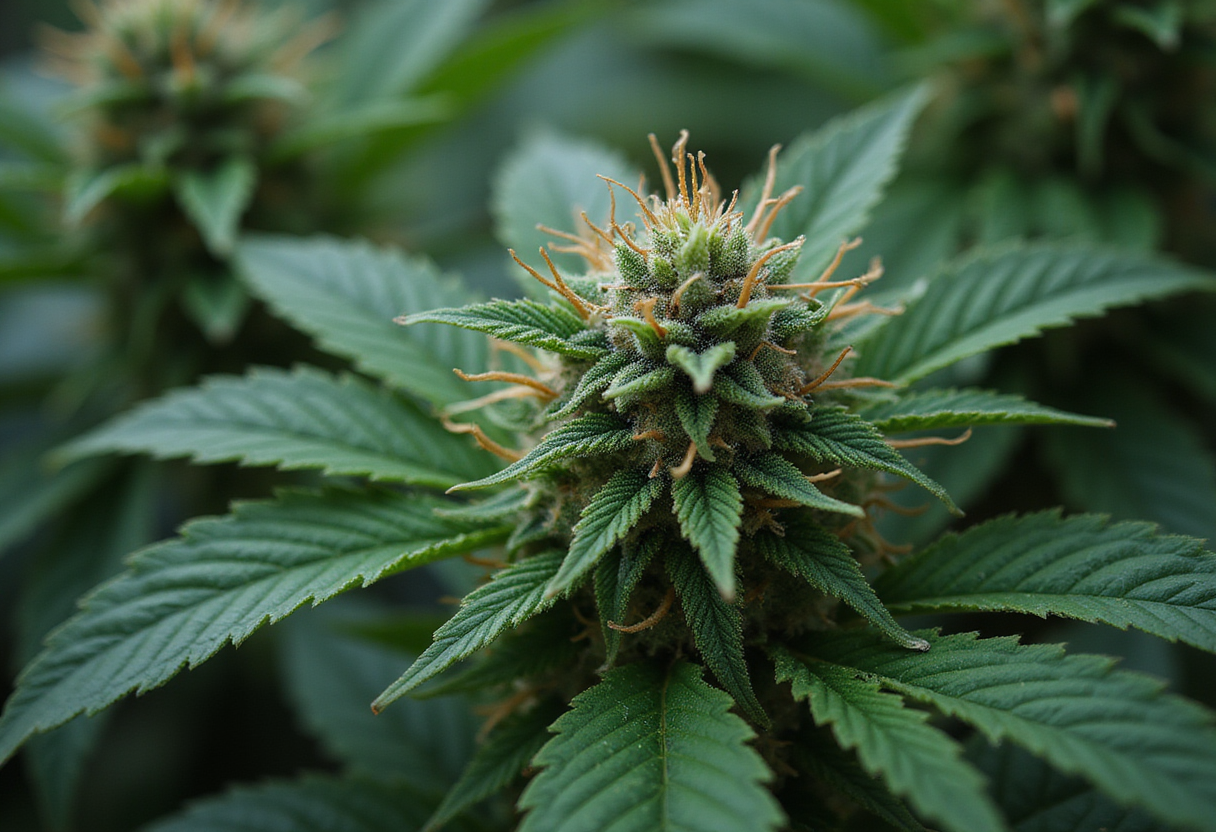
Northwestern University scientists have, for the first time, identified a small cluster of somatostatin neurons in the brain's central amygdala that drives anxious behavior after exposure to cannabinoid drugs — the class of substances that includes THC, cannabis's main psychoactive ingredient.
The work, conducted in mice, was published in Nature Communications.
What did the experiments show?
The researchers gave mice either a placebo or a synthetic cannabinoid before exposing them to fox urine odor, a scent the animals instinctively treat as a predator warning.
Mice that received the drug froze more often and spent less time investigating the odor — standard rodent signs of anxiety. When the team genetically silenced the somatostatin neurons, those anxious behaviors eased. The drugged mice no longer avoided the predator scent as strongly.
How did the team watch the brain in real time?
- They implanted miniature microscopes in the mice's brains to record neural activity during the odor test.
- They ran separate brain-tissue experiments to map how the drug altered signaling between neurons.
- They tested several doses of the synthetic cannabinoid to compare behavior across intensities.
The drug, the scientists found, weakened the brain's natural "brake" on somatostatin neurons, letting those cells fire more than usual.
What does the lead scientist say?
Dr. Sachin Patel, the study's senior author and chair of psychiatry and behavioral sciences at Northwestern University Feinberg School of Medicine, framed the findings in everyday terms:
"The results of this study could explain why a good trip can turn bad pretty quickly if people consume too much cannabis or the situation they are in turns stressful or scary."
Patel described the underlying mechanism plainly: "Higher doses of cannabinoids and environmental stress worked together to synergistically release the 'brake' on the central amygdala, which in turn drove excessive anxiety."
Why might this research matter?
Cannabis use in the U.S. has risen steadily in recent years, and emergency department visits linked to the drug's adverse effects have grown alongside it. Earlier studies have tied cannabis use to a higher long-term risk of anxiety disorders. Globally, anxiety and mood disorders have also been climbing.
"Understanding how cannabis affects brain function to generate its psychoactive effects could ultimately reveal new ways to counteract negative consequences should they arise in some people," Patel said.
He also pointed to a broader possibility. "Suppressing the activity of somatostatin neurons in the central amygdala could represent a final pathway for reducing anxiety symptoms, not just in the context of cannabis side effects," he explained.
What are the limits of the work?
- The experiments used mice, whose brains differ from human brains in important ways.
- Researchers tested one synthetic cannabinoid, not whole-plant cannabis, which contains dozens of active compounds.
- The mechanism is preliminary: genetic silencing reversed anxious behavior in mice, but translating that to a human treatment would take years of additional study.
Publication details
Cannabinoid Modulation of Central Amygdala Population Dynamics During Threat Investigation, Nature Communications (2026). DOI: 10.1038/s41467-026-77957-4
via Medical Xpress (Source)
More from Elena Vasquez
Nearby plates
- Rutgers study: fear boundaries form in early brain sensory circuits
- Single Magic Mushroom Dose Can Anatomically Change the Brain
- Mouse Study Maps a Brain Circuit That Tunes Stress Responses
- Quitting Alcohol May Prime the Brain for Relapse, Mouse Study Finds
- Brain 'Prediction' Signals Are Clocks, Not Anticipation, Mouse Study Finds