Recorded November 20, 2026
Biology & EvolutionReported finding
One Protein Family Lets Microbes Make Drugs Without Self-Harm
Michigan researchers found DnrV, a protein that shields Streptomyces from toxic byproducts while boosting doxorubicin production — and a 40,000-protein REACT family that could transform natural-product drug discovery.
By Marcus Bennett4 min read764 words
In brief
- The study, published in Science (2026), identified the DnrV protein that protects Streptomyces while boosting doxorubicin production.
- The team uncovered a family of more than 40,000 REACT proteins across plants, bacteria and fungi.
- About half of all pharmaceuticals on the market originate from natural compounds made by microorganisms.
- REACT proteins can serve as genetic markers to mine genomes for undiscovered anticancer and antimicrobial compounds.
- DOI: 10.1126/science.aee2641
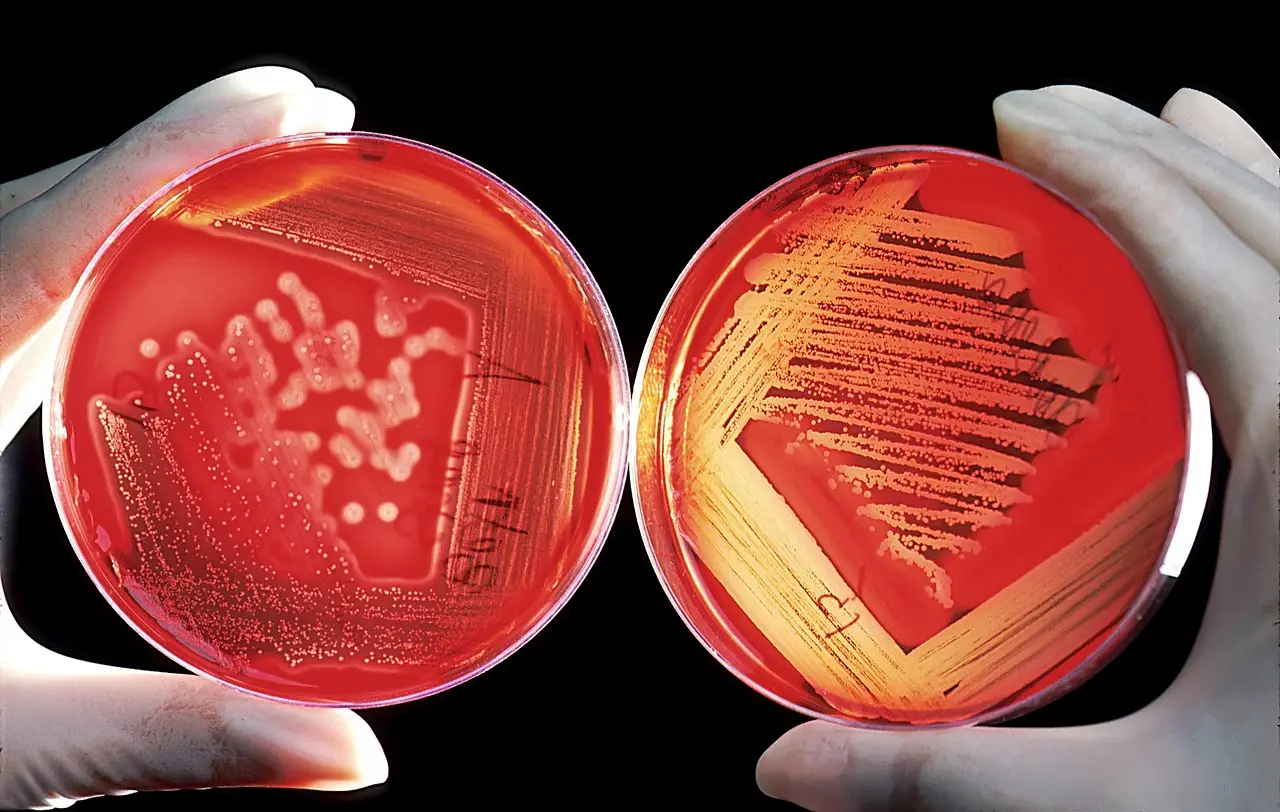
A single protein called DnrV does three jobs at once — it shields bacteria from toxic byproducts, preserves an anticancer drug molecule, and speeds up the very reaction that makes the drug. That finding, published in Science on 2026 by researchers at the University of Michigan, has now been generalized into a family of more than 40,000 proteins that researchers have named REACT.
The discovery matters because roughly half of all pharmaceuticals on the market trace their origins to natural compounds made by microscopic organisms such as bacteria and fungi. A mechanism that explains how those organisms survive their own potent chemistry gives drug researchers a new genetic marker for finding undiscovered compounds and a new tool for building better ones.
How did the paradox surface?
The starting point was doxorubicin, a widely used anticancer drug produced by Streptomyces bacteria. The final step in the bacterial manufacturing process requires an enzyme called CYP450 to convert a starting compound into the finished drug. CYP450 enzymes are proteins that drive chemical reactions which traditional lab chemistry struggles to replicate.
While trying to coax the bacteria into producing doxorubicin more efficiently, the team in David Sherman's lab at the U-M Life Sciences Institute noticed something odd: the conditions the CYP450 enzyme needed to function were also degrading the doxorubicin molecule itself.
"We saw this paradox that the organism that produces this anticancer drug is doing so under conditions that can also lead to destruction of the drug," said Sherman, senior author of the study. "And so we knew there must be something really interesting happening in the natural system that allowed the bacteria to overcome this paradox."
What does the DnrV protein actually do?
The researchers analyzed the gene cluster in Streptomyces responsible for making doxorubicin and found that a gene called DnrV, sitting directly next to the CYP450 gene, was essential for preserving the drug molecule. Reactive oxygen species — highly unstable molecules that can cause genetic mutations and damage cellular function — are normal byproducts of CYP450-driven reactions. DnrV protects the organism against them.
But the protein went further than passive defense.
"We were able to demonstrate that DnrV has this multifunctional role, where it protects the organism against ROS. But the most surprising aspect is its third function, which is that this protein was actually enhancing the function of the CYP450 enzyme, leading to a more efficient reaction," said Sherman, who is also a professor of medicinal chemistry at the College of Pharmacy and holds appointments in microbiology and immunology, and chemistry.
In short: one protein strengthens the reaction that makes the drug, mops up the dangerous byproducts, and keeps the finished molecule intact.
How big is the REACT family?
Through additional bioinformatic and genetic analyses, the team uncovered more than 40,000 proteins performing similar functions across plants, bacteria and fungi. They named the family REACT — short for REdox-Associated CytoToxin binding.
"It felt a bit like unraveling a ball of yarn," said Hannah Boesger, a graduate student in the Sherman lab and first author of the study. "Our efforts to overcome this one doxorubicin paradox led to the discovery of this huge family of REACT proteins that protect both the microorganisms and the molecules they are creating."
What changes for drug discovery?
For practitioners, the finding offers two practical handles:
- A search marker. Researchers can now mine the genomes of other organisms for gene clusters containing a REACT protein, flagging those likely to produce compounds with anticancer or antimicrobial activity. "Now we can begin to mine the genomes of other organisms for gene clusters that contain a REACT protein," Sherman said.
- An engineering tool. Pairing REACT proteins with P450 enzymes in engineered systems could unlock new reactions and build novel compounds with improved pharmaceutical properties. "P450 enzymes enable reactions that traditional chemical approaches cannot readily perform, and REACT proteins appear to enhance P450 activity," said Sean Newmister, a research scientist and senior author on the study.
The results remain early-stage: the mechanism has been demonstrated in one bacterial system and extrapolated through computational analysis, and the engineered applications are prospective. Study authors also include Emma Fang, Ralph Harte and Areeba Momin of U-M; Rongbin Wang, Arina Koroleva and Mikko Metsä-Ketelä of the University of Turku, Finland; and Taylan Tunckanat and Sean Elliott of Boston University.
The paper is Hannah A. Boesger et al., Balancing redox-mediated cytotoxicity and catalysis in natural product biosynthesis, Science (2026), DOI: 10.1126/science.aee2641.
One protein solved a paradox; 40,000 relatives may now reshape how we find nature's next drugs.
via phys.org/rss-feed/ (Source)
More from Marcus Bennett
Show full bio
News editor covering regulation, policy and their impact on general science news at SciBeat.
584 articles
Nearby plates
- DnrV protein shields doxorubicin from harmful reaction byproducts
- Evolved Enzymes Build TB Antibiotic Ingredient Without the Waste
- How Oxford researchers caught penicillin being built — atom by atom
- AI Predicts Protein Structures to Speed 'Molecular Glue' Drug Discovery
- Scientists identify first PLP-dependent tRNA-modifying enzyme