Plate Nº 33 · recorded September 29, 2026
Neuroscience & MindReported finding
OpenFISH Maps Genes and Metabolites in One Tissue Slice
A low-cost imaging platform called OpenFISH reads gene activity and metabolites from a single tissue section, cutting costs by about 95% and revealing cell-specific changes in Alzheimer's mice.
By James Calloway4 min read719 words
In brief
- OpenFISH cuts the cost of imaging-based spatial transcriptomics by about 95% compared with leading commercial platforms.
- The platform integrates spatial transcriptomics and MALDI-MSI metabolomics on the same tissue section, avoiding problems of comparing adjacent serial slices.
- In 5xFAD Alzheimer's mice, microglia showed the strongest metabolic changes, with several cell-type-associated metabolites elevated relative to healthy controls.
- The study is published in Neuron (2026), DOI: 10.1016/j.neuron.2026.09.007.
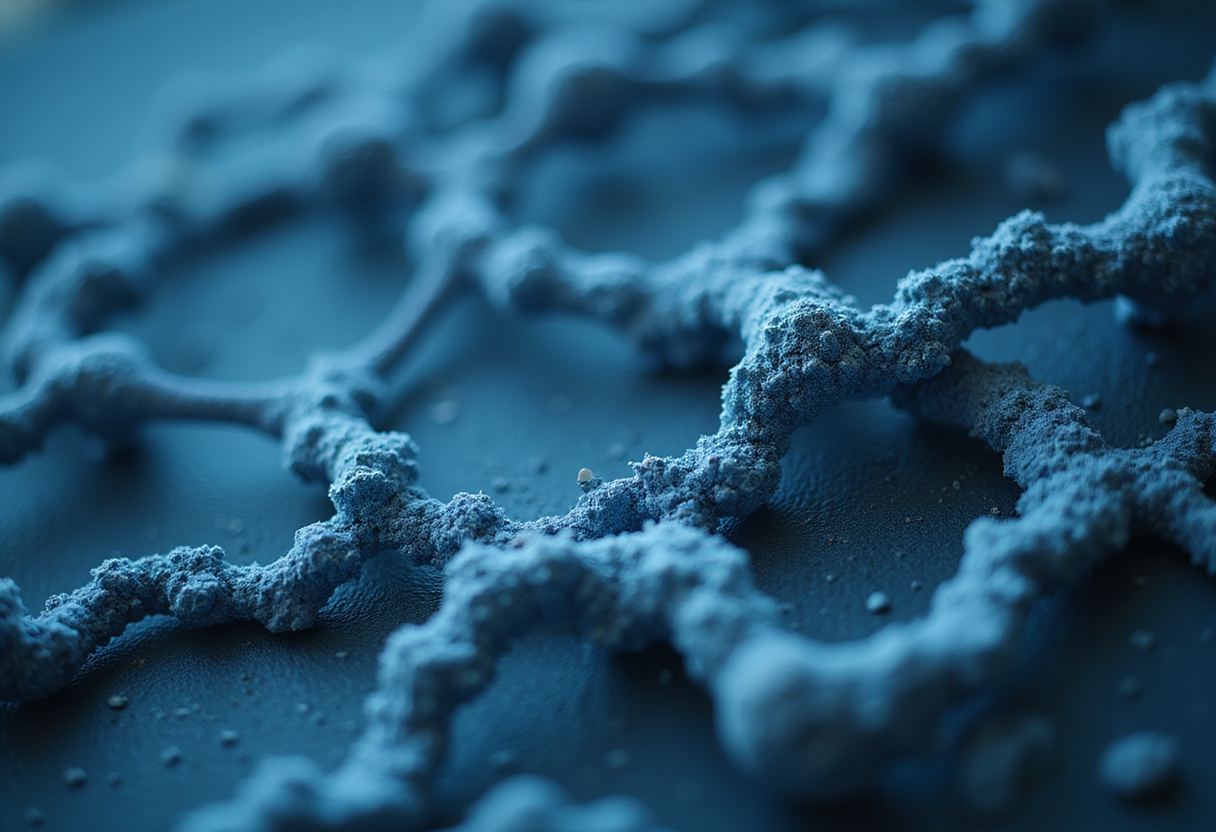
Researchers have built an open, low-cost platform that maps gene activity and small molecules in the same tissue section — something existing technologies struggle to do, and often at a price many laboratories cannot afford.
The platform, called OpenFISH, combines two methods that are usually kept separate. Spatial transcriptomics shows which genes are switched on, and where, inside a tissue. Spatial metabolomics does the same for metabolites — the small molecules that cells produce and consume as they go about their work. Published in Neuron and led by Lihui Duan, a professor at the Institute of Genetics and Developmental Biology of the Chinese Academy of Sciences, the study addresses two persistent problems in the field: high cost and the difficulty of pairing the two techniques on a single sample.
Why one layer is not enough
A biological system works a bit like a multistory building. Information flows from genes to transcripts, then to proteins and metabolites, and finally to the visible characteristics of an organism — and every floor communicates with the others. Measuring only one layer can miss both the full picture and the connections between floors.
Scientists can now detect molecular features in tissues at single-cell resolution, but imaging-based spatial transcriptomics remains expensive. Pairing it with the leading untargeted metabolomics method, a laser-based technique called MALDI mass spectrometry imaging (MALDI-MSI), adds a further complication: the two approaches are typically run on adjacent serial sections, and the inherent differences between two neighboring slices can muddy the interpretation of the data.
Cutting costs without microfluidics
The OpenFISH team tackled the cost problem with a modular probe design that reduces the expense of synthesizing probes — the labeled molecules that bind to specific gene transcripts and make them visible. A simple coding system for genes eliminates the need for a microfluidic device, the expensive hardware that many competing platforms rely on to deliver reagents to the sample. The researchers also streamlined the experimental procedure so that the wet-lab work takes no more than 13 hours.
A standard 20× widefield fluorescence microscope is enough to capture clear signals from the tissue. Taken together, these choices reduce the total cost of the platform by roughly 95% compared with leading commercial systems, according to the study.
Making two measurements on one slice
To read both gene activity and metabolites from the same section, the researchers modified conductive glass slides for MALDI-MSI. They embedded the tissue in polyacrylamide gel, then digested proteins and removed lipids — processing steps that would normally destroy the delicate transcript signals. Even after the harsh laser treatment used in mass spectrometry imaging, the OpenFISH signals remained readily detectable, and ion feature signals and transcript detection were barely affected by the integration.
With this combined pipeline, the team identified metabolites associated with specific cell types in mouse brain cells. Merging the two data types also improved the anatomical detail they could resolve.
From inflammation to Alzheimer's mice
The researchers put OpenFISH through several neuroscience tests. In one, they examined transposable elements — sometimes called "jumping genes" — during inflammation, and saw reproducible increases in specific cell types. That pattern, they report, implicates these elements as active drivers or modulators of neuroinflammatory pathways.
In another application, they studied mice lacking the Reln gene. Beyond the anatomical changes already known to result from this knockout, the team observed a decrease in D1-type inhibitory striatal neurons, a population of nerve cells in a brain region involved in movement and reward.
Finally, the researchers applied the combined pipeline to 5xFAD mice, a standard model of Alzheimer's disease. Microglia — the brain's immune cells — showed the strongest changes in these mice, and multiple metabolites associated with specific cell types were elevated compared with healthy controls.
These early applications suggest the platform can help untangle how different molecular layers interact in disease, though the findings remain preliminary demonstrations in animal models rather than confirmed disease mechanisms. Because the system is open and inexpensive, the researchers say, it could make combined gene-and-metabolite mapping practical for laboratories that previously could not afford it — potentially widening the community of scientists able to study tissues one cell, and one molecule, at a time.
Publication details: OpenFISH enables same-section spatial transcriptomics and MALDI–MSI integration, Neuron (2026). DOI: 10.1016/j.neuron.2026.09.007.
via Medical Xpress (Source)