Plate Nº 97 · recorded November 16, 2026
Biology & EvolutionReported finding
Ranavirus outbreaks cut monkey frog population by 83% in Brazil
Ranavirus outbreaks killed hundreds of tadpoles and cut monkey frog reproduction by 83% in Brazil's Atlantic Forest — the first proven wild case in South America.
By Elena Vasquez5 min read978 words
In brief
- Ranavirus outbreaks reduced monkey frog reproduction by 83% at a pond in Santa Catarina, Brazil
- 324 dead tadpoles were found across three outbreaks between January 2024 and March 2026
- 88.6% of dead monkey frogs tested positive for ranavirus, with nearly 10 billion viral copies per microliter
- Outbreak risk rose sharply when air humidity dropped from 90% to 65% two weeks before die-offs
- Study published in Biodiversity and Conservation (2026), DOI 10.1007/s10531-026-03433-6
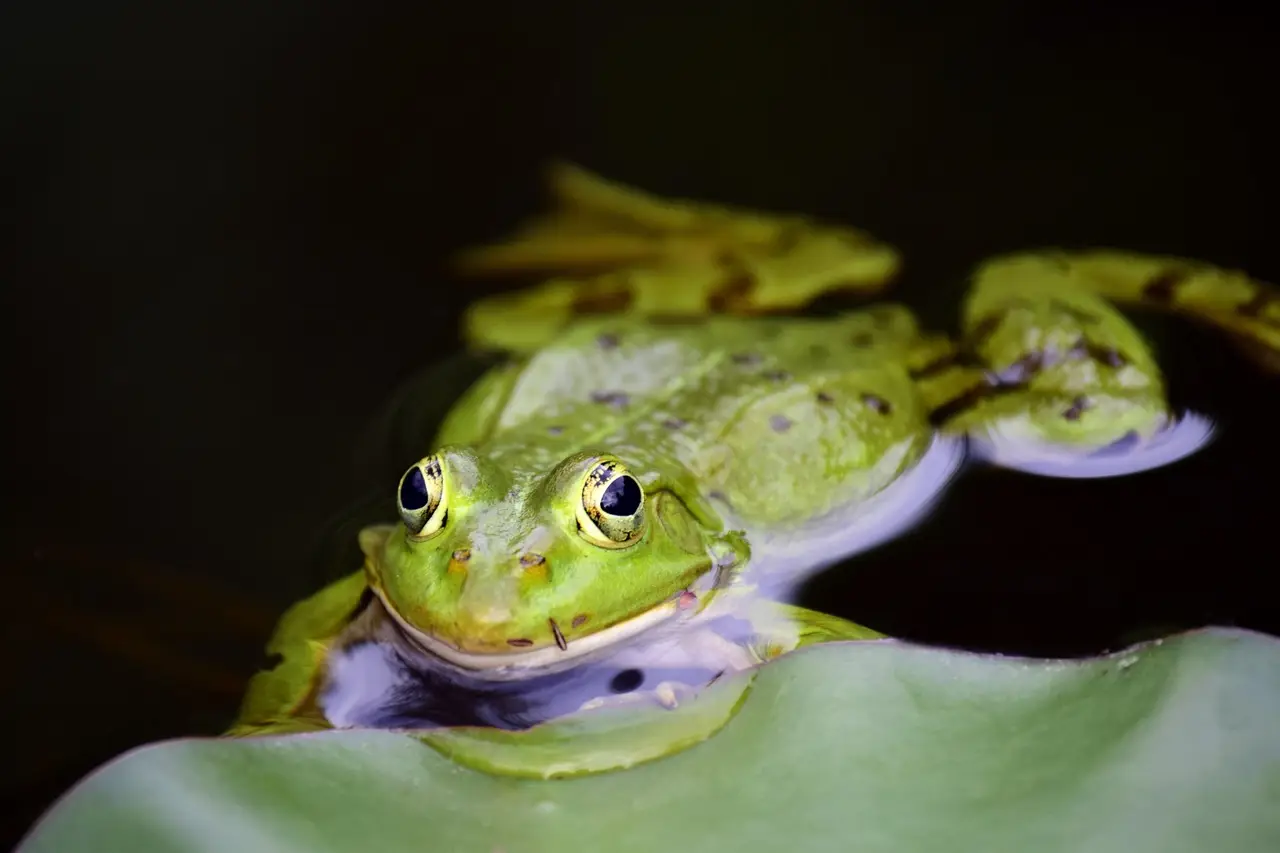
A lethal virus slashed reproduction in a monkey frog population by 83% at a reserve in Brazil's Atlantic Forest. That's the headline figure from a new study in the journal Biodiversity and Conservation, which provides the first robust proof that ranavirus — a pathogen that also infects reptiles and fish — can collapse wild amphibian populations in South America.
Researchers documented at least three recurring outbreaks at a single pond in the Rã-Bugio Sanctuary Private Natural Heritage Reserve, in the municipality of Guaramirim, Santa Catarina. The virus killed tadpoles in large numbers and drove the monkey frog (Phyllomedusa distincta) population down to a fraction of its historical size.
"Despite several suspected deaths documented in the Americas, this is the first time that ranavirus has been proven to be the cause of death in a native species through histological analysis of tissue samples and viruses isolated from the animals' livers," said Aline Fonseca, who conducted the study as part of her doctoral research at the Federal University of Paraná (UFPR).
What happened at the pond?
The first mass mortality event struck in January 2024. Two more followed: one between November 2024 and January 2025, and another between November 2025 and March 2026.
In total, researchers found 324 dead tadpoles. Of those, 315 were monkey frogs and nine were Bischoff's tree frogs (Boana bischoffi). The numbers on infection were stark:
- 279 of the monkey frogs — 88.6% — tested positive for ranavirus.
- Eight of the Bischoff's tree frogs, or 88.9%, carried the virus.
- Viral load in monkey frogs reached nearly 10 billion copies per microliter of sample.
- In Bischoff's tree frogs, the load was about 2 billion copies per microliter.
The Bischoff's tree frog death toll was too small to count as a mass die-off on its own. The monkey frogs were the clear victims.
To confirm the clinical picture, researchers examined the livers of 13 tadpoles histologically — a technique that uses a microscope to inspect tissue and cellular damage. The lesions they found confirmed the severity of the infection.
How does the disease kill?
In tadpoles, the infection moves fast and destroys tissue. It causes necrosis — the death of cells — in vital organs such as the liver. Visible signs include abdominal swelling (edema), extreme redness, ulcers and multiple hemorrhages, which can occur inside the animals' eyes.
Ranaviruses are no strangers to Brazil's amphibian world. They commonly infect bullfrogs (Aquarana catesbeiana) on commercial farms and in the wild without causing disease. But over recent decades, reports have increased of suspected mass die-offs among native species in North and South America. Researchers and environmentalists worry that other virus-driven mortality events are happening unnoticed.
How do we know the population fell 83%?
The decline showed up in one of the longest-running amphibian datasets in the region. Germano Woehl Jr. and Elza Nishimura Woehl of the Rã-Bugio Institute for Biodiversity Conservation, both study authors, have monitored the lagoon continuously since 1999.
During the breeding season, June through February, researchers count egg masses around the pond every day. Females deposit eggs on leaves, then fold the leaves around them to keep them from drying out. When the eggs hatch, the tadpoles drop straight into the water.
From August 2025 to February 2026, just after the mass die-offs, the number of egg masses was far below counts from the same months between 1999 and 2004. That comparison produced the 83% decline estimate.
Why do outbreaks happen in dry spells?
The team compiled climate data from two weeks before and during the die-offs. No single factor matched the virus's impact.
"We performed statistical analyses to identify environmental and climatic changes that could have contributed to the deaths, but no factor had as significant an impact on the population decline as ranavirus," said Karla Campião, a UFPR professor who advised Fonseca's doctoral work.
Still, one pattern stood out. When air humidity dropped from 90% to 65% in the two weeks before a die-off, outbreak risk rose sharply.
"The virus is likely present in the environment at all times without causing disease, but low humidity may cause it to increase its own replication and trigger an outbreak," Fonseca said. "It's also known that amphibians' immune systems can be compromised at low humidity levels, which facilitates infection."
There's a simpler mechanism too: less water in the pond crowds tadpoles into a smaller area, which makes it easier for the virus to pass from one animal to the next.
What comes next?
Monitoring at the Rã-Bugio Sanctuary continues. UFPR researchers plan to collect samples in nearby areas to gauge how widespread the virus is.
"This virus could also pose a significant threat to amphibian conservation," said Luís Felipe Toledo, a professor at the Institute of Biology at the State University of Campinas (IB-UNICAMP), who coordinates the project behind the study. "For more than a decade, we've been studying the chytrid fungus as a cause of amphibian mortality and extinction. But this virus, which is already widespread in the Atlantic Forest, may be doing the same."
Toledo's group recently found that the chytrid fungus (Batrachochytrium dendrobatidis) was infecting Brazilian amphibians as early as 1916 — before the bullfrog was introduced to the country and was long assumed to be the source. He wants museum-held amphibian specimens examined to see whether ranavirus has a similar hidden history.
"Perhaps the ranavirus has also been here for a long time. It remains to be seen what changed for it to become a threat," Toledo said.
The findings are preliminary in scope — one pond, one reserve — but they mark the first confirmed case of its kind in South America. The takeaway: a virus long known from frog farms is now killing wild amphibians in the Atlantic Forest, and dry weather makes it worse.
via phys.org/rss-feed/ (Source)
More from Elena Vasquez
Show full bio
Correspondent covering money, funding and market shifts around general science news at SciBeat.
451 articles
Nearby plates
- Museum Frogs Solve a 50-Year Mystery of Brazil's Vanishing Amphibians
- Yosemite Toads Catch Deadly Fungus in Their Winter Burrows, Study Finds
- Eel Bites Spread Herpesvirus, Study Finds — Upending Fish Virology
- Climate Refuges Could Save Panama's Frogs from Deadly Chytrid Fungus
- DRC Ebola outbreak reaches 10,668 cases and 5,198 deaths