Plate Nº 33 · recorded October 28, 2026
Health & Medicine ResearchReported finding
Snake-Inspired Soft Robot Crawls Deep Into the Small Intestine
MIT engineers built a snake-like soft robot that crawled 6.5 feet through the small intestine in animal tests, imaging tissue, spraying drugs and taking biopsies.
By James Calloway4 min read783 words
In brief
- MIT's soft robotic enteroscope traveled about 6.5 feet through the small intestine in animal studies.
- The study appears in Science Robotics, with results published today.
- The human small intestine is over 20 feet long and about an inch in diameter.
- The robot's kirigami-inspired sleeves pop out 3D needles that grip slippery intestinal tissue like snake scales.
- Current diagnosis relies on double balloon enteroscopy, a slow and laborious procedure.
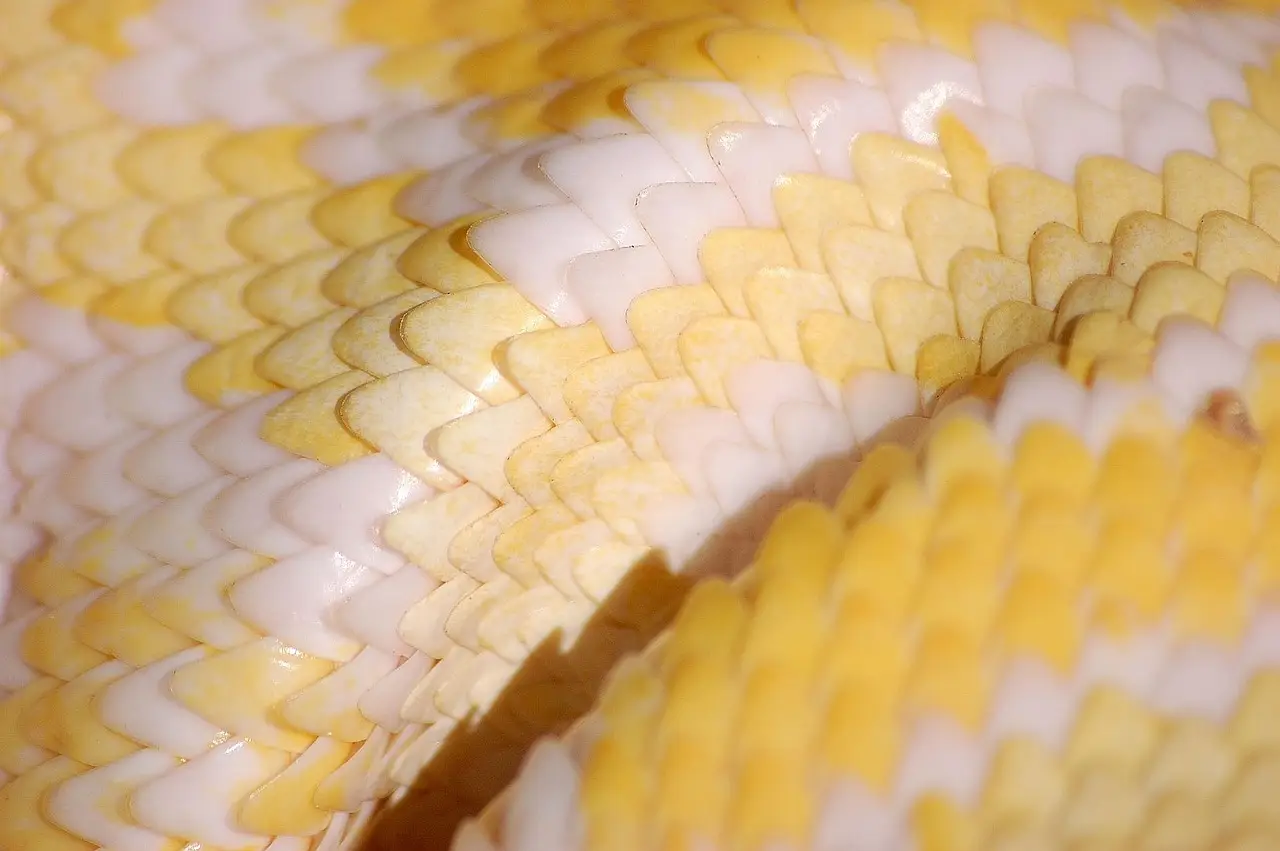
A snake-inspired soft robot traveled about six and a half feet through the small intestine in animal studies, MIT engineers report today in Science Robotics. That may not sound far, but the small intestine runs more than 20 feet, is roughly an inch wide, and sits deep inside the body — which is exactly why doctors have struggled to reach it.
The device is a robotic enteroscope: a tube-like machine that, like the endoscopes used in the colon or stomach, can carry tools for imaging, drug delivery and biopsy. But unlike conventional scopes, it propels itself, borrowing its gait from a snake and its grip from the reptile's scaly skin.
Why does the small intestine need a robot at all?
Bleeding, lesions and blockages are the most common problems doctors need to evaluate there. Right now, the only way to diagnose them is a procedure called double balloon enteroscopy, in which a clinician alternately inflates and deflates two balloons to inch a scope through the tract. It works. It is also slow and laborious.
"The fundamental challenge that we're trying to overcome is how to evaluate that 20-to-25-foot segment of the small intestine in a way that can be more automated," says Giovanni Traverso, the study's senior author, a professor of mechanical engineering at MIT, a gastroenterologist at Brigham and Women's Hospital and an associate member of the Broad Institute of MIT and Harvard.
"When we evaluate the small intestine, we do it for either diagnosis or treatment. If we find a little polyp that needs to be removed, this robot allows us to take a biopsy or remove it," Traverso adds.
How does a robot slither?
A snake steers by contracting muscles on one side of its body, then the other. The MIT team copied that trick with multifunctional actuators — soft devices that drive the robot's motion. Each actuator contains four chambers, and inflating them in different combinations makes the tube extend or bend in any direction.
"By tuning the amount of air that goes into these chambers, you can tune the direction that the robot is moving in," Traverso explains.
The head and tail segments carry expandable anchoring balloons that take turns inflating and deflating, pulling the robot forward. And here's the clever part: those segments wear patterned sleeves inspired by kirigami, the Japanese paper craft that cuts as well as folds. The sleeves lie flat until the balloon stretches them, at which point tiny three-dimensional needles pop out. Like snake scales, these needles grip the intestine's slippery mucosal lining.
That grip matters. "By using kirigami sleeves to enhance surface friction, the robot can generate localized tissue engagement traction for locomotion without relying on excessive stretching of the delicate small intestinal tissue," says Ahmad Mujtaba Jebran, an MIT graduate student and one of the paper's lead authors.
The other lead authors are Binbin Ying, a former MIT postdoc now at University of Texas Southwestern Medical Center, and Sahab Babaee, a former MIT research scientist. Traverso's lab has used the same kirigami approach before, in traction-boosting shoe sole coatings and in esophageal stents that temporarily lodge in place and release drugs.
What does this change for patients?
Right now, not much — and that caveat deserves emphasis. The tethered robot, which enters through the mouth or rectum and connects by cable to external controllers, has been tested only in animals. In those studies, it demonstrated a camera for imaging, a sprayer for drug delivery, and clips that can take tissue biopsies or remove polyps, all guided by a human-operated controller.
A six-and-a-half-foot crawl is also well short of the full 20-to-25-foot organ. The team says it is now improving the navigation systems and testing additional applications in the small intestine.
"We hope we can continue to move it forward to eventually develop systems that can help achieve more automated evaluation of the small intestine," Traverso says.
Eventually. That word is doing real work here. Before any human patient benefits, the robot needs better navigation, longer range and clinical trials. Still, if the approach holds up, a procedure that today demands painstaking manual balloon-pumping could one day become semi-automated — faster, easier to control, and able to diagnose and treat in a single pass.
The research drew funding from a long list of sources, including the Karl van Tassel Career Development Professorship, the MIT Department of Mechanical Engineering, Banting and NSERC postdoctoral fellowships, the UT Southwestern Medical Center Startup Fund, Samsung Semiconductor and Eurnekian Nanotechnology Graduate Student Fellowships, the Cooke Undergraduate Transfer Scholarship, and MIT's Undergraduate Research Opportunities Program.
via doi.org (Original)
More from James Calloway
Show full bio
Staff writer covering regulation, policy and their impact on general science news at SciBeat.
267 articles
Nearby plates
- Why Snake Embryos Twist Into Right-Handed Spirals: A Gut Explains It
- Noise, Not Motors: How Pig Hearts Reveal a New Way to Close Soft Valves
- MIT researchers build microfluidic tool to collect living cancer cells
- Single Cell Shrinks to a Quarter of Its Size in Milliseconds
- Kimchi bacterium more than doubles nanoplastic excretion in mice