Recorded November 20, 2026
Space & AstronomyReported finding
Voyager 1 Reaches One Light-Day From Earth, a First for Any Spacecraft
Voyager 1 reached one light-day from Earth — 26 billion km — on Nov. 18, a first for any spacecraft. Engineers are troubleshooting a data glitch and expect a fix soon.
By Elena Vasquez4 min read814 words
In brief
- Voyager 1 reached one light-day from Earth (about 16 billion miles / 26 billion km) at 5:16 a.m. EST on Nov. 18.
- On Nov. 14 the probe stopped sending science and engineering data, though its carrier signal remains strong.
- Signals now take 24 hours each way, so any diagnosis takes two days.
- It was the first Voyager press conference at JPL since 1989; the probes turn 50 in 2027.
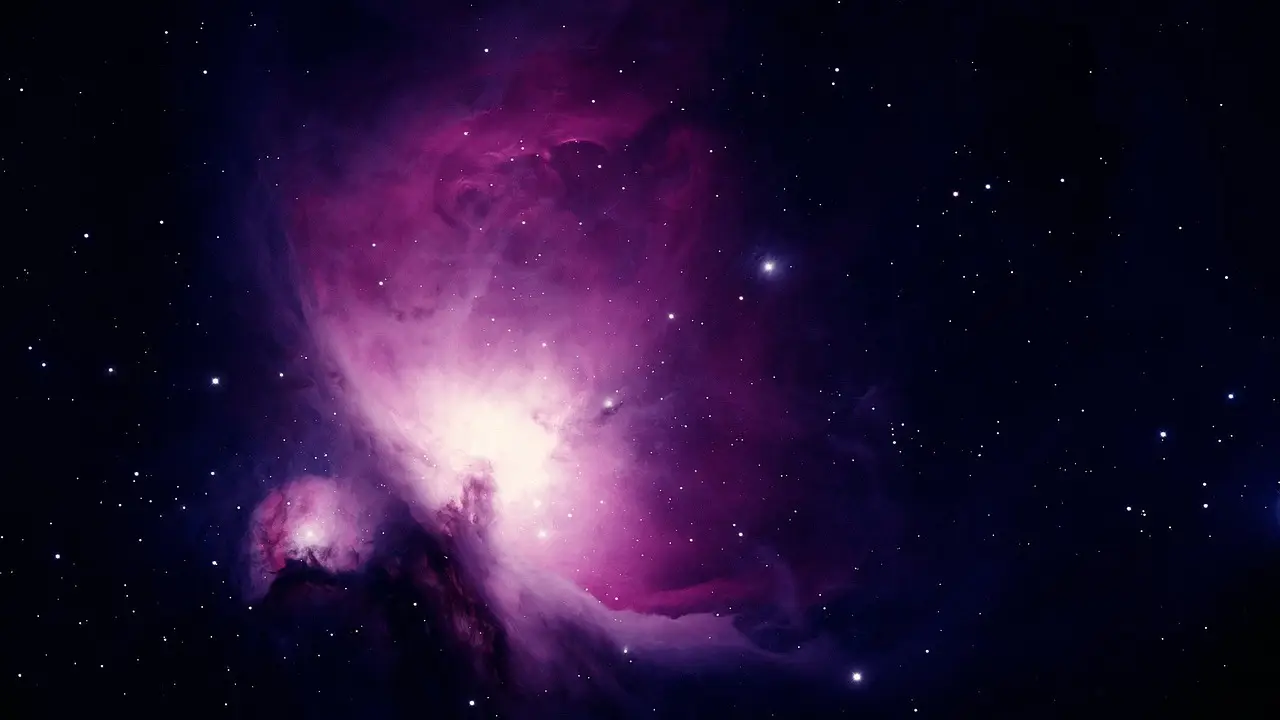
Voyager 1 is now one light-day from Earth — roughly 16 billion miles, or 26 billion kilometers — the first human-made object ever to travel that far. A radio signal now needs a full day to reach the probe, and its reply takes another day to come home.
The milestone hit at 5:16 a.m. EST (1016 GMT) on Wednesday, Nov. 18. NASA's Voyager team celebrated it Thursday at a press conference at the Jet Propulsion Laboratory in Pasadena, California — the first Voyager press event since 1989, when the probe's twin, Voyager 2, flew past Neptune.
The cheering came with a complication. On Saturday, Nov. 14, Voyager 1 stopped transmitting science and engineering data, JPL spokesperson Raquel Villanueva confirmed at the event.
What exactly went wrong?
The team still hears from the spacecraft. "We listen to each spacecraft every day," project manager Suzanne Dodd told Space.com. "We do have a very strong carrier signal. We currently don't have a frame sync, so we're not getting the science or engineering data currently."
In plain terms: the probe's radio tone reaches Earth loud and clear, but the data riding on that tone isn't decoding properly. Dodd called the anomaly "not something unseen before."
Distance makes everything slow. "[It takes] 24 hours to get the signal to the spacecraft, 24 hours for the signal to come down, so it takes two days to diagnose anything on the spacecraft," she said. "So we can't do anything fast, and the data rates are very low."
She expects a fix. "I'm confident that it won't be too long, and it will send us data back."
The likeliest culprit is old age. "These spacecraft are old," Dodd said. "All of us old people have our aches and pains, and sometimes it takes longer to stretch out your muscles and remember things, and so we are in a realm where we're going to see more anomalies with Voyager just due to the distance and the age." The probes launched in 1977 on a mission designed to last five years.
Voyager 2, meanwhile, is fine. "Voyager 2 is very healthy. It's continuing its mission. It has three scientific instruments on it," Dodd said. "Each spacecraft is basically setting a record every day for longevity or distance."
How did the team mark the moment?
Most of the team had been up all night confirming the one-light-day signal, but the room at JPL's Von Karman auditorium stayed buoyant. The event played footage of light-day celebrations from around the world — children cheering, landmarks lit gold in honor of the mission's Golden Record, the phonograph disc carrying sounds of Earth.
The videos nearly undone NASA's Nicky Fox, associate administrator for the Science Mission Directorate. "I actually thought I was going to start sobbing," she joked. "Just hearing children's voices and people saying 'We love you, Voyager,' 'Go Voyager' — it just was amazing."
NASA astronaut Jessica Watkins sent a video message from the International Space Station, 250 miles (400 km) above Earth. "Voyager 1, you have been a beacon of light, a symbol of exploration, a seeker of truth, a carrier of hope, a brave explorer, traveling further than any human hand has ever reached," Watkins said. She signed off with a weightless backflip.
Project scientist Linda Spilker, who watched the 1977 launch at the Cape, put the moment in perspective: "I never thought I would be here today, 49 years later, to celebrate Voyager's one light-day. What an incredible milestone."
Fox began her own celebrations early. On Tuesday evening, Nov. 17, she and Ann Druyan — writer, producer and widow of Carl Sagan, whose work shaped the Golden Record — lit the Empire State Building gold. "We were both so giddy with the excitement of doing it," Fox said, wearing Voyager-inspired golden nail polish crafted by her daughter.
The briefing closed with a standing ovation for the generations of mission staff in the room, whose ranks now span people in their 20s to their 90s.
What comes next?
Voyager turns 50 in 2027, and it remains an active science mission. Both probes are flying through interstellar space — territory no spacecraft has visited before.
"Every single bit of data that comes back is precious because it's unique," Fox said.
"Now we're in a region where the sun's influence is a lot different," deputy project scientist Jamie Rankin said. "We can start to understand: What is it like out past our sun? What is it like in the space between the stars?"
Fox rejected any talk of an ending. "It's never going to end," she said. "Even when we can no longer talk to Voyager, they're both going to keep going."
Even silent, the probes will keep flying. That's the plain takeaway.
via space.com (Source)
More from Elena Vasquez
Show full bio
Correspondent covering money, funding and market shifts around general science news at SciBeat.
592 articles
Nearby plates
- Voyager 1 reaches 1 light-day but stops returning science data
- Voyager 1 Nears One Light-Day From Earth, a First for Any Human Object
- Voyager 1 crosses one light-day from Earth, JPL confirms
- Voyager 1 to reach 1 light-day from Earth in November 2026
- Voyager 1 reaches 1 light-day from Earth on Nov. 18 after 49 years