Plate Nº 92 · recorded October 2, 2026
Space & AstronomyReported finding
What Spaceflight Is Teaching Scientists About Human Sleep
Astronauts see 16 sunrises a day and often sleep just 6 hours. Spaceflight research is revealing how much sleep depends on timing—and what happens when the Earth day disappears.
By James Calloway5 min read989 words
In brief
- Astronauts in orbit see about 16 sunrises and sunsets every 24 hours, yet typically sleep only 6 to 6½ hours despite 8½ hours of scheduled sleep opportunity.
- A NASA study of 14 adults found pink noise played during a four-hour daytime nap did not improve alertness or reduce sleep inertia in the first 40 minutes after waking.
- A Martian sol lasts about 24 hours 40 minutes; the CHAPEA Mars simulation crew in Houston shifted to Martian time in late September 2026 until the mission ends Oct. 31.
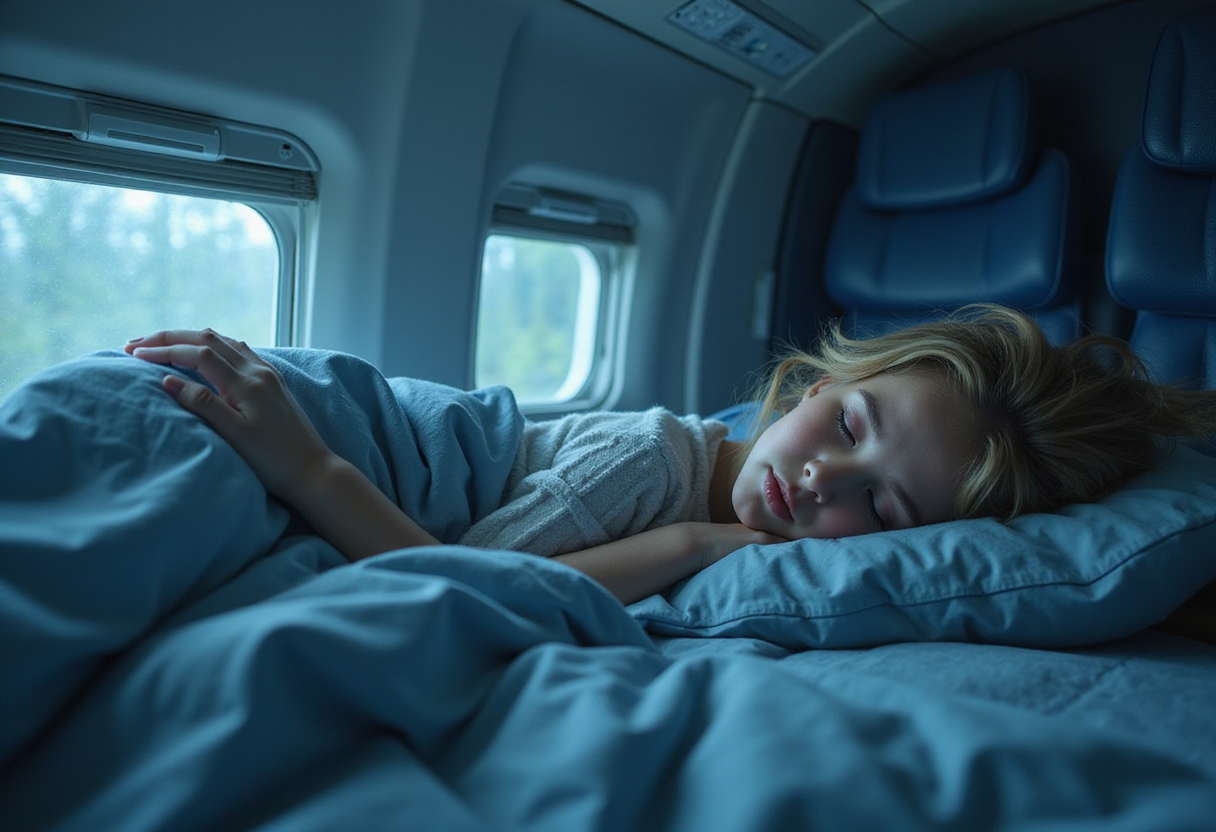
A spacecraft circles Earth once every 90 minutes. Astronauts on board see roughly 16 sunrises and 16 sunsets every 24 hours. That makes spaceflight more than an engineering challenge—it is an extraordinary natural experiment in human biology, one that reveals what happens when the environmental cues that normally regulate our sleep disappear.
On Earth, we rarely think about the signals keeping our internal clocks aligned. The sun rises, daylight shifts, darkness falls, morning returns. Our bodies evolved alongside this roughly 24-hour cycle, and light is one of the strongest signals we use to synchronize our circadian clock—the internal timekeeper that helps determine when the brain expects sleep and wakefulness. But what happens when the sun no longer provides a reliable schedule?
Two systems, sometimes in conflict
Scientists think two interacting biological systems control sleep. The first is the circadian clock. The second is sleep pressure, which gradually builds the longer we stay awake and drains away while we sleep. Usually the two work in harmony. Jet lag, shift work and spaceflight can pull them apart.
An astronaut may feel exhausted after many hours awake yet still struggle to sleep, because their circadian system insists it is daytime. Feeling tired and being biologically ready for sleep are not always the same thing. That distinction, researchers say, is one of the most important lessons spaceflight offers about how sleep actually works.
Research in chronobiology—the study of biological rhythms—and sleep science has shown that carefully guiding astronaut schedules around exercise, meals, tailored lighting and work plans can offset some of the negative effects of sleep loss and circadian disruption. Artificial lighting aboard spacecraft can be tuned to provide more appropriate cues.
But there is a catch. Giving astronauts time to sleep does not guarantee they will sleep. Space agencies traditionally schedule about 8½ hours of sleep opportunity per day of spaceflight. Yet research across different mission types suggests astronauts typically manage only about 6 to 6½ hours of actual sleep.
Night after night, that gap becomes chronic sleep restriction. Research aboard the International Space Station has linked daily sleep of six hours or less to measurable declines in vigilant attention—the ability to notice and respond reliably to important information. Where a missed signal could have serious consequences, sleep is not a comfort issue. It is part of mission safety.
Wearables on a lunar flyby
NASA's Artemis II lunar flyby mission, which flew in April 2026, offered an unusually close look at sleep in deep space. Each morning, crew members were woken by music chosen by the astronauts and their families—a morale-boosting tradition rather than a circadian treatment. One morning, American astronaut Christina Hammock Koch called out NASA for cutting off "Pink Pony Club" by Chappell Roan before the chorus.
The science happened quietly alongside the playlist. Crew members wore wrist-mounted movement and sleep monitors as part of NASA's Artemis Research for Crew Health and Readiness study, before, during and after the mission. The devices let researchers track how sleep and activity changed across training, deep-space flight and recovery on Earth, alongside measurements of cognition, behavior and team performance.
Missions like Artemis II, together with NASA's ongoing Mars simulations, give scientists a distinctive window into human sleep. Rather than treating sleep as something that simply happens when we are tired, space research shows how much sleep depends on timing.
NASA is not just observing sleep disruption—it is testing ways to prevent it. One question: can pink noise improve alertness after a nap? Pink noise is an audio signal containing all frequencies humans can hear, with lower frequencies sounding louder and higher frequencies softer. Researchers tested whether playing it through a headband during a four-hour daytime sleep opportunity would boost subsequent alertness.
The preliminary study involved 14 healthy adults. It found no difference in sleep inertia—that groggy feeling after waking—or vigilant attention between the pink-noise and control conditions during the first 40 minutes after waking. With such a small sample, the results remain tentative, but they illustrate the trial-and-error nature of countermeasure research.
The lighting trade-off
In spacecraft, engineers treat light as part of the biological life-support system. Blue-enriched white light can support alertness and help synchronize the circadian clock during scheduled waking hours. Dimmer, blue-depleted light can help prepare the brain for sleep.
This creates an unexpected engineering trade-off. Recent NASA-supported testing found that presleep lighting allowed greater melatonin production—the hormone that signals to the body it is time for sleep—but impaired color discrimination. A setting that benefits the circadian system may be unsuitable when astronauts need to identify color-coded controls, equipment or warning signals.
Caffeine poses a similar dilemma. It can protect some aspects of performance when sleep-deprived astronauts must stay alert, but studies have also found it interferes with the sleep they need to perform well the next day. In space as on Earth, caffeine can temporarily solve one problem while quietly creating the next.
Beyond Earth days
The next challenge is more fundamental: what happens when humans stop living by an Earth day altogether? A Martian "sol" lasts approximately 24 hours and 40 minutes. Those extra 40 minutes may sound trivial. For the human circadian system, they present a persistent scheduling problem.
In late September 2026, the four-person crew of NASA's yearlong CHAPEA Mars simulation, based at Johnson Space Center in Houston, Texas, was scheduled to shift from an Earth-based 24-hour schedule to the longer Martian day. The crew is expected to remain on Martian time until the mission ends on Oct. 31.
Forty minutes may sound small. But repeatedly delaying sleep and wake times means continually asking the circadian system to readjust. Future Mars explorers may face the most literal form of jet lag imaginable—not simply crossing time zones, but traveling between planetary days.
via Phys.org Space & Astronomy (Source)
More from James Calloway
Nearby plates
- Night Owls Face Higher Risk of Early Disability Retirement
- Overnight Cooling May Not Fully Protect Older Adults From Heat Waves
- Pink Noise Bursts May Boost the Brain's Nightly Wash Cycle
- Smile Mission Opens Its Eyes on Space Weather Science
- NASA Greenlights New Boeing Starliner Missions After Troubled Test Flight