Plate Nº 16 · recorded October 10, 2026
Biology & EvolutionReported finding
11,000 Bred Insects Later, New Zealand's Heaviest Bug Is Back
Fifteen years of breeding at Butterfly Creek and Auckland Zoo produced 11,000 wētāpunga for 45 releases, lifting New Zealand's heaviest insect off the Nationally Endangered list.
By Priya Raman4 min read830 words
In brief
- More than 11,000 captive-bred wētāpunga were released at 10 wild sites across 45 translocations by 2025.
- The species' status improved from Threatened—Nationally Endangered (2004) to Threatened—Nationally Increasing (2022).
- Auckland Zoo alone bred and released 8,874 wētāpunga between 2014 and 2025.
- Monitoring shows at least four wild generations born on Motuora and Tiritiri Matangi islands, confirming established populations.
- The findings are published in the New Zealand Journal of Zoology (2026), DOI: 10.1002/njz2.70061.
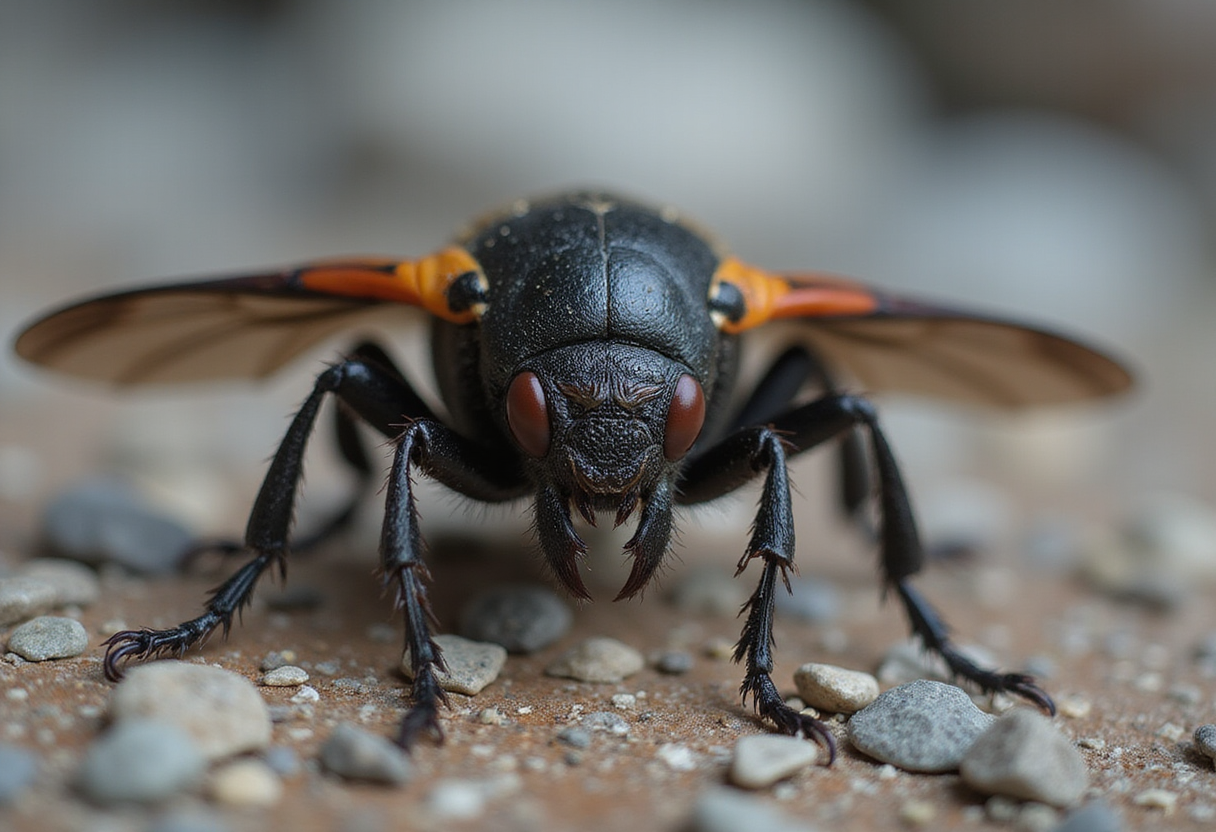
More than 11,000 zoo-bred wētāpunga — New Zealand's heaviest insect — have been released into the wild over the past 15 years, and the species' official conservation status has improved from Threatened—Nationally Endangered in 2004 to Threatened—Nationally Increasing in 2022.
The New Zealand Journal of Zoology has now officially documented the recovery program in a paper led by Dr. Chris Green, honorary research associate at the Department of Conservation (DOC). The program stands, in his words, as "one of the most comprehensive case studies of invertebrate conservation breeding, translocation and species recovery ever undertaken in Aotearoa New Zealand, perhaps the world."
Two breeding facilities — Butterfly Creek and Auckland Zoo — produced tens of thousands of wētāpunga over 15 years. That effort enabled 45 translocations, moving 11,000 insects to 10 new wild sites by 2025.
What is a wētāpunga?
The wētāpunga (Deinacrida heteracantha) is the largest of New Zealand's giant wētā and the heaviest orthopteran in the world — the insect order that includes crickets and grasshoppers. An adult can outweigh a mouse, though the source does not give exact weights.
Its story is a familiar one in New Zealand ecology. Early European settlers cleared land for farming and destroyed wētāpunga habitat. They also introduced rats, stoats and other pests. Those combined pressures wiped out every wētāpunga population except one, confined to Te Hauturu-o-Toi/Little Barrier Island, a nature reserve in the Hauraki Gulf.
By the 1990s, a DOC Threatened Wētā Recovery Plan had flagged the species as one of New Zealand's most threatened, requiring urgent action. Surveys on Little Barrier Island between 2005 and 2009 confirmed the stakes: the surviving population was too small to supply animals for direct translocations to new sites. That finding triggered the decision to breed the insects in captivity instead.
How do you rebuild a population from one island?
The program started with a small number of wētā collected on Little Barrier Island to seed a colony at Butterfly Creek, a visitor attraction near Auckland. Staff there established early husbandry and release techniques — in plain English, the methods for keeping the insects alive and healthy in captivity and setting them up in the wild.
The founding colony produced the first release animals, which went onto two Hauraki Gulf islands, Motuora and Tiritiri Matangi, in 2010 and 2011.
In 2012, Auckland Zoo joined with a second breeding colony. The zoo refined the Butterfly Creek techniques and, as the paper puts it, "industrialized" them, rearing wētā in communal nurseries at a scale that produced 8,874 insects for release between 2014 and 2025 alone.
Releases expanded to multiple predator-free islands in the Hauraki Gulf and Bay of Islands, and most recently to two mainland fenced sanctuaries north of Auckland — areas enclosed by predator-exclusion fencing.
Did the released insects actually survive?
Intensive monitoring on Motuora and Tiritiri Matangi shows at least four generations of wētāpunga have now been born on those islands. Internationally, that generational benchmark is recognized as confirmation that the species has established self-sustaining wild populations on both islands. Many of the other island populations are also well on their way to the same milestone.
That result matters because breeding and releasing animals is only half the battle. Conservationists also need evidence that released populations persist without continued human help.
Who made it work?
The paper credits a wide network of partners:
- Ngāti Manuhiri, the Māori tribe that is kaitiaki (guardian) of wētāpunga and mana whenua — the traditional tribal authority — over Little Barrier Island, where the founding insects came from. Wētāpunga are a taonga, or treasured, species for Ngāti Manuhiri, and the iwi provided ongoing support and engagement.
- Butterfly Creek and Auckland Zoo, which developed and scaled up the breeding methods.
- Community restoration groups across the upper North Island, which raised funds for the resource-hungry intensive management of the insects and helped organize releases and ongoing monitoring.
"The expertise, commitment and collaboration of many people and organizations contributed to the recovery of this iconic giant wētā," Green said.
What comes next?
Green argues that documenting the program matters beyond the wētāpunga itself. "By documenting this amazing conservation success story, we can share valuable knowledge on husbandry, release methods and population persistence," he said.
That knowledge is already being applied elsewhere. It is now informing breeding of the Māhoenui giant wētā at the Ōtorohanga Kiwi House. Green points to other candidates for similar programs, including the Canterbury knobbled weevil (Hadramphus tuberculatus) and several native stag beetle species.
As for the insect at the center of it all: "The future of wētāpunga is looking bright," Green said.
The peer-reviewed paper, by Chris Green and colleagues, appears in the New Zealand Journal of Zoology (2026), DOI: 10.1002/njz2.70061. As with any single case study, the findings describe one species and one program; the authors themselves frame it as a knowledge-sharing exercise rather than a guarantee that the same approach will work for every endangered invertebrate.
via Phys.org Biology (Source)
More from Priya Raman
Show full bio
Senior reporter covering industry trends and analytics at SciBeat.
207 articles
Nearby plates
- Over 80% of Insect Species Live in the Tropics. Science Keeps Missing Them
- Seven New Diamond Frog Species Found Under Madagascar's Forest Floor
- Aldabra's giant tortoises near 183,000 in first rigorous atoll-wide count
- Half-meter Jurassic predator rewrites mammal feeding origins
- Zoos Rarely Rearrange Collections When Species Risk Shifts