Plate Nº 67 · recorded October 10, 2026
Biology & EvolutionReported finding
Seven New Diamond Frog Species Found Under Madagascar's Forest Floor
Seven new diamond frog species raise Madagascar's Rhombophryne count to 27, after museum DNA solved a 12-year-old identification puzzle with conservation implications.
By Priya Raman4 min read725 words
In brief
- Seven new diamond frog species were described, bringing known Rhombophryne species to 27.
- The study was announced August 30, 2026, from the University of Copenhagen and published in Vertebrate Zoology.
- DNA sequencing of century-old museum specimens, including original type specimens, resolved a puzzle that lasted over 12 years.
- In March 2026, new species including Rhombophryne quentini informed protected-area proposals under Madagascar's Biodiversity 30x30 Program.
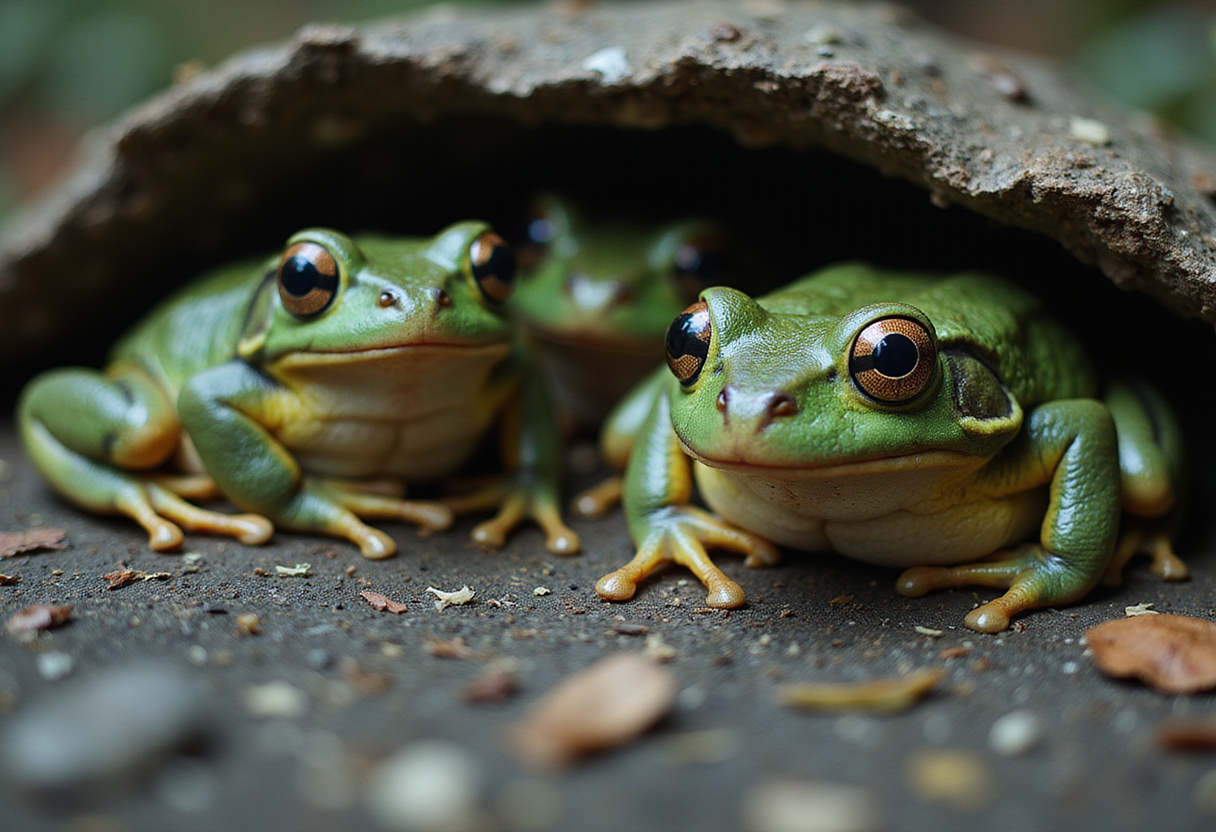
Seven new frog species have emerged from beneath Madagascar's forest floor, pushing the known count of diamond frogs in the genus Rhombophryne to 27. An international team announced the find on August 30, 2026, after solving a species-identification puzzle that had dragged on for more than twelve years.
The study, led by Dr. Mark D. Scherz, Curator of Herpetology at the Natural History Museum Denmark, appears in the journal Vertebrate Zoology. It draws on field observations, museum specimens, and DNA sequencing to sort out which frogs belong to which species — and where each of them actually lives.
"Diamond frogs have been hiding their diversity beneath our feet," Scherz said. "Many species spend most of their lives beneath the leaf litter, and even when they emerge they can look deceptively similar."
What are diamond frogs?
Diamond frogs are among Madagascar's most distinctive amphibians, and among its least studied vertebrates. Some species are extremely round and resemble the rain frogs of mainland Africa, spending much of their lives concealed in the forest floor. Others have long legs and live among moss; some are sturdier frogs adapted to life on the ground.
Their appearance adds to the confusion. Most look brown at first glance, but several species carry vivid markings — bright orange flashes or bold black-and-white patterns on the thighs and lower back — that stay hidden until the frogs move. Researchers think these markings may startle predators.
How did DNA from old museum specimens help?
The project began more than twelve years ago, when scientists kept encountering frogs that clearly represented species no one had formally described. The obstacle was older species names: researchers could not reliably match those names to the genetic lineages they found in modern specimens.
"When I started this project twelve years ago, we already knew there were several species waiting to be described, and almost every expedition to Madagascar revealed another one," Scherz said. "Untangling that puzzle took years."
The breakthrough came from museomics — DNA sequencing applied to historical museum specimens. The team compared genetic material from old collections, including the original type specimens that define species names, with DNA from newly collected frogs. They also examined external features, skeletal anatomy, and frog calls.
Together, these lines of evidence let the researchers attach historical names to the correct evolutionary lineages and clear up taxonomic confusion that had persisted for decades.
"Museum collections are far more than archives of the past — they are essential scientific resources for understanding biodiversity today," said Dr. Alice Petzold of the University of Potsdam, who led the museomics work. "By sequencing historical specimens, including the original type specimens, we were able to answer questions that have persisted for generations."
What does this mean for conservation?
Knowing which species exist, and where they live, is the foundation of biodiversity measurement and protection. That matters in Madagascar, where deforestation is rapidly fragmenting the forests these frogs call home.
Scientists still know remarkably little about many of these animals. "For many species, we still know almost nothing about their breeding biology, population sizes or ecological requirements," said co-author Dr. Andolalao Rakotoarison of the Institut d'Enseignement Supérieur de Soavinandriana Itasy in Madagascar. "Without that knowledge, it becomes much more difficult to assess their conservation status and protect them effectively."
The findings are already feeding into policy. At a protected-area planning workshop in March 2026, held under Madagascar's Biodiversity 30x30 Program, several of the newly described frogs — including Rhombophryne quentini — directly informed proposals to strengthen and expand protected areas.
The study itself grew from close cooperation among scientists and institutions in Madagascar and Europe.
Are more frogs still waiting to be found?
Almost certainly, the researchers say. Even with seven additions, they believe unnamed species remain undiscovered and undescribed across the island.
Scherz frames the new work as a beginning rather than an ending. "Every newly described species represents millions of years of unique evolutionary history," he said. "The more we learn about Madagascar's remarkable amphibians, the clearer it becomes that there is still an enormous amount left to discover."
The team's findings carry one clear caveat: seven new species described does not mean seven species fully understood. Basic biology — breeding, population sizes, ecological needs — remains unknown for many of them, and the researchers stress that effective protection depends on filling those gaps.
via dx.doi.org (Original)
More from Priya Raman
Show full bio
Senior reporter covering industry trends and analytics at SciBeat.
207 articles
Nearby plates
- Climate Refuges Could Save Panama's Frogs from Deadly Chytrid Fungus
- 11,000 Bred Insects Later, New Zealand's Heaviest Bug Is Back
- Yosemite Toads Catch Deadly Fungus in Their Winter Burrows, Study Finds
- Insects Keep Vertebrates Alive as Food, Medicine and Home Builders
- 32.2-Centimeter 'Colossogiant' Isopod From Puerto Rico Is a New Species