Plate Nº 97 · recorded November 18, 2026
Biology & EvolutionReported finding
New Flying Frog Species Lays Its Eggs in Gel, Not Foam
Rhacophorus kurniatiae, a tiny flying frog endemic to a single Sulawesi lake, is the first in its group known to lay eggs in a gelatinous mass instead of foam nests.
By Elena Vasquez3 min read601 words
In brief
- Scientists measured 28 physical traits plus DNA and calls to confirm the new species.
- Rhacophorus kurniatiae is known only from Danau Coca-Cola, a high-elevation lake in Sulawesi's Mekongga Mountains.
- It is the first Asian flying frog known to lay eggs in a jelly-like mass rather than a foam nest.
- The discovery is published in Zootaxa 5900 (4): 349-370.
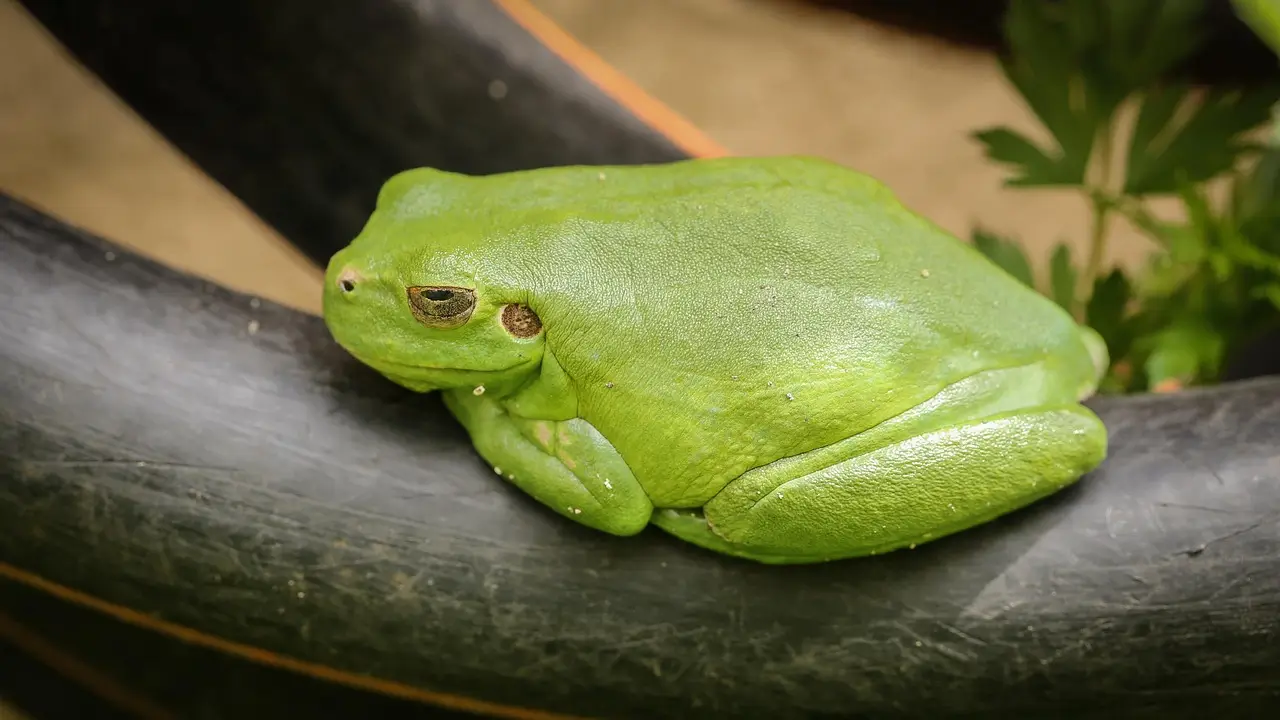
Scientists have discovered a new species of flying frog in Sulawesi that lays its eggs in a jelly-like mass — a breeding strategy no other Asian flying frog is known to use. Named Rhacophorus kurniatiae, the species is described in the journal Zootaxa in a paper by Wahyu Trilaksono and colleagues.
The frog is small enough to perch on a person's cheek. It lives in the rugged Mekongga Mountains of Southeast Sulawesi, Indonesia, and is endemic to a single high-elevation lake known as Danau Coca-Cola. That means it's found nowhere else on Earth.
"Rhacophorus kurniatiae has a different reproductive strategy from all other Asian flying frogs," said Dr. Alamsyah Elang Nusa Herlambang, a researcher at the Museum Zoologicum Bogoriense.
In short: a familiar-looking frog with a genuinely new trick.
What are flying frogs?
The genus Rhacophorus, called flying frogs or Asian flying frogs, is a group of tree-dwelling amphibians in the family Rhacophoridae. They range across South and East Asia, from India and southern China to Japan, the Philippines and the Greater Sunda Islands.
They live in tropical and subtropical forests, spending most of their lives among branches and foliage. Most are green or brown, with large eyes, slender bodies and exceptionally long toes joined by wide webs of skin. Some also carry prominent skin flaps along their limbs and bodies.
Despite the name, they don't truly fly. Several species glide between trees, using their webbed hands and feet as parachutes to slow their descent and steer through the air.
How is the new species different?
To confirm Rhacophorus kurniatiae as a separate species, the researchers measured 28 physical traits and analyzed the frogs' DNA and recorded calls.
The data showed differences from its relatives, including pointed snouts and distinctive calls. The egg-laying was the standout finding.
Related frogs build foam nests — frothy coverings that keep eggs moist while larvae develop. The new species does something else entirely. It deposits its eggs in an irregular, jelly-like mass on vegetation hanging over or near water, and both the eggs and the tadpoles develop inside that gel.
"This distinct reproductive mode may reflect ecological adaptation to ephemeral aquatic habitats and suggests a transitional or derived state within the genus," the scientists said.
Ephemeral habitats are temporary water sources that appear and disappear, such as pools that dry up. Breeding in gel may help the frog cope with those unreliable conditions.
"It's the first time we have seen Rhacophorus with gelatinous matrix for its reproduction strategy. It's unique," Dr. Herlambang added.
How does it fit into the family tree?
Genetically, the new species sits closest to Rhacophorus boeadii, though the divergence between the two is minimal. That closeness is part of what makes the frog "cryptic" — hard to distinguish by looks alone, which is why DNA, measurements and call recordings were all needed.
The authors say the find points to gaps in what scientists know about Sulawesi's mountain amphibians. "The discovery of the new species reveals further unstudied lineage diversification within Sulawesi's montane amphibian fauna, and underscores the urgency of targeted surveys in montane regions increasingly threatened by anthropogenic pressures," they concluded.
Anthropogenic pressures simply means human-driven threats, from habitat loss to development.
The findings, published in Zootaxa 5900 (4), pages 349-370, also carry a methodological message: "Our findings highlight the importance of integrative approaches in uncovering cryptic diversity and refining our understanding of reproductive evolution within Rhacophoridae."
The takeaway: a small frog at one mountain lake just rewired what biologists thought they knew about how flying frogs reproduce.
via sci.news (Source)
More from Elena Vasquez
Show full bio
Correspondent covering money, funding and market shifts around general science news at SciBeat.
503 articles
Nearby plates
- New flying frog species found in Sulawesi rainforests
- Seven New Diamond Frog Species Found Under Madagascar's Forest Floor
- Museum Frogs Solve a 50-Year Mystery of Brazil's Vanishing Amphibians
- Climate Refuges Could Save Panama's Frogs from Deadly Chytrid Fungus
- Ranavirus outbreaks cut monkey frog population by 83% in Brazil