Plate Nº 28 · recorded November 17, 2026
Biology & EvolutionReported finding
Half of These Rainforest Ferns Are Under Six Million Years Old
Half of all living Danaea fern species emerged within the last 6 million years, as Andean uplift and Amazon drainage reshaped tropical America, a new study finds.
By Marcus Bennett4 min read747 words
In brief
- About half of extant Danaea fern species emerged within the last 6 million years.
- The Danaea genus diverged from its closest relatives roughly 128 million years ago, in the Early Cretaceous.
- Researchers described 47 new Danaea species over 25 years of fieldwork.
- Mountain-adapted Danaea lineages appeared as Andean uplift accelerated around 20 million years ago.
- The study was published in Frontiers of Biogeography in 2026.
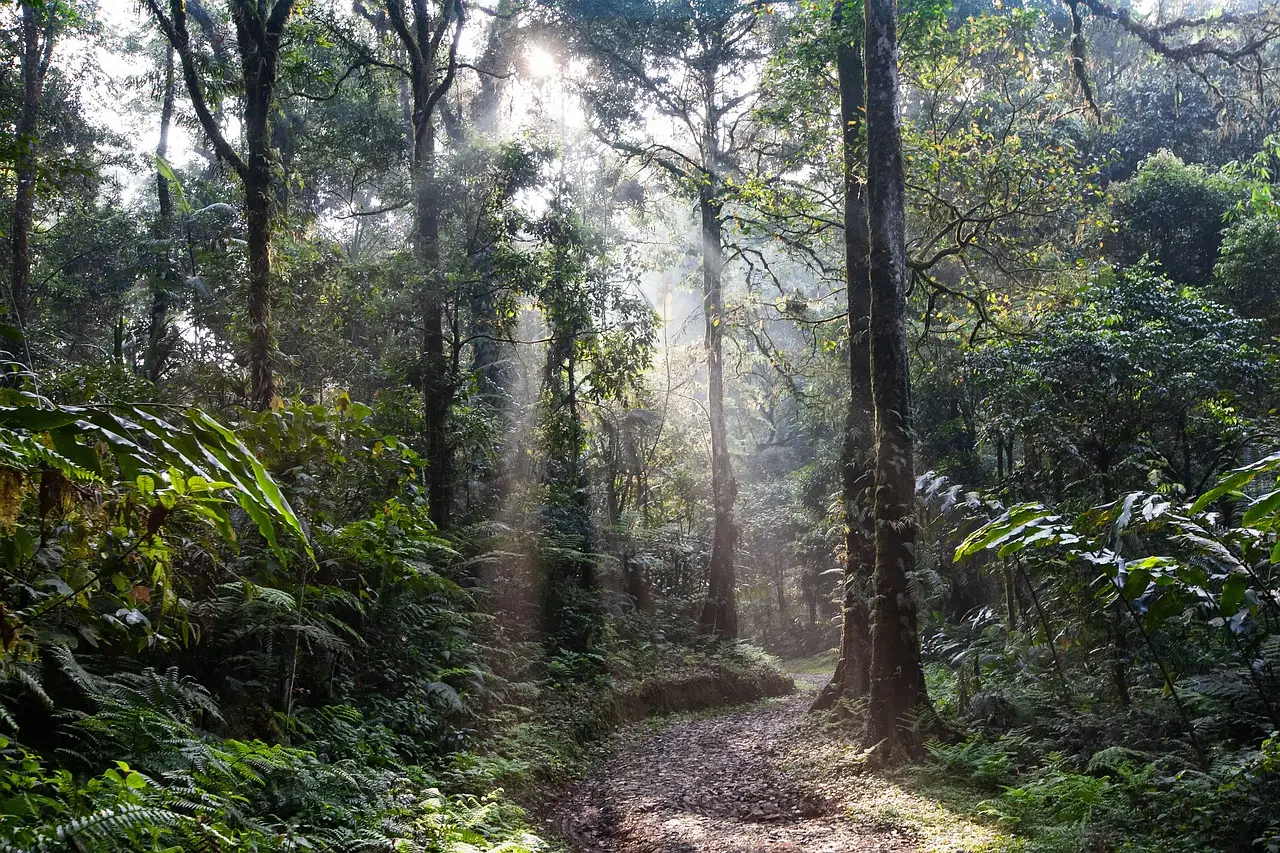
Roughly half of all living species in the fern genus Danaea emerged only within the last 6 million years — even though the genus itself has existed for 128 million. That finding, published in the journal Frontiers of Biogeography, upends the assumption that tropical rainforest species are as ancient as the lineages they belong to.
Researchers from the University of Turku in Finland and Aarhus University in Denmark traced the evolutionary history of Danaea, a group of ferns that grows on the forest floors of tropical America, and connected it to the region's geological and climatic past.
Why does this challenge the textbook view?
Scientists have long explained the tropics' extraordinary biodiversity by pointing to stability. While Europe's plants and animals endured repeated ice ages, many ancient evolutionary lineages persisted largely undisturbed in tropical regions for millions of years.
The tropics, however, did not stand still. Mountain ranges rose, coastal bays dried out, and new soil types formed. Each change forced species to adapt — and each created openings for new species to emerge and spread.
What did the researchers actually do?
The team built on decades of fieldwork at the University of Turku.
"In the last 25 years, we have discovered and described 47 new Danaea species previously unknown to science and have clarified the distribution and phylogenetic relationships of the species in the Danaea genus. We have now been able to link this information to the geological and climatic history of tropical America," said Hanna Tuomisto, professor of ecology at the University of Turku.
The study reconstructs when and where Danaea species originated, using the newly mapped family tree of the genus together with the geological record of tropical America.
What does the timeline show?
The genus Danaea split from its closest living relatives in the Early Cretaceous period, some 128 million years ago. The common ancestor of all present-day Danaea species lived around 53 million years ago.
Yet the burst of speciation that produced about half of today's species began just 6 million years ago. That timing matches a period of dramatic upheaval. During the Miocene epoch, the uplift of the Andes reshaped the climate and soils of tropical America. The vast megawetlands of the western Amazon drained. New landmasses emerged in Central America, giving species fresh corridors to spread and diversify.
In short: old lineage, young species — and geology supplied the trigger.
Why are these ferns richest in the Amazon, not the mountains?
Ferns as a whole reach their greatest diversity in tropical mountain forests. Danaea breaks that rule: across its entire history, the genus has produced the most species in the Amazon lowlands.
Growth habits may explain the difference.
"Mountain rainforests are home in particular to an abundance of epiphytes — plants that grow on top of other plants. Danaea ferns, on the other hand, grow on the forest floor. These research results are, in fact, similar to those obtained for trees, which are also the most species-rich in lowland rainforests," said postdoctoral researcher Venni Keskiniva of the University of Turku.
The takeaway: different plant groups can respond very differently to the same environment, and those divergent responses may partly explain why the tropics hold so much biodiversity.
How did mountains act as launching pads?
The study found that Danaea lineages adapted to mountainous conditions began to appear as the uplift of the Andes accelerated roughly 20 million years ago. Those mountain lineages then did something striking: they dispersed to new areas far from the equator, while lineages specialized in Amazon lowland conditions tended to stay put.
"As the plants had already adapted to the cooler climate of the mountains, it may have been easier for them to spread to areas where the temperature differences between the seasons are greater," Keskiniva said.
Pre-adaptation to cold, in other words, became a passport to cooler, more seasonal lands.
What is the bigger picture?
The findings carry a caveat common to biogeographic work: they describe one plant genus in one region, and the pattern may not hold for every group. Still, they demonstrate that the American tropics' staggering biodiversity owes as much to relatively recent geological events as to deep time.
"The biodiversity in rainforests is the result of a long history, but its formation has also been greatly influenced by events that are relatively recent on a geological time scale," Keskiniva concluded.
The paper, by Venni Keskiniva and colleagues, appears in Frontiers of Biogeography (2026), DOI: 10.21425/fob.19.211246.
via phys.org/rss-feed/ (Source)
More from Marcus Bennett
Show full bio
News editor covering regulation, policy and their impact on general science news at SciBeat.
493 articles
Nearby plates
- Fossil record links marine diversity peaks to climate state
- Amber Fossils Show Australia Fragment Seeded Asia's Rainforests
- Denser Forests Do Not Always Mean More Bird Species, Island Study Finds
- Giant 20-meter dinosaur found at Brazilian construction site
- Off Mozambique, a Drowned Forest Now Sustains a Living Reef