Recorded November 22, 2026
Biology & EvolutionReported finding
3,000-Year-Old Bison Jump Found in Texas Panhandle
Archaeologists found only the second known southern Plains bison jump, used from 1550 B.C. to A.D. 1550. At least seven mass kills left bones and tools below a 65-foot cliff.
By Elena Vasquez3 min read657 words
In brief
- Nighthawk bison jump in Caprock Canyons State Park, Texas, was used from about 1550 B.C. to A.D. 1550.
- Radiocarbon dates show at least seven mass bison kills; one event around A.D. 300-400 left most of the bones.
- The site is only the second bison jump ever found in the southern Plains.
- Kills averaged 500 years apart, suggesting techniques were passed down rather than rediscovered.
- The study was published online Nov. 9 in American Antiquity.
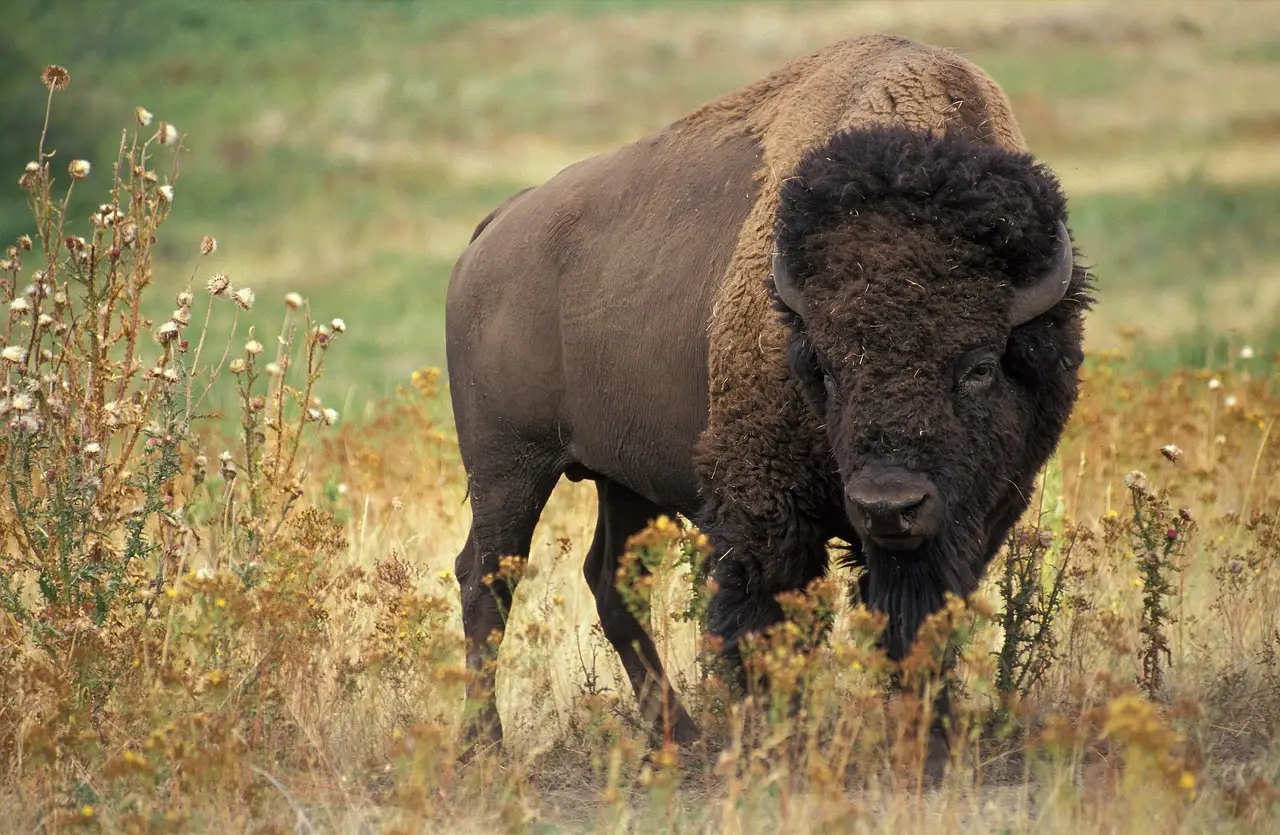
Indigenous hunters ran bison off a cliff in the Texas Panhandle for 3,000 years, from roughly 1550 B.C. to A.D. 1550, according to a study published online Nov. 9 in the journal American Antiquity. Archaeologists say the site, called Nighthawk, is only the second "bison jump" ever found in the southern Plains — proof the hunting technique wasn't unique to the northern Plains as experts had long assumed.
The find sits in Caprock Canyons State Park, beneath a roughly 65-foot-tall (20 meters) cliff spur. Bison bones began eroding from a bone bed — a spot where bones naturally accumulate — and that caught archaeologists' attention.
What did the excavators actually find?
The team recovered hundreds of bison bones, plus chipped stone tools and a few arrowheads scattered near the remains. Several bones carried cut marks from stone tools, matching prehistoric butchery practices. That combination — bones, tools, butchery marks under a cliff — pointed straight to a bison jump.
The geology sealed the case. "The only way bison can arrive at the site is by falling from above, as the site surface is sandwiched between two cliffs," the researchers wrote.
How did the hunt work?
A bison jump channels a stampeding herd over a cliff edge, killing the animals in a fall. Hunters on the northern Plains used the method for centuries, and jumps there are well documented. Nighthawk may have worked a little differently, though.
The cliff's natural spur shape likely let hunters herd the animals along a narrow path to their deaths. "Instead of a stampede toward a surprise fall, Nighthawk could have operated more like 'walking the plank,'" according to the researchers.
How often was the site used?
Radiocarbon dating revealed at least seven mass bison kills at Nighthawk across three millennia. One event, which researchers named Kill 3, accounted for most of the bones and likely took place around A.D. 300 to 400. A hunt that size demanded an immense labor force and precise coordination.
"Bison jumping is a complicated community effort," said study first author Gus Costa, an archaeologist at Rice University in Houston. "Large scale bison harvests (like jumps) are exciting because they require a large group of people working together to be successful."
The gap between kills was huge: every event sat at least a century apart, averaging 500 years. Yet hunters never forgot the place. "Returning to the same place over and over again over 3,000 years shows that people had a significant connection to the Nighthawk hunting facility," Costa said in a statement.
The researchers see knowledge, not rediscovery, as the simplest explanation. "The simplest explanation for long-lived jump facilities is that these techniques were passed down over long time spans rather than revived again and again," they wrote.
Why did southern hunters do it?
That's the open question. In the northern Plains, archaeologists have long assumed jumps happened in fall and provisioned communities for winter, producing pemmican — a shelf-stable mix of dried meat and rendered fat. Texas was likely too warm for bison fat to keep more than a few weeks, the researchers wrote. So southern hunts may have served a different purpose: displaying power and building alliances.
That interpretation remains tentative, and the study doesn't claim certainty about what hunters did with the meat.
Why does the discovery matter?
"Bison jumping is an iconic, uniquely North American hunting technique that yielded some of the most productive food-getting events in the history of human hunting," the researchers wrote. Until now, only one southern Plains jump site was known.
Nighthawk doubles that record and pushes the technique's known range far south — a 3,000-year-old hunting tradition, carefully handed down generation to generation.
The study's takeaway in plain words: Indigenous communities in the Texas Panhandle ran a sophisticated communal hunting operation at the same cliff for three millennia, and they remembered exactly how to do it.
via livescience.com/feeds/news (Source)
More from Elena Vasquez
Show full bio
Correspondent covering money, funding and market shifts around general science news at SciBeat.
592 articles
Nearby plates
- Evidence suggests eagles attacked a baboon heavier than 26 kilograms
- Eagles Kill 26-kg Baboons, Rethinking Human Ancestors' Predator Fears
- Eagles May Have Preyed on 58-Pound Baboons — and Human Ancestors
- Bone marks suggest eagles prey on human-sized baboons in the Sahara
- Fossil Bycatch Reveals Giant Orca Relative Hunted in North Sea 2 Million Years Ago