Plate Nº 60 · recorded November 17, 2026
Earth & ClimateReported finding
A Faint Plant Glow Could Reshape How We Watch Photosynthesis From Space
A faint glow plants re-emit in sunlight could let satellites monitor photosynthesis worldwide, a new review argues — if the biology and the spacecraft keep pace.
By Elena Vasquez4 min read769 words
In brief
- Scientists discovered satellite-detectable plant fluorescence only within the last 15 years.
- ESA's FLEX fluorescence mission launched successfully Sept. 15; NASA–Italian LUCE is planned for the 2030s.
- Agriculture covers more than 85% of Kansas land area.
- The review appears in Annual Review of Plant Biology (2026), DOI: 10.1146/annurev-arplant-090324-115537.
- KU's Jennifer E. Johnson co-authored a physically based model linking satellite fluorescence to carbon fixation.
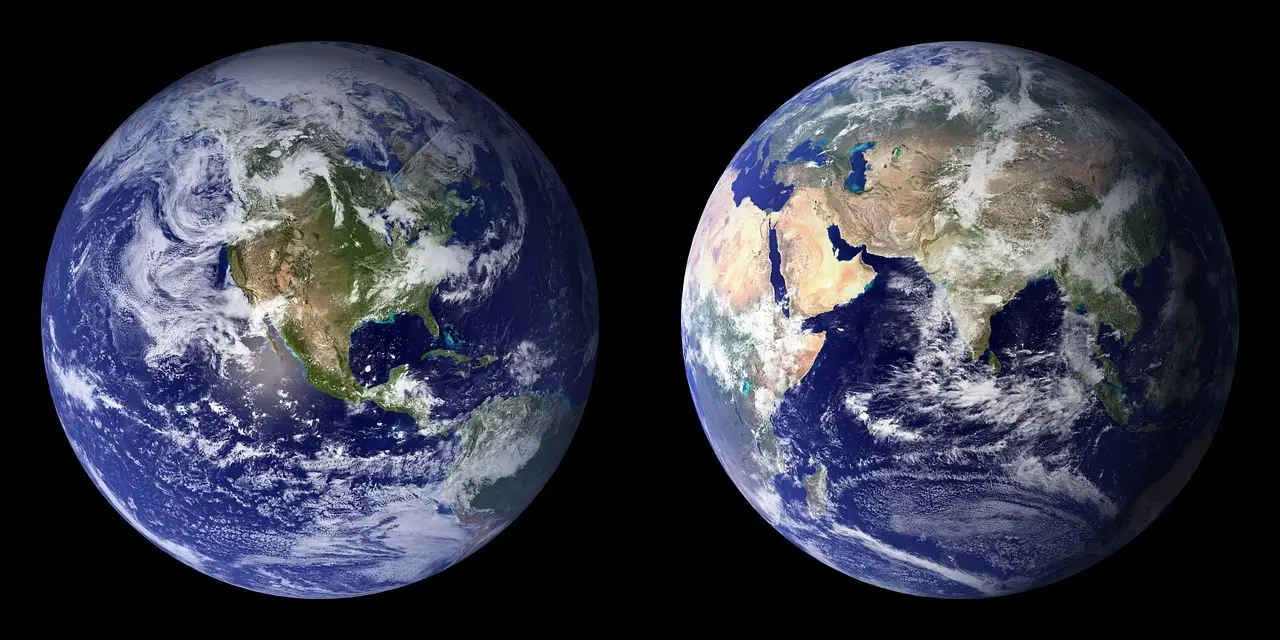
A faint glow that plants give off while absorbing sunlight could give scientists a planet-wide window into photosynthesis — but only if satellite technology and plant biology both catch up. That's the central claim of a review published in Annual Review of Plant Biology, authored by Xi Yang and colleagues including Jennifer E. Johnson, assistant professor of ecology and evolutionary biology at the University of Kansas.
The signal is called solar-induced chlorophyll fluorescence, or SIF. In plain terms, it's a small amount of light that plants re-emit after absorbing sunshine. Plants use only part of the sunlight they capture to drive photosynthesis. Some energy leaves as heat. The rest comes back out as fluorescence. Detecting that glow tells you something greenness maps can't.
What makes fluorescence different?
Traditional satellite measurements of vegetation mainly show where plants are. Fluorescence shows what plants are actually doing — whether the photosynthetic machinery is running hard or struggling, moment to moment.
Scientists have studied fluorescence in laboratories for over a century. Only in the last 15 years did researchers discover satellites orbiting Earth can pick up the faint signal too. The catch: reading it correctly requires understanding how plants divvy up absorbed light among photosynthesis, heat loss and fluorescence, a balance shaped by environmental conditions and the regulation of photosynthetic electron transport — the process that moves energy through the plant's light-capturing machinery.
Johnson, who helped develop the review's conceptual framework and wrote its section on mechanisms, has built a mathematical model of these processes. She said the work replaces older statistical shortcuts with real biology.
"The earliest remote sensing studies of fluorescence used statistical models to establish correlations between fluorescence emission measured from satellites and canopy-level photosynthesis measured from towers," Johnson said. "We have now taken the next step by developing a physically based model that represents the biological processes that link the satellite-observed fluorescence signal to carbon fixation."
That advance, she said, makes it possible to understand and predict how plant traits and environmental conditions each shape the relationship between photosynthesis and fluorescence. In short: the glow is now readable in physical terms, not just correlations.
Why does it matter?
Better estimates of photosynthetic activity could sharpen scientists' view of how forests, grasslands and farmland respond to drought, rising temperatures and other environmental changes. The review stresses the need to connect observations across scales — from the molecular machinery inside plant cells to measurements of whole landscapes.
The payoff is carbon accounting. Improved fluorescence interpretation would help quantify how carbon moves between land ecosystems and the atmosphere, and help researchers separate changes in plant physiology from changes in vegetation structure. The authors argue these advances could ultimately transform monitoring of the terrestrial carbon cycle and predictions of how ecosystems respond to a changing climate.
What's launching, and when?
The review calls for a new generation of Earth-observing platforms built to measure plant function with greater precision. Two missions are already moving:
- FLEX — the European Space Agency's Fluorescence Explorer, built for passive SIF measurements, launched successfully Sept. 15 and is expected to finish commissioning next month. Johnson serves on its External Calibration/Validation Team.
- LUCE — a joint NASA–Italian Space Agency mission using active fluorescence measurements to probe the photosynthetic machinery. It remains in planning, with launch anticipated in the 2030s. Johnson sits on its Science Working Group.
"These new platforms for measuring SIF from space are incredibly exciting because they will allow us to see the biology of the planet in an entirely new way—measuring the 'breathing' of the biosphere in near-real time and across the extent of the Earth's surface," Johnson said. "In the coming decades, SIF has the potential to transform how we monitor the activity of the Earth's biota, assess the health of ecosystems, detect emerging threats and manage the carbon cycle."
What about the fields next door?
The stakes are concrete in Kansas, where agriculture covers more than 85% of the land area and drives much of the state's economy. Improved photosynthesis measurements could eventually show how Kansas crops handle drought, heat and other stresses, while offering new insight into farm productivity and the carbon and water cycles. The same tools could track the health of the state's grasslands and other natural ecosystems.
The review is preliminary in one sense: it's a synthesis, not new experimental results, and its projections depend on missions and models still maturing. Still, the authors' bottom line is plain. Better satellites plus better biology could let humanity watch the planet breathe in near-real time.
via phys.org/rss-feed/ (Source)
More from Elena Vasquez
Show full bio
Correspondent covering money, funding and market shifts around general science news at SciBeat.
503 articles
Nearby plates
- NASA Satellite Tracks Fall Foliage Redness Daily Across Entire Planet
- Magenta Solar Panels Grew Broccoli as Big as Open-Field Crops
- Venus's Dark Cloud Mystery Narrows: Absorber Must Be Extreme
- Satellites and AI reveal 570% surge in invasive leafy spurge
- Astronomers Find First Green Star — and It's a Dead One