Plate Nº 88 · recorded November 12, 2026
Health & Medicine ResearchReported finding
Aggressive Blood Pressure Targets Show No Clear Heart Benefit in Diabetes Trial
A trial of 9,476 adults with type 2 diabetes found no conclusive heart benefit from targeting systolic blood pressure below 120, while kidney-related events were more frequent than with a target below 140.
By Priya Raman3 min read630 words
In brief
- The OPTIMAL-DIABETES trial enrolled 9,476 adults aged 50 or older with type 2 diabetes at 33 centers in Brazil.
- Major cardiovascular events occurred in 6.0% of the intensive-target group versus 6.7% of the standard-target group — a difference that was not statistically conclusive.
- Kidney-related events were more frequent with intensive treatment: 5.7% versus 3.7% in the standard group.
- Over about four years, average systolic readings were roughly 122 in the intensive group and 135 in the standard group.
- Results were published in The New England Journal of Medicine and presented at the American Heart Association's Scientific Sessions.
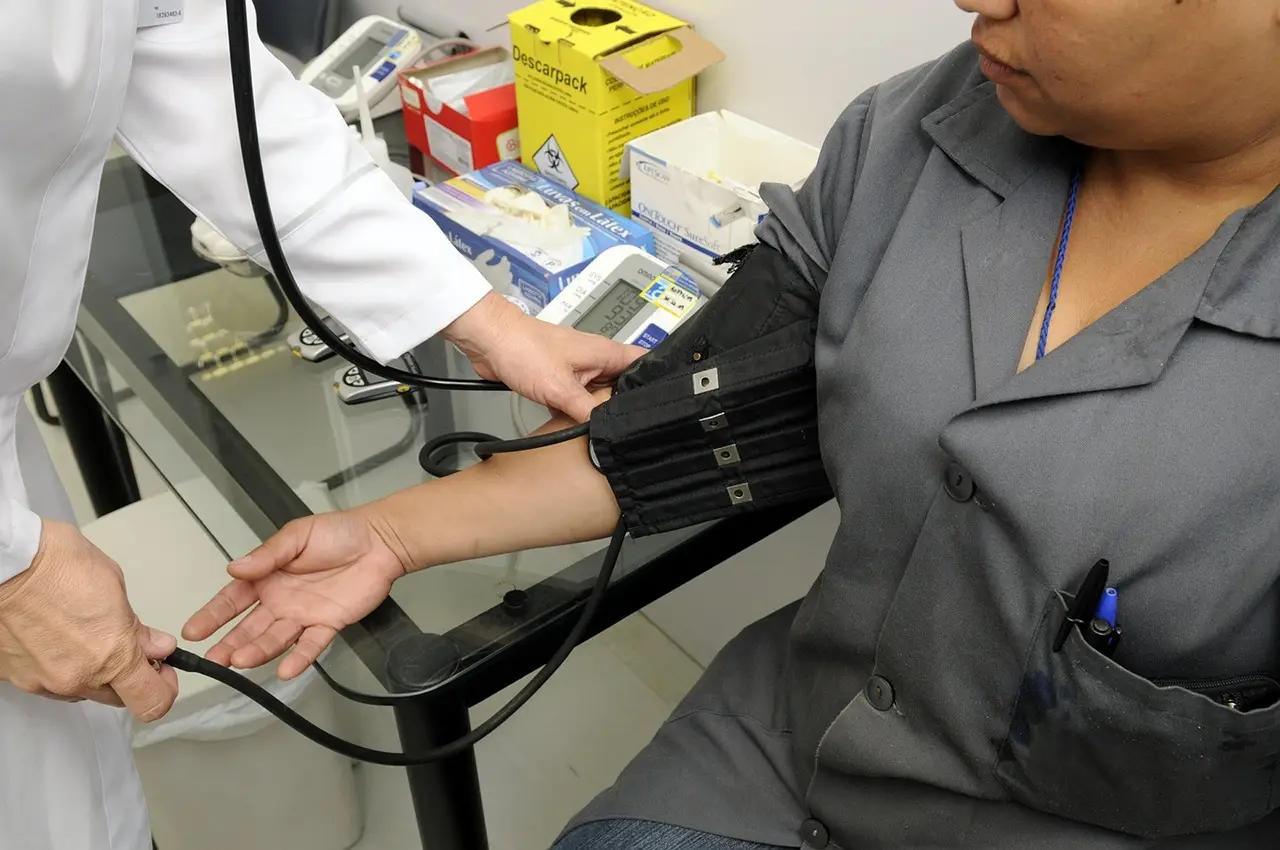
A trial of 9,476 adults with type 2 diabetes has found that driving systolic blood pressure below 120 did not conclusively prevent more major heart problems than a standard target below 140 — and it came with more kidney-related events. The results were published in The New England Journal of Medicine and presented at the American Heart Association's Scientific Sessions.
In a clinic room, the decision looks deceptively simple: lower pressure generally protects the heart and blood vessels. But reaching a lower target often means more medicines and a greater chance of unwanted effects. The new trial, called OPTIMAL-DIABETES, measured exactly where that balance falls — and found it does not tip clearly toward the more aggressive strategy.
What did the trial test?
Researchers enrolled 9,476 adults aged 50 or older at 33 centers in Brazil. All participants had type 2 diabetes and elevated blood pressure, and all had either existing cardiovascular disease or other factors that raised their risk.
They were randomly assigned to one of two systolic targets: below 120 or below 140. Systolic pressure (the top number in a blood pressure reading) reflects the pressure in the arteries when the heart contracts.
During follow-up, average systolic readings came in at about 122 in the intensive group and 135 in the standard group. The target and the achieved average are different measures: treatment aimed at a threshold, while people's actual readings varied around it.
What did the results show?
Over roughly four years, major cardiovascular events occurred in 6.0 percent of the intensive group and 6.7 percent of the standard group. That outcome combined cardiovascular death, heart attack, stroke and hospital care for heart failure or unstable chest pain.
The lower event rate was consistent with a possible modest benefit — but it was not statistically conclusive. In plain terms, the trial could not firmly distinguish that benefit from a difference that might have arisen by chance.
The kidney findings pointed the other way. Kidney-related events affected 5.7 percent of the intensive group versus 3.7 percent of the standard group. Most of these involved declines in measured kidney function. Kidney failure requiring advanced treatment was uncommon and did not show the same clear difference between the groups.
Serious adverse events overall were similar between the two strategies. The kidney findings therefore need to be weighed alongside the broader safety results, rather than treated as a measure of every possible treatment problem.
What are the study's limitations?
Several caveats matter for interpretation:
- Participants and clinicians knew which target they were pursuing, a design feature that can influence care and reporting.
- The trial took place entirely in Brazil, so the balance of benefits and harms may differ in other populations and care settings; further comparisons can help clarify this.
- A single trial does not determine the best target for every person with diabetes.
What does this mean for patients and doctors?
The results add detail to a genuinely difficult treatment decision rather than settling it. For clinicians, the study offers more information for choosing a target together with each patient — a choice shaped by three questions the trial makes explicit.
The first is how much additional protection a lower pressure might actually provide, which in this population was modest at best and not statistically firm. The second is what it takes to reach that lower number, typically more medication. The third is how well the kidneys, and the patient, tolerate the treatment along the way.
The central lesson may be that blood pressure targets in type 2 diabetes cannot be set by one number alone: heart outcomes, kidney outcomes and overall tolerability have to be weighed together.
The answer, for now, is a careful conversation rather than a universal threshold.
via knowridge.com (Source)
More from Priya Raman
Show full bio
Senior reporter covering people, launches and day-to-day practice in general science news at SciBeat.
342 articles
Nearby plates
- Letting Your Arm Hang During a Blood Pressure Check Can Add 6.5 mmHg
- Blood pressure medicines protect less when doses are missed
- An 80-80-80 Blood Pressure Plan Could Prevent Up to 130 Million Deaths
- Nearly 1 in 3 Diabetes Patients Face Kidney, Heart Disease or Death
- Nearly 6 in 10 People with Hypertension in England Are Undiagnosed