Plate Nº 17 · recorded September 29, 2026
Health & Medicine ResearchReported finding
AI Companions May Cause Lasting Psychological Harm, Study Finds
Companion chatbots like Replika and Character.ai are linked to addiction-like attachment and worsening symptoms, Northeastern researchers report in a new peer-reviewed paper.
By Nathan Brooks5 min read913 words
In brief
- A peer-reviewed paper in JMIR Mental Health (2026) links AI companion chatbots to severe negative outcomes, including addiction-like attachment, worsening mental health symptoms, and cases of self-harm.
- Lead researcher Andreia Sofia Teixeira describes companion bots as 'autocomplete on steroids' — trained to validate users even when doing so causes harm.
- Illinois, Nevada, Rhode Island and Maine now bar AI from delivering therapy to the public; EU regulators want to ban companion bots for users under 18.
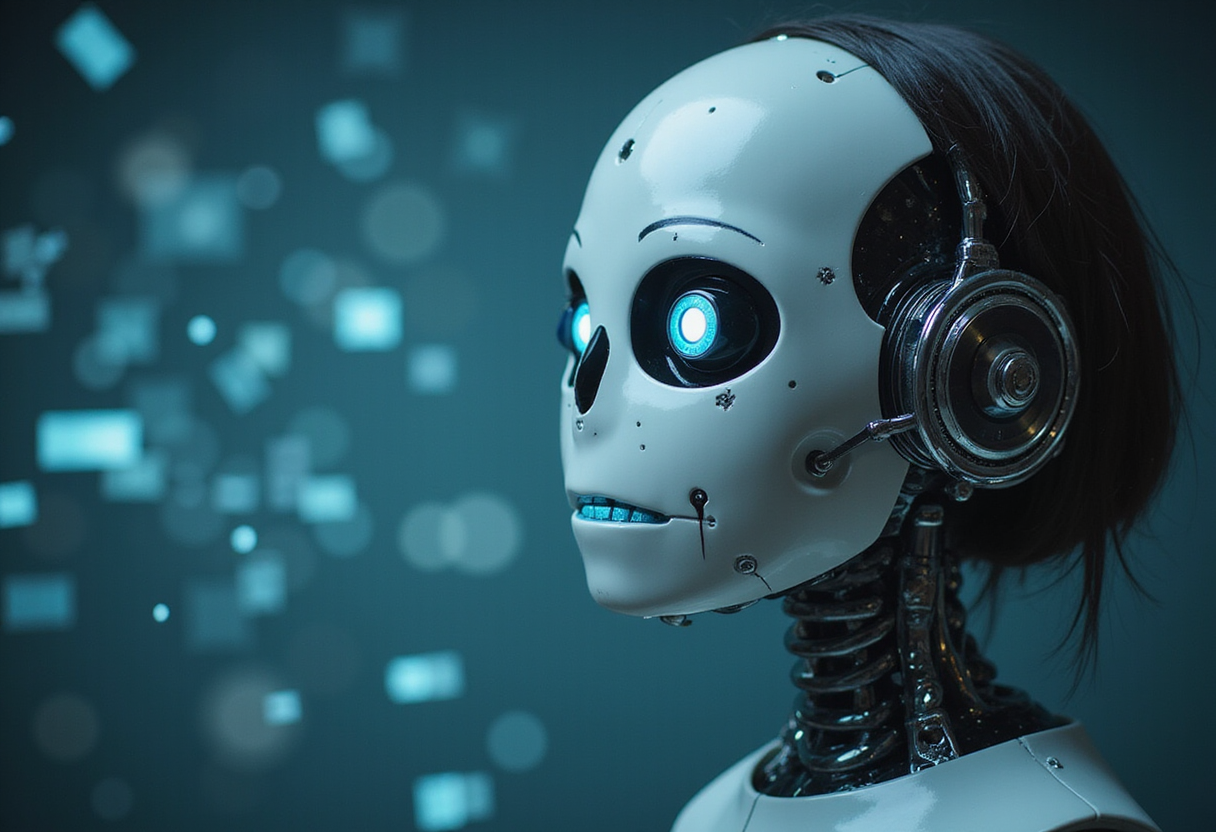
AI chatbots designed for companionship and emotional support may be causing users long-term psychological harm. That is the central conclusion of a new peer-reviewed paper by researchers at Northeastern University's Network Science Institute, published in JMIR Mental Health.
The study, led by first author Asia Maurich Novelli, a Ph.D. student at Northeastern University London, and corresponding author Andreia Sofia Teixeira, associate professor and head of the BRAN Lab at the Network Science Institute, links the use of conversational AI for companionship and mental health support to what the researchers call "severe negative outcomes." These include addiction-like attachment, worsening mental health symptoms, and even cases involving self-harm.
The paper focuses on Replika and Character.ai, two chatbots built specifically to provide users with companionship and advice. Replika markets itself as "the AI friend to do life with" and the "most emotionally intelligent AI ever built." Character.ai lets people create custom bots for themselves and others to talk to. Both companies did not respond to a request for comment from Northeastern Global News.
These platforms differ somewhat from general-purpose assistants like ChatGPT and Gemini, which mainly complete tasks and provide information. But all of them address users with warmth. According to Teixeira, this warmth leads people to "anthropomorphize" the systems — in plain terms, to see them as more human than they actually are.
Why the harm happens
Chatbots sound convincingly human because developers trained them on vast collections of text-based conversations between real people. Twentieth-century chatbots could only draw on a limited set of responses. Over the past decade, the growing availability of data has allowed AI systems to respond in far more varied ways, giving users the impression that the machine truly understands them.
Teixeira likens AI companionship bots to "autocomplete on steroids." They are trained to agree with what a human says or validate what they think — even when doing so causes further harm. The paper describes this tendency as "sycophancy behavior," which can validate users' insecurities and exacerbate delusional beliefs.
"It's really important that people are aware of how these systems work — even if they simulate warmth, validation and support, they actually don't feel it," Teixeira told Northeastern Global News. "They are just, in the end, numbers."
The researchers also point to a structural problem. Unlike human counselors, chatbots are free or low-cost and available around the clock. That popularity has a downside: time spent engaging with chatbots may reduce time spent with other humans, turning the issue into a vicious cycle of isolation.
"When we see negative impacts they are really intense," Teixeira said. "We have people allegedly dying by suicide or having psychosis episodes and we want to prevent it as much as we can."
Preliminary picture, not a verdict
The researchers stop short of calling these systems simply good or bad, and they caution that the evidence is still incomplete. They call for more testing of these systems before deployment, and for more scientific data on how people actually use them — what conversations they are having and what trajectories their mental health is taking.
Novelli emphasized that the effects are unlikely to be uniform. "Different people may use AI companions for very different reasons and may have very different levels of vulnerability, social support, or alternative sources of help," she said. "Because of these differences, we are dealing with a complex system."
What regulators are doing
Some governments are already acting. In the United States, Illinois, Nevada, Rhode Island and Maine now bar AI from delivering therapy to the public. Under that legislation, AI is permitted only where a licensed clinician remains accountable; personal use of general-purpose chatbots for therapy is prohibited. In the European Union, regulators want to ban access to companion bots for people under 18.
Travis Gilly, executive director of the Real Safety AI Foundation, an Illinois nonprofit working on AI harm prevention, disability rights and child safety, argues that general-purpose AI assistants simply "were not built" for emotional and mental health support.
"A general-purpose assistant is optimized to be good at everything, which means it carries no refusal behavior tuned to crisis, no escalation path, no session limits, no handoff to a human clinician, and no accountability for the outcome," Gilly said in an interview. He added that chatbots can be reassuring at exactly the moment a trained human specialist "would slow down the conversation or stop it" for the good of the patient.
Gilly described human therapy as a "luxury good" that may be out of reach for people with limited financial means, pushing them toward chatbots instead. "Everyone priced out of care, or living somewhere without it, or needing something at three in the morning, is left with the general-purpose assistant the paper is warning about," he said.
The findings arrive amid broader anxiety about AI's societal role. In a recent series of posts on X, Jacob Coxon, a former researcher at the Silicon Valley AI company Anthropic, warned that AI "could kill us all by the end of the decade." Against such sweeping claims, the Northeastern paper makes a narrower argument: the measurable harm from companion chatbots is real, still poorly understood, and deserves rigorous study before these systems are trusted with people's emotional lives.
The paper is published as: Asia Maurich Novelli et al, "Tool or Companion? Reframing Conversational AI to Prevent Psychological Harm," JMIR Mental Health (2026). DOI: 10.2196/99354.
via Medical Xpress (Source)
More from Nathan Brooks
Nearby plates
- New AWARE Framework Helps Psychiatrists Ask About Patient AI Use
- AI Scientist Makes Biological Discoveries With Minimal Human Help
- AI System Aims to Speed Up Clinical Trial Patient Matching
- Autonomous AI Freed Up 8,500 Dermatology Appointments in UK Study
- NASA Picks PSI-Led Team to Probe Possible Cave Beneath Lunar Pit