Plate Nº 39 · recorded October 9, 2026
Health & Medicine ResearchReported finding
AI Reads Sleep-Study ECGs to Predict Heart Risk a Decade Out
A deep learning model predicted 10-year risks of atrial fibrillation, heart failure and death from single-lead ECGs recorded during sleep studies of over 38,000 patients.
By James Calloway4 min read794 words
In brief
- The study analyzed ECG data from sleep studies of more than 38,000 patients across three U.S. hospitals.
- The model was fine-tuned on 15,809 patients and validated on 9,810 and 12,576 patients at separate hospitals.
- It predicted 10-year risk of atrial fibrillation, heart failure and all-cause mortality; heart attack and stroke need further work.
- The findings were published in the journal SLEEP in 2026, DOI: 10.1093/sleep/zsag229.
- The method uses just one ECG lead, allowing data collection via simple, low-cost patches in a single night.
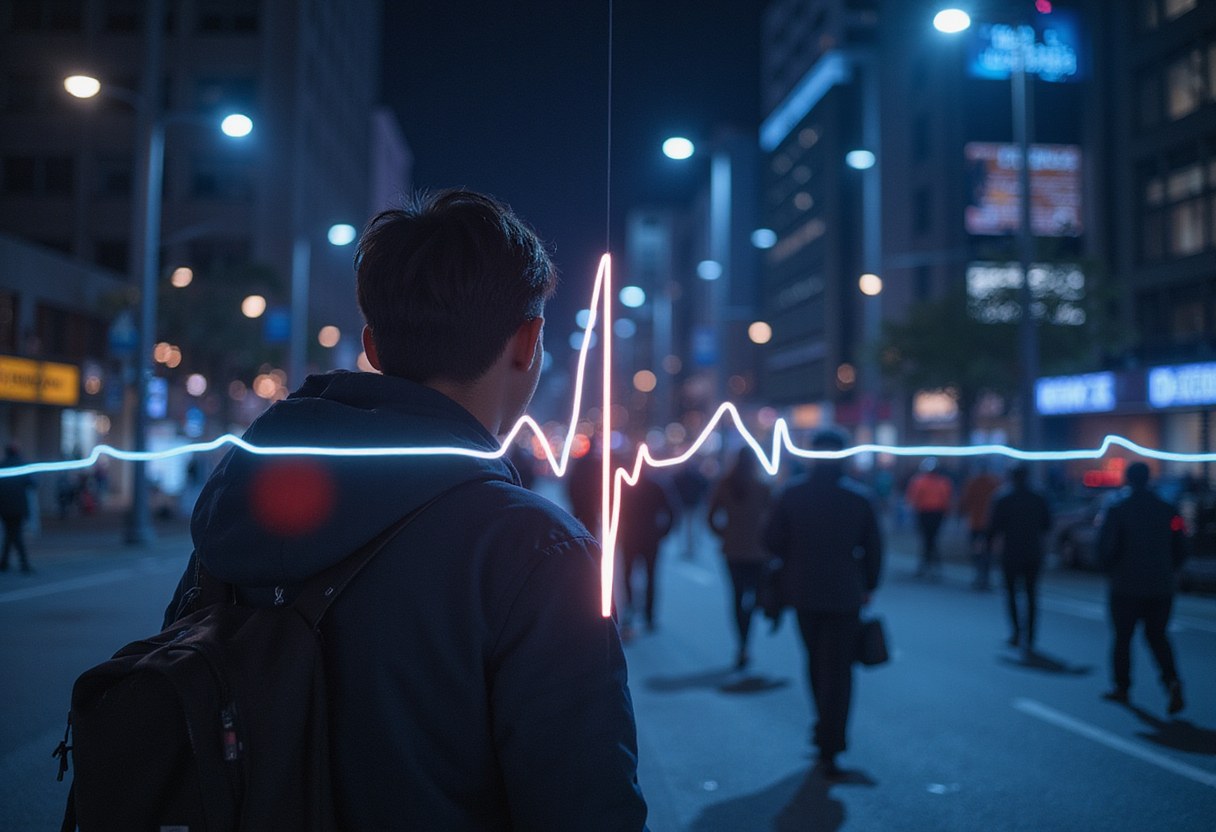
A deep learning model analyzed heart signals recorded during ordinary overnight sleep tests and sorted patients into groups with measurably different 10-year risks of atrial fibrillation, heart failure and death, according to a study published in the journal SLEEP in 2026.
The research, supported by the National Institutes of Health (NIH), suggests that electrocardiograms (ECGs) — simple recordings of the heart's electrical activity — collected during sleep studies could help doctors predict which patients face a greater risk of poor heart-related outcomes, and guide clinical decisions earlier.
How did the model work?
The team, led by study author Gari Clifford, D.Phil., chair of the Department of Biomedical Informatics at Emory University School of Medicine and professor of biomedical engineering at Georgia Institute of Technology, trained a deep learning system on single-lead ECGs from sleep studies, combined with expert-annotated sleep stage data — that is, records of when each patient was in light, deep or REM sleep.
Overnight sleep testing, known as polysomnography, is the standard method for diagnosing sleep disorders such as insomnia and obstructive sleep apnea. Both conditions are recognized risk factors for cardiovascular disease. Clinicians already record ECGs during these tests, but they rarely analyze them in depth. The researchers asked whether this overlooked data could instead predict 10-year cardiovascular outcomes, including:
- atrial fibrillation (an irregular heart rhythm),
- stroke,
- myocardial infarction (heart attack),
- heart failure,
- all-cause mortality.
How big was the study?
The researchers fine-tuned the model on data from 15,809 patients at Massachusetts General Hospital in Boston. They then assessed its performance on two separate data sets: 9,810 patients from Emory University Hospital in Atlanta and 12,576 patients from Beth Israel Deaconess Medical Center in Boston. In total, the study drew on more than 38,000 patients. Outcomes came from electronic health records.
The results showed a clear gradient: people with higher model scores carried higher long-term cardiovascular risk. The model's predictive value held up even after the researchers adjusted for common cardiovascular risk factors — age, sex, BMI, diabetes and hypertension — as well as sleep-related characteristics such as sleep apnea severity, arousals and sleep efficiency.
Not every outcome was predictable with equal confidence. The scientists report that the model successfully predicted atrial fibrillation, heart failure and death from any cause, but additional optimization is needed before it can predict myocardial infarction and stroke.
Why does one ECG lead matter?
The method relies on just one ECG lead — a single electrical signal — rather than the usual 12-lead hospital setup. That difference matters for practicality. A single lead can be captured with simple, low-cost adhesive patches during one night of sleep, making the approach highly accessible and easy to add to routine testing.
"Importantly, we found that adding the score from our deep learning model improved prediction of cardiac outcomes beyond established risk factors," Clifford said. "Adding these scores into sleep studies has great potential for improving early detection of cardiovascular disease, determining who is most at risk and being more proactive in patient care."
What could this change in the clinic?
NIH officials see a screening role for the technology. "This new approach has the potential to identify individuals at risk for cardiovascular disease years before clinical symptoms arise," said David Goff, M.D., Ph.D., acting director of NIH's National Heart, Lung, and Blood Institute (NHLBI).
Goff cautioned that validation work remains. "Evaluating whether this information improves traditional risk prediction is an important next step," he said. "In the future, proven analytical approaches like this could be integrated into existing diagnostic tests for patients undergoing sleep studies as a screening tool for multiple adverse cardiovascular outcomes."
What are the limitations?
The findings are promising but preliminary in several respects. The model still needs optimization for two of the five outcomes studied — heart attack and stroke. And although the researchers tested it on thousands of patients across three hospitals in two cities, all data sets came from U.S. academic medical centers, and outcomes were drawn from electronic health records rather than dedicated long-term follow-up.
The study did not test whether acting on the model's scores actually prevents cardiac events. That would require prospective clinical trials, which the researchers and NIH identify as the logical next step before the tool enters routine care.
Still, the core conclusion is encouraging: a signal that hospitals already record during millions of sleep studies, and largely discard, carries information about a patient's cardiovascular future. If the approach withstands further testing, it could turn a one-night diagnostic test into an early-warning system for heart disease — at almost no added cost.
The paper, by Zuzana Koscova and colleagues, appears in SLEEP (2026), DOI: 10.1093/sleep/zsag229.
via Medical Xpress (Source)
More from James Calloway
Nearby plates
- Pink Noise Bursts May Boost the Brain's Nightly Wash Cycle
- Brain Scans Link Long COVID Fatigue to Reduced Blood Flow
- AI Search Tools Give Unreliable Answers on Blood Pressure Monitor Validation
- What Spaceflight Is Teaching Scientists About Human Sleep
- Night Owls Face Higher Risk of Early Disability Retirement