Plate Nº 13 · recorded October 10, 2026
Biology & EvolutionReported finding
Amoeba That Eats Eyes Resists Drugs—Its Genome May Reveal Weak Points
Researchers boosted the accuracy of the Acanthamoeba genome map from 52% to 98%, locating nearly 16,000 genes and roughly 300 mitochondrial proteins unique to the microbe.
By Nathan Brooks5 min read988 words
In brief
- Two 2026 papers in Cell and Cell Press Blue mapped Acanthamoeba, the amoeba behind drug-resistant eye infections.
- Genome annotation accuracy improved from about 52% to 98%, pinpointing almost 16,000 genes.
- About one-third of Acanthamoeba genes are unique compared with humans and yeast.
- Roughly 300 mitochondrial proteins and 20 cyst-wall protein families have no human counterparts—candidate drug targets.
- The papers are part of nine studies from the MitoCarta Tree of Life Consortium exploring a common ancestor from about 2 billion years ago.
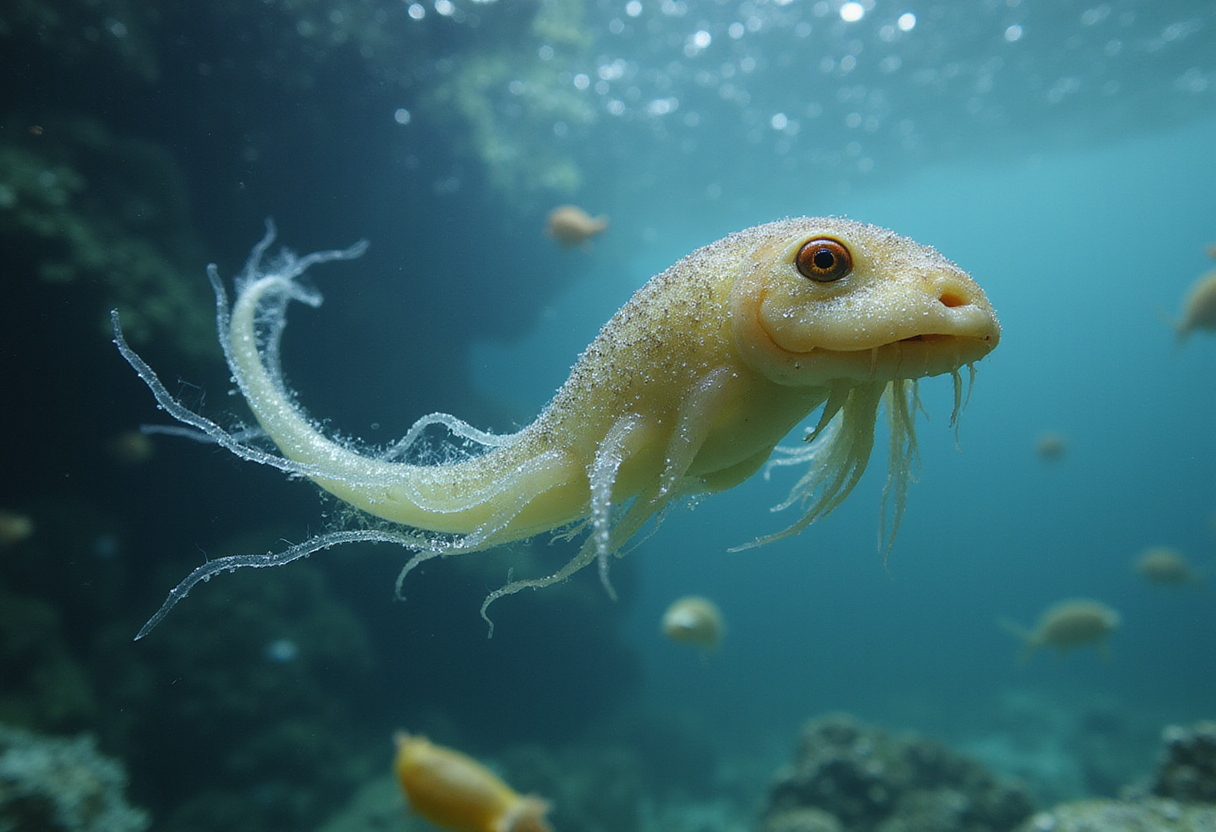
Researchers have mapped the genes of Acanthamoeba—a single-celled amoeba that can cause a stubborn, drug-resistant eye infection—and found roughly 300 mitochondrial proteins that exist in the microbe but not in humans. That gap could become the foundation for new, less toxic treatments.
The work appears in two papers, published in 2026 in the journals Cell and Cell Press Blue. Dr. Jon Stefely, first author of both studies, is now a metabolism investigator at the Morgridge Institute for Research and an assistant professor of biomolecular chemistry at the University of Wisconsin School of Medicine and Public Health.
Acanthamoeba lives freely in water, soil and air, and most of the time it leaves people alone. On rare occasions it infects humans, causing severe infections of the eyes, skin and even the brain. The eye infection, called Acanthamoeba keratitis, is notoriously hard to diagnose and treat.
"It's a big challenge. The lack of readily available diagnostics is a problem, and then even after you finally get to the diagnosis, we don't have good drugs," Stefely said. "Our current drugs are untargeted and toxic, and we just need more options for treating these infections."
Why does the amoeba resist treatment?
In harsh environments such as a human cornea, Acanthamoeba builds a thick, double-layered protective cell wall—somewhat like the walls found in trees and other plants. In this dormant cyst form, the organism shrugs off the drugs doctors currently have.
The research team reasoned that if they could understand the genes and proteins behind the amoeba's mitochondrial function—the energy-producing machinery of the cell—they could identify targets for highly specialized drugs that spare human tissue.
"What's been proven historically," Stefely said, "is that if you have a target protein in a biochemical pathway that's completely unique to the microbe, it's a better target than something that has a homolog in humans. A drug that targets a unique microbial protein or pathway is less likely to also harm the infected person."
How did the team fix the genome map?
The genome of Acanthamoeba had been sequenced before, but the annotation—the map showing where genes actually sit along the DNA—was only about 52% accurate. That flawed map had to come first, because even though mitochondria carry their own tiny DNA, most mitochondrial proteins are encoded in the cell's nuclear genome.
Stefely likened the problem to reading a page of words squished together in an unknown language: "You would have to ask, 'Where are the words? How do I separate one word from the next?' It's hard to tease apart."
The researchers used a technique called long-read RNA sequencing, which captures transcripts of entire genes rather than short snippets that must be reassembled later. RNA is the intermediate molecule cells use to translate DNA into proteins, so reading it shows which parts of the genome are actually active.
The effort paid off. Annotation accuracy jumped to 98%, pinpointing almost 16,000 genes. Among the findings:
- About one-third of those genes are unique to the amoeba compared with the human genome and with baker's or brewer's yeast, a standard laboratory organism.
- The team identified 20 families of proteins involved in building cyst walls, none of which exist in humans.
Both categories are candidate targets for future drug development.
What did the mitochondria reveal?
In the second study, the team isolated progressively purified samples of Acanthamoeba mitochondria and used mass spectrometry—an analytical technique that identifies molecules by their mass and charge—to track which proteins became more abundant as mitochondrial content rose. Proteins that tracked with mitochondrial purity were deemed mitochondria-localized.
The result: "There are roughly 300 proteins in Acanthamoeba mitochondria that are unique when compared to human and yeast mitochondria," Stefely said.
The mitochondria also showed an unusual ability to switch functions between oxygen-rich and oxygen-deprived conditions. This flexibility may help the amoeba survive in places as different as a human cornea and the depths of a lake.
What comes next?
The two papers belong to a set of nine published concurrently by the MitoCarta Tree of Life Consortium, a project conceived by Dr. Vamsi Mootha, a molecular biologist at the Broad Institute, Massachusetts General Hospital, Harvard Medical School and the Howard Hughes Medical Institute. The broader effort aims to inventory mitochondrial proteins across all branches of the tree of life, shedding light on the last common ancestor of all animals, plants, fungi and protists, which lived roughly 2 billion years ago. Acanthamoeba turned out to be a useful model for that ancestor, retaining many proteins and pathways predicted to have been present in it.
Stefely's next step is to investigate the individual proteins and pathways the team flagged as unique, to determine which make the best drug targets. "It's going to take a lot of focused work on individual proteins and pathways, but we'll start chipping away at this exciting project," he said. "We'll take them one small set at a time, and there is a lot of potential for new discoveries."
That work will involve collaborations with Morgridge colleagues specializing in mass spectrometry, RNA sequencing, cell metabolism, structural biology and biomedical imaging. Stefely will also spend five weeks a year at UW Health University Hospital, where patients with protozoan infections such as Acanthamoeba keratitis shape his research agenda.
"Seeing those challenges in diagnosis and treatment in the hospital motivates the work that we do in the lab," he said. "We have a very exciting opportunity to both discover new fundamental mechanisms of biology and at the same time help lay the foundation for new therapies."
The findings are preliminary steps toward therapies—no new drug has yet emerged, and each candidate target will require years of validation. But the new 98%-accurate genetic map gives researchers, for the first time, a reliable place to start.
via Phys.org Biology (Source)
More from Nathan Brooks
Nearby plates
- Scientists Map Three Weak Points in Antibiotic-Resistant Bacteria
- Eye Scans May Flag Heart Rhythm Disorder Years Before Diagnosis
- Evolved Enzymes Build TB Antibiotic Ingredient Without the Waste
- Two Protein Plugs Help Superbug P. aeruginosa Block Antibiotics
- Scientists Find a Way to Kill a Drug-Resistant Deadly Fungus