Plate Nº 38 · recorded November 12, 2026
Reported finding
Asteroid 1998 KY26 Is Too Warm for Ice, Study Finds
New simulations show asteroid 1998 KY26 averages minus 47°C — too warm for buried ice, ruling out comet-like gas jets and pointing to sunlight as its engine.
By Nathan Brooks3 min read669 words
In brief
- Asteroid 1998 KY26 is 11 meters wide and rotates once every 5.35 minutes.
- Georgia Tech researchers ran 260 simulations; results appeared in the journal Icarus.
- Any ice powering the asteroid's acceleration would be exhausted in just 62 years.
- Japan's Hayabusa2 spacecraft is scheduled to rendezvous with KY26 in July 2031.
- A 2025 study found sunlight pressure and heat emissions could explain the motion without gas.
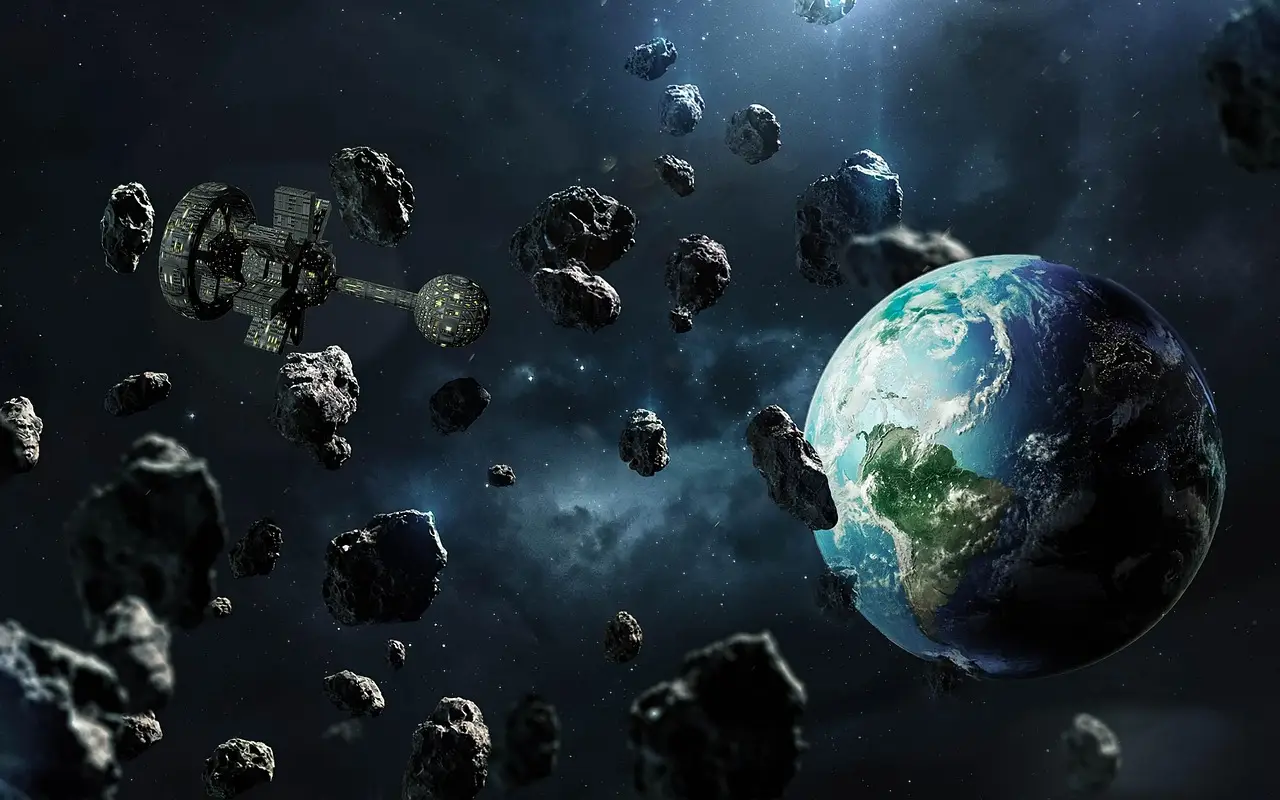
Asteroid 1998 KY26 would burn through any ice driving its strange acceleration in just 62 years, according to new research — far too little time for a rock that may have taken millions of years to reach Earth's neighborhood. The finding, published in the journal Icarus, suggests this 11-meter (36-foot) object is probably a dry asteroid, not a "dark comet" venting gas like a rocket engine.
KY26 has puzzled astronomers since a 2023 study detected an unusual acceleration pushing it out of its orbital plane — a nudge that neither the Sun's gravity nor planetary pulls could explain. The leading theory blamed jets of water vapor escaping from buried ice. There's a catch, though: the asteroid appears far too warm to hold that ice.
What did the researchers actually do?
Aerospace engineers Korbin Hansen and Masatoshi Hirabayashi of the Georgia Institute of Technology built a detailed computer model of the asteroid. They fed it estimates of KY26's shape, size, reflectivity, orbit and physical properties, then calculated temperatures across the surface and deep inside the rock.
The team ran 260 simulations covering 13 sets of assumptions, including different possible compositions and orientations. The numbers came back consistently warm — by space-ice standards, anyway.
How warm is too warm for ice?
The asteroid's average temperature came out at roughly minus 47 degrees Celsius. Even its coldest spots averaged at least minus 61 degrees Celsius over a full orbit.
That sounds brutally cold, but it's not cold enough. In the vacuum of space, water ice gradually evaporates even well below freezing, and buried ice generally needs to stay below about minus 128 degrees Celsius to survive for long stretches. KY26 doesn't come close.
Hiding the ice deeper doesn't work either. In the main model, the asteroid's center was only about one degree cooler than its surface. Even modeling the rock as a loose pile of insulating rubble failed to solve the problem.
"Our temperature model results indicate that the water outgassing rate on 1998 KY26 would be too high to maintain buried ice," the researchers wrote.
The math is unforgiving. Even if water made up 1% of the asteroid's mass, the simulations suggest it would vanish in roughly 2,065 years. And if outgassing water vapor were responsible for the odd acceleration, the ice supply would run dry in just 62 years.
So what is pushing the asteroid?
Sunlight, possibly. Sunlight exerts a tiny pressure on objects it strikes, and asteroids also absorb sunlight and re-release energy as heat, creating additional forces that slowly shift their orbits. Because KY26 is so small, these effects could have an outsized influence on its motion.
A separate study published in 2025 found that solar radiation pressure and thermal emissions could fully explain the acceleration — no escaping gas required. The Georgia Tech results strengthen that interpretation, though scientists still don't know how long KY26 has occupied its current orbit.
Why a spacecraft visit matters
Japan's Hayabusa2 spacecraft is already en route to KY26, with a rendezvous planned for July 2031. It's the same probe that landed twice on the 900-meter asteroid Ryugu, blasted a crater into its surface, and returned samples to Earth in 2020.
The new target is dramatically harder. In September 2025, astronomers revealed that KY26 is three times smaller and spinning twice as fast as previously estimated. It completes one rotation every 5.35 minutes and is barely larger than a small house.
"We found that the reality of the object is completely different from what it was previously described as," said astronomer Toni Santana-Ros of the University of Alicante.
After flying past the asteroid Torifune in July 2026, Hayabusa2 will continue toward KY26. Its observations could confirm whether the rock is truly dry and clarify what forces are acting on it. For now, the strongest evidence points to something almost paradoxical: an object that looks like it has an engine, propelled by nothing more than sunlight.
via zmescience.com (Source)
More from Nathan Brooks
Show full bio
Market editor covering companies, deals and strategy in general science news at SciBeat.
325 articles
Nearby plates
- Simulations weaken the dark-comet case for asteroid 1998 KY26
- Asteroid 1995 BJ4 Grew a Tail — and It May Be the Largest Main-Belt Comet
- Cracked Boulders Explain Why Asteroid Bennu Loses Heat So Fast
- Interstellar Comet 3I/ATLAS Carries Methane Up to 10 Billion Years Old
- Bennu Samples Rewrite the Asteroid's Birthplace — and Jupiter's Role