Recorded November 27, 2026
Biology & EvolutionReported finding
Bacterial Colonies Turn Themselves Inside Out When Oxygen Runs Low
Gonorrhea bacteria starved of oxygen stop producing grip molecules, lose cohesion at the colony's core, and physically flip themselves inside out, a Nature Physics study shows.
By Elena Vasquez3 min read675 words
In brief
- Colonies of N. gonorrhoeae can turn themselves inside out when internal oxygen runs out
- Oxygen-starved cells slow production of type 4 pili, weakening attraction between bacteria
- A capillary instability drives weakly interacting cells from the core toward the oxygen-rich surface
- Findings published in Nature Physics (DOI: 10.1038/s41567-026-03530-x) in 2026
- Dormant colony cells show reduced growth and metabolism, a state protected against many antibiotics
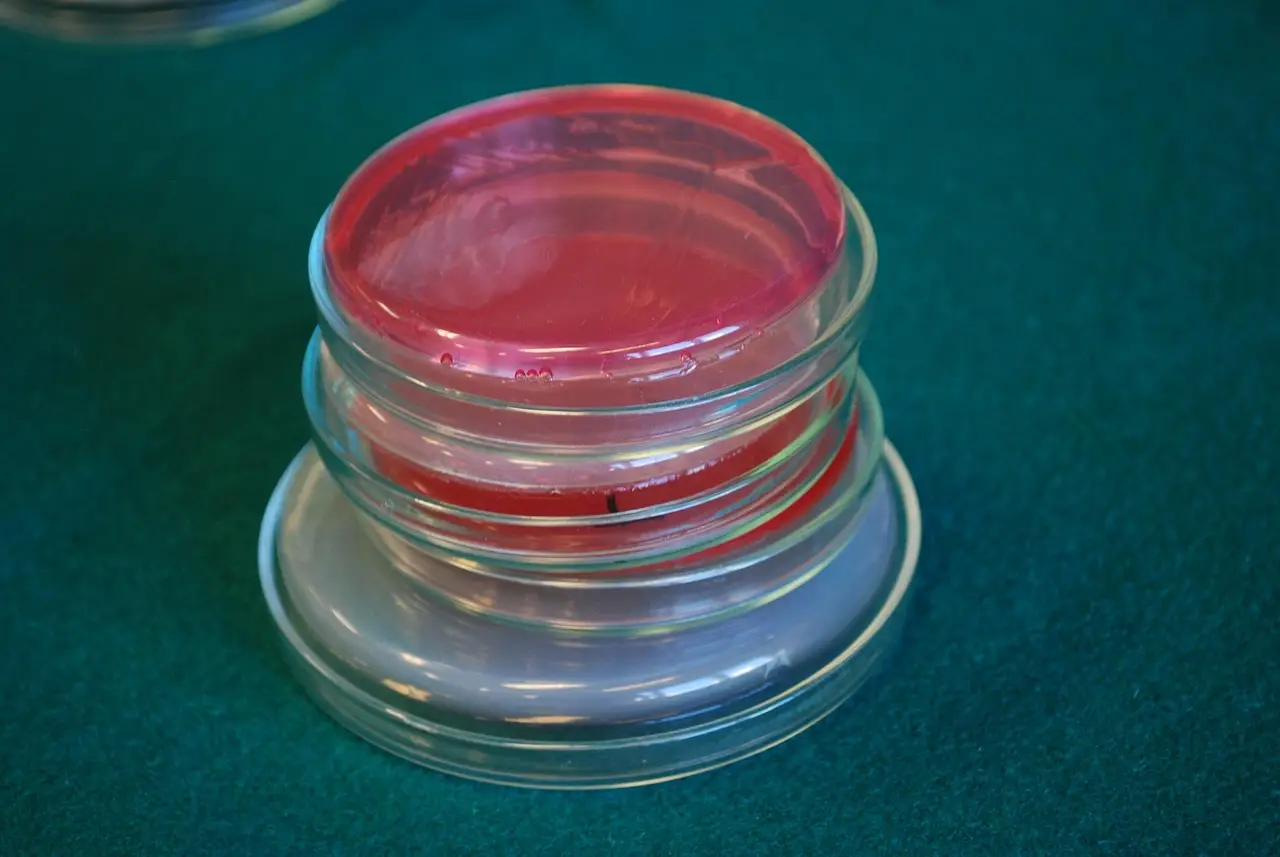
Colonies of Neisseria gonorrhoeae, the bacterium that causes gonorrhea, can turn themselves inside out when oxygen runs scarce, researchers report in Nature Physics. The finding, from a team at the University of Cologne's Institute for Biological Physics, TU Dortmund, Wenzhou Business College and Universidade NOVA de Lisboa, reveals a physical mechanism that could matter for antibiotic tolerance.
The process works like this. Bacteria inside a colony rapidly consume the oxygen they need for respiration. Cells at the oxygen-starved center respond by weakening the attractive forces that hold neighbors together. The colony loses shape stability from within, and bacteria flow from the center toward the oxygen-rich surface — effectively everting the entire structure.
What exactly did the researchers observe?
The study, published under the title "Differential active adhesion and a capillary instability drive global eversion and dissemination of bacterial colonies," focuses on a specific molecular mechanism.
- N. gonorrhoeae cells attach to surfaces and to each other using type 4 pili — molecular tentacles that act as grappling hooks.
- When oxygen drops at the colony's center, cells slow production of these pili.
- With fewer pili, cells in the interior stick together less strongly than cells at the surface.
- Theoretical modeling showed that a capillary instability — the same class of physics that makes a liquid jet break up into droplets — then drives a directed flow of weakly interacting cells outward.
"It was a particularly challenging experiment to characterize these attractive interactions within the living colonies," said Dr. Stephan Wimmi of the Institute for Biological Physics, one of the study's lead authors.
The payoff came at the microscope. "We were thrilled when we observed this impressive process of the colony turning itself inside out for the first time under the microscope," said professor Berenike Maier, also of the Institute for Biological Physics. "It was fascinating to see how this unexpected phenomenon, caused by the active forces of the bacteria, can be explained by a simple physical theory," added professor Benedikt Sabass of TU Dortmund.
In short: a striking biological reversal, explained by classical physics.
Why does colony structure matter?
Bacteria often live either as solitary cells or in spatially structured communities known as colonies or biofilms, depending on which strategy suits the environment. The physical principles governing how those colonies are built, and how they restructure themselves, remain poorly understood.
The researchers note a striking parallel with embryonic development. When a new colony forms, all cells start in the same physiological state. Over time, the local chemical environment around each cell changes, and cells differentiate into different physiological states. To sort the differentiated cells correctly, they regulate their forces of attraction.
The colony structure also has medical stakes. Colonies can shield bacteria both from the immune response and from antibiotic treatment, which makes the work relevant to research on antibiotic tolerance.
A trade-off between protection and growth
Inside a colony, the dormant cells pay a price for safety. "At the center of the colonies, the bacteria reduce their growth and metabolism — you could say that the bacteria go to sleep," Maier explained. "In this physiological state, they are protected against many antibiotics. However, this protective advantage comes at the cost of a reduced supply of nutrients and oxygen and, therefore, bacteria must strike a balance between protection and restricted growth."
How bacteria solve that balance as a community is a key question for Maier's group, which develops biophysical methods to measure interaction forces and combines them with microbiological techniques to genetically manipulate those forces.
N. gonorrhoeae causes one of the most common sexually transmitted infections worldwide. The researchers consider it reasonable to assume the pathogen passes through periods of oxygen deprivation during its complex infection cycle. In future work, the team plans to study the spatiotemporal dynamics of colonies in infection models.
That's the next step. For now, the study establishes the mechanism: oxygen depletion weakens adhesion, a capillary instability does the rest, and the colony flips itself outward. The full paper appears in Nature Physics (DOI: 10.1038/s41567-026-03530-x).
via phys.org/rss-feed/ (Source)
More from Elena Vasquez
Show full bio
Correspondent covering money, funding and market shifts around general science news at SciBeat.
659 articles
Nearby plates
- Prophage Activation Builds Catalytic DNA Networks in Biofilms
- Bacillus Spores Survived Six Years Bolted to a NASA Satellite
- Bacterial poles imaged at molecular resolution for the first time
- Bacteria Use Hidden 'Master Switch' to Breach the Body's Barriers
- Iron-Sensing Protein Pair Rewires P. aeruginosa, Study Finds