Recorded November 27, 2026
Biology & EvolutionReported finding
Atomic bomb fallout in teeth may mark oldest male orca on record
Radioactive fallout from Cold War bomb tests, preserved in a stranded Scottish orca's teeth, suggests he lived past 65 years — beyond the known male orca lifespan ceiling.
By Priya Raman4 min read872 words
In brief
- A stranded male orca, KW2, was radiocarbon-dated at more than 65 years old, published Oct. 1 in Frontiers in Marine Science.
- Male orcas are thought to live at most 50 to 60 years.
- The study examined teeth from three orcas stranded 1995–2016 and two sperm whales stranded in the 1990s.
- Scotland's West Coast Community is down to two surviving males, thought to be more than 50 years old.
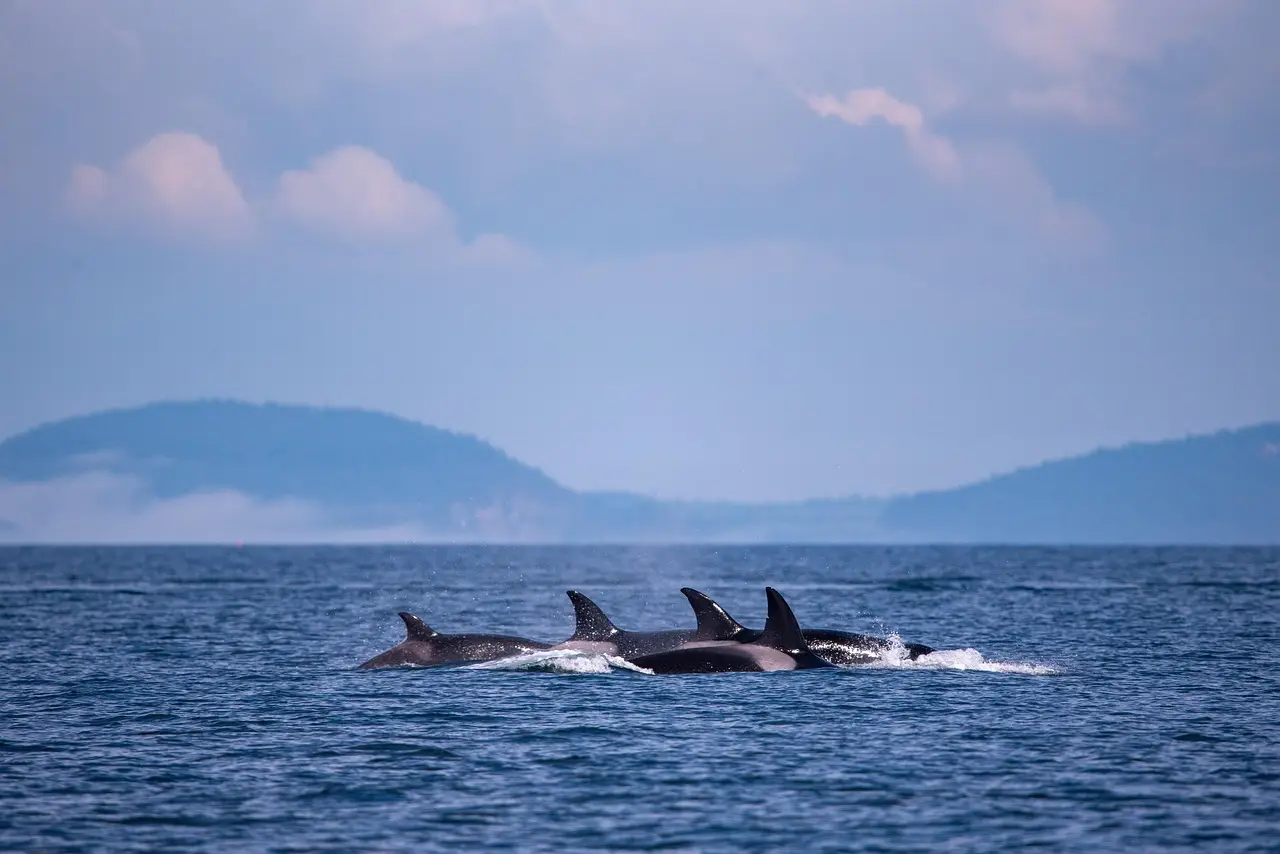
A stranded male orca from Scotland may have lived past 65 years, scientists reported on October 1 in the journal Frontiers in Marine Science — potentially making him the oldest male orca ever recorded. The estimate, which would push well beyond the accepted 50-to-60-year ceiling for male orcas, comes from an unlikely source: radioactive fallout from mid-20th-century atomic bomb testing preserved in the whale's teeth.
The animal, named KW2, washed up on Uist, an island off western Scotland, in 2015. He was one of five whales whose teeth researchers examined in the study: three orcas stranded between 1995 and 2016 and two sperm whales stranded in the 1990s.
How do you date a whale with bomb radiation?
Radiocarbon — a radioactive form of carbon — occurs naturally in the atmosphere, but nuclear weapons tests, especially in the mid-20th century, sharply raised environmental levels of the isotope. That carbon entered the marine environment and settled into the teeth of cetaceans (the group of whales and dolphins) as they grew.
"It gives us what we call a kind of bomb pulse," study first author Kieran Tierney, a research scientist at the Scottish Universities Environmental Research Centre, told Live Science. An animal whose teeth carry that pulse demonstrably lived through the testing era.
Orcas and sperm whales also have banded growth layers in their teeth, which researchers believe form once a year, like the rings in a tree trunk. The study's central test was whether those layers and the radiocarbon evidence told the same story.
For the two sperm whales, they largely did. The banded layers matched the atomic data, and the animals were estimated to have died in their 20s and 40s, suggesting the layers form annually at least in early- to mid-life. One orca also matched, with both methods placing him in his early 20s. KW2 did not. His tooth layers suggested his 50s, but his radiocarbon signature indicated he was at least 65 when he died.
Tierney offered two explanations: a cluster of layers may have been laid down as a single year, or new layers may have stopped forming late in life. "We think that the tooth effectively ran out of space to put down any more layers," he said.
Why the maximum-age estimate comes with caveats
The team noted that the radiocarbon data does not yield a precise age. Measuring maximum lifespans in nature is notoriously difficult, because researchers cannot track every individual animal, and no extensive worldwide record of orca longevity exists.
"The age estimates we have from life history studies are only a few decades old and researchers have only looked at limited numbers of individuals from a few orca populations," said Erich Hoyt, co-chair of the IUCN Important Marine Mammal Area Specialist Group and author of "Orca: The Whale Called Killer" (Firefly Books, 2019). "It would not surprise me if male killer whales were sometimes living to age 65 and beyond," said Hoyt, who was not involved in the study, in an email to Live Science.
What did the whales eat?
By measuring stable isotopes (chemical variants) of carbon and nitrogen in the teeth, the researchers also reconstructed clues to the animals' diets. The study's only female orca, named Lulu, appeared to have eaten a higher proportion of marine mammals, while the males seemed to eat more fish.
Lulu was famous for a grimmer reason. She stranded in 2016 as the last known female of Scotland's West Coast Community, a genetically distinct orca population that preyed on other marine mammals and stood on the brink of extinction. The population has not produced any calves in the decades researchers have studied it. It is now down to just two surviving males, which are expected to be the last of their kind.
Lulu's teeth posed a puzzle of their own. Her bomb-pulse signal was unclear, making comparisons difficult; her tooth layers suggested she died in her 30s, while her radiocarbon signature pointed instead to historic nuclear plant discharges in the Irish Sea in the latter half of the 20th century, carried to the Scottish west coast.
What does this mean for orca research?
Until now, most orca longevity research has focused on populations off the Pacific coast of North America, where males have a "mama's boy" reputation: they typically spend their entire lives with their mothers, and their life expectancy drops significantly after their mothers die.
That picture may not travel. The two surviving West Coast Community bulls, though not part of the study, are thought to be more than 50 years old and are getting by without their mothers' support. Combined with KW2's estimated age of 65-plus, this raises the possibility that Scottish males are more independent than their Pacific counterparts — and that male orca lifespan has been underestimated.
"It looks like the killer whales around our shores maybe do something a little bit different," Tierney said.
The findings remain preliminary: five animals is a small sample, and the radiocarbon method gives a floor, not a birth certificate. But if the bomb pulse in KW2's teeth is read correctly, the oldest male orca on record spent his long life in Scottish waters.
via livescience.com/feeds/news (Source)
More from Priya Raman
Show full bio
Senior reporter covering people, launches and day-to-day practice in general science news at SciBeat.
611 articles
Nearby plates
- Fallout from Nuclear Tests Reveals 65-Year-Old Orca, a Record for Males
- Fossil Bycatch Reveals Giant Orca Relative Hunted in North Sea 2 Million Years Ago
- Saw-Toothed 'Killer' Dolphin Hunted Off South Carolina 28 Million Years Ago
- Fossil killer whales show large-prey traits over 2 million years ago
- Drone-Collected Whale Breath Yields First Whole Genome Without Biopsies