Recorded November 22, 2026
Biology & EvolutionReported finding
Saw-Toothed 'Killer' Dolphin Hunted Off South Carolina 28 Million Years Ago
A newly named dolphin, Ankylorhiza serratidens, is the first toothed whale ever found with serrated teeth — saw-edged weapons no living whale possesses.
By Priya Raman3 min read593 words
In brief
- Ankylorhiza serratidens lived 30 to 28 million years ago in the Early Oligocene off South Carolina.
- Its teeth bear serrations of 0.9-1.3 mm, the first ever reported across multiple teeth in a toothed whale.
- The study, by Dr. Robert Boessenecker, was published October 30, 2026 in Acta Palaeontologica Polonica.
- Its fifth lower cheek tooth is about 26% larger than that of its relative Ankylorhiza tiedemani.
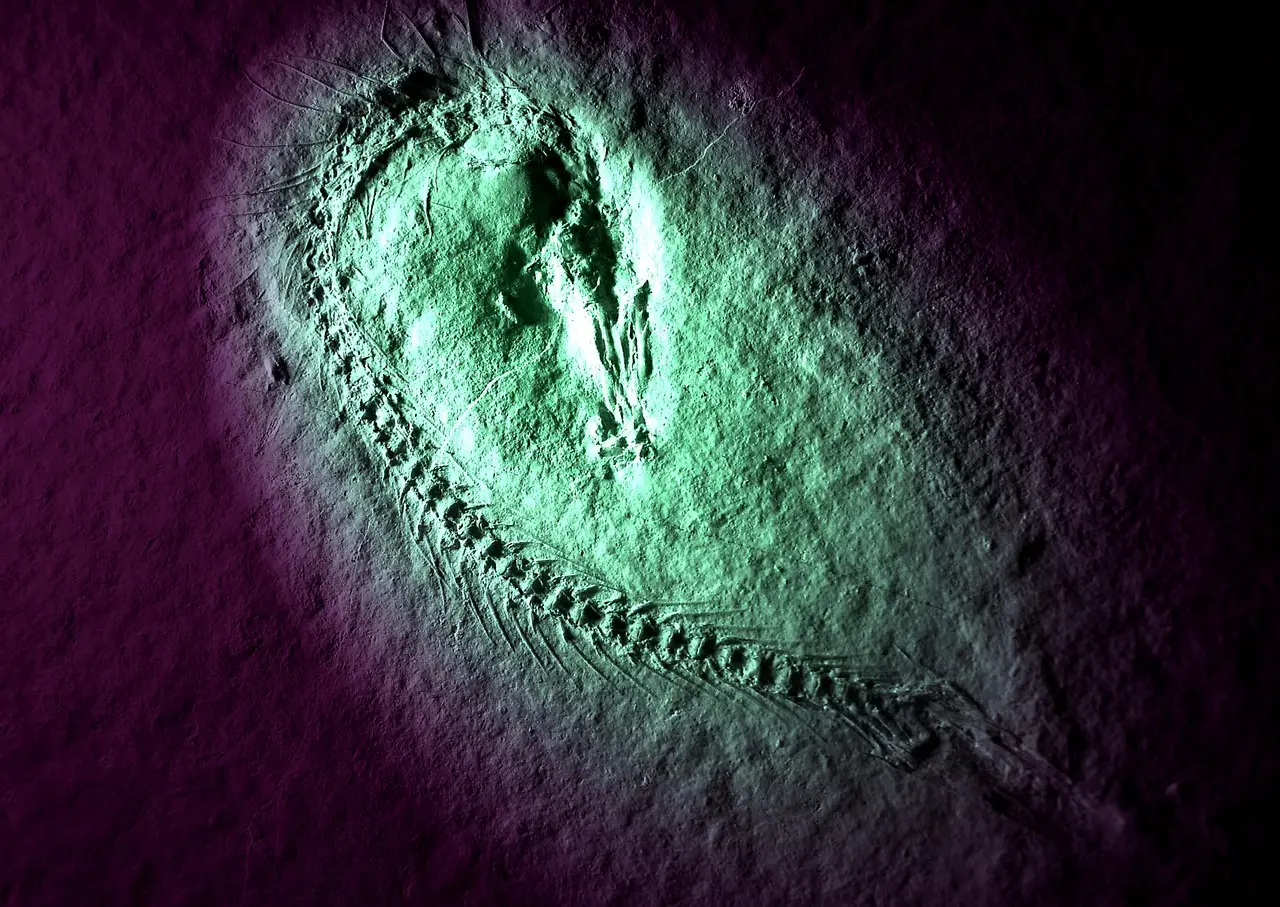
Roughly 28 million years ago, a dolphin with saw-edged teeth prowled the coastal waters where South Carolina now stands. Palaeontologists have named it Ankylorhiza serratidens, and its fossilised teeth carry serrations never before reported in any toothed whale.
The new species belongs to a group of macrophagous toothed whales (predators that feed on large prey, much as killer whales do today). It lived during the Early Oligocene epoch, approximately 30 to 28 million years ago. The description, published online on October 30, 2026, in the journal Acta Palaeontologica Polonica, rests on a single partial skeleton held at the Mace Brown Museum of Natural History at the College of Charleston.
Collectors recovered the specimen from the Edisto River area in Dorchester County, South Carolina, within layers of the Ashley Formation. The same formation had previously yielded fossils referred to Ankylorhiza tiedemani, an earlier relative and the largest toothed whale of the Oligocene, estimated at 4.5 to 6 metres (15 to 20 feet) long. The new skeleton includes both lower jaws, a dozen teeth, and neck, back and rib bones.
What makes the teeth unusual?
"The dentition of this specimen has extensive serrations (measuring 0.9-1.3 mm) on the posterior postcanine teeth," said Dr. Robert Boessenecker, a palaeontologist at the University of California, Berkeley, who authored the study.
Wear on some of the serrations exposed the dentine inside, which indicates they were true denticles — small tooth-like projections rather than artefacts of preservation. Serrated teeth occur widely among predatory dinosaurs, some ancient marine reptiles and many sharks, but no toothed whale had shown them across multiple teeth before. Modern killer whales and false killer whales, by comparison, have smooth teeth.
The serrations concentrate on the rear teeth, which suggests Ankylorhiza serratidens seized prey with its front teeth and processed it with its back teeth. "Coarsely serrated vertebrate teeth function like a saw blade, where movement of the flesh parallel to the serrated edge results in a 'grip and rip' action, concentrating tissues, including tough connective tissue and skin, into the notches and ripping the tissue with relative motion between the tooth and prey item," Dr. Boessenecker explained.
The species was likely even more specialised for large-prey feeding than Ankylorhiza tiedemani. Its back teeth were larger too, with the fifth lower cheek tooth about 26% bigger.
Why does the Oligocene matter?
The find illuminates a pivotal chapter in whale evolution. "The Oligocene epoch is a key period in the evolution of cetaceans as it marks the diversification of Odontoceti and toothed and toothless baleen whales, with a major increase in diversity and disparity relative to the Middle and Late Eocene and a peak in evolutionary rate," Dr. Boessenecker said.
"This period of nascent evolution is characterized by increases in encephalization, the first appearance of baleen, the evolution of echolocation and an explosive diversification in feeding morphology," he added.
How rare are such predators today?
Modern macrophagous marine mammals are few. "Modern macrophagous marine mammals are few, but include the killer whale (Orcinus orca), false killer whale (Pseudorca crassidens), and the leopard seal (Hydrurga leptonyx), though none today possess serrated teeth," the palaeontologist said.
"Fossils of extinct 'killer' sperm whales, basilosaurid whales, and the giant dolphin Ankylorhiza indicate that cetaceans of different groups have filled microphagous apex predator niches in the past."
The description rests on one partial skeleton, so inferences about feeding behaviour remain provisional until further specimens surface. Even so, a riverbank in South Carolina has yielded the first whale ever found with a saw's edge in its jaws.
via sci.news (Source)
More from Priya Raman
Show full bio
Senior reporter covering people, launches and day-to-day practice in general science news at SciBeat.
549 articles
Nearby plates
- Fossil Bycatch Reveals Giant Orca Relative Hunted in North Sea 2 Million Years Ago
- Fossil killer whales show large-prey traits over 2 million years ago
- Gobi Desert Fossil Rewrites 40-Year Mammal Evolution Theory
- 220-Million-Year-Old Skull From South Africa Unveils New Dinosaur Species
- Forgotten Museum Fossil Reveals New European Clawed Dinosaur