Plate Nº 58 · recorded November 17, 2026
Science Policy & FundingReported finding
Berkeley Lands Schmidt Grant to Build AI Platform on Doudna Supercomputer
Schmidt Sciences will fund a Berkeley Science AI Platform on NERSC's Doudna supercomputer, deploying in 2027 as the first academic-philanthropic public-private collaboration in the DOE ecosystem.
By Nathan Brooks4 min read763 words
In brief
- A Schmidt Sciences grant announced November 16, 2026 creates the Berkeley Science AI Platform, the first academic-philanthropic public-private collaboration in the DOE ecosystem.
- The platform will add compute and storage to Doudna, NERSC's flagship supercomputer, scheduled for deployment in 2027.
- Doudna runs on ORv3 direct liquid-cooled Dell PowerEdge servers with NVIDIA's Vera Rubin platform.
- SSCN's other announced members are the University of Chicago, the University of Illinois Urbana-Champaign, and Johns Hopkins University.
- Dedicated capacity is intended for Schmidt Sciences awardees and UC Berkeley researchers.
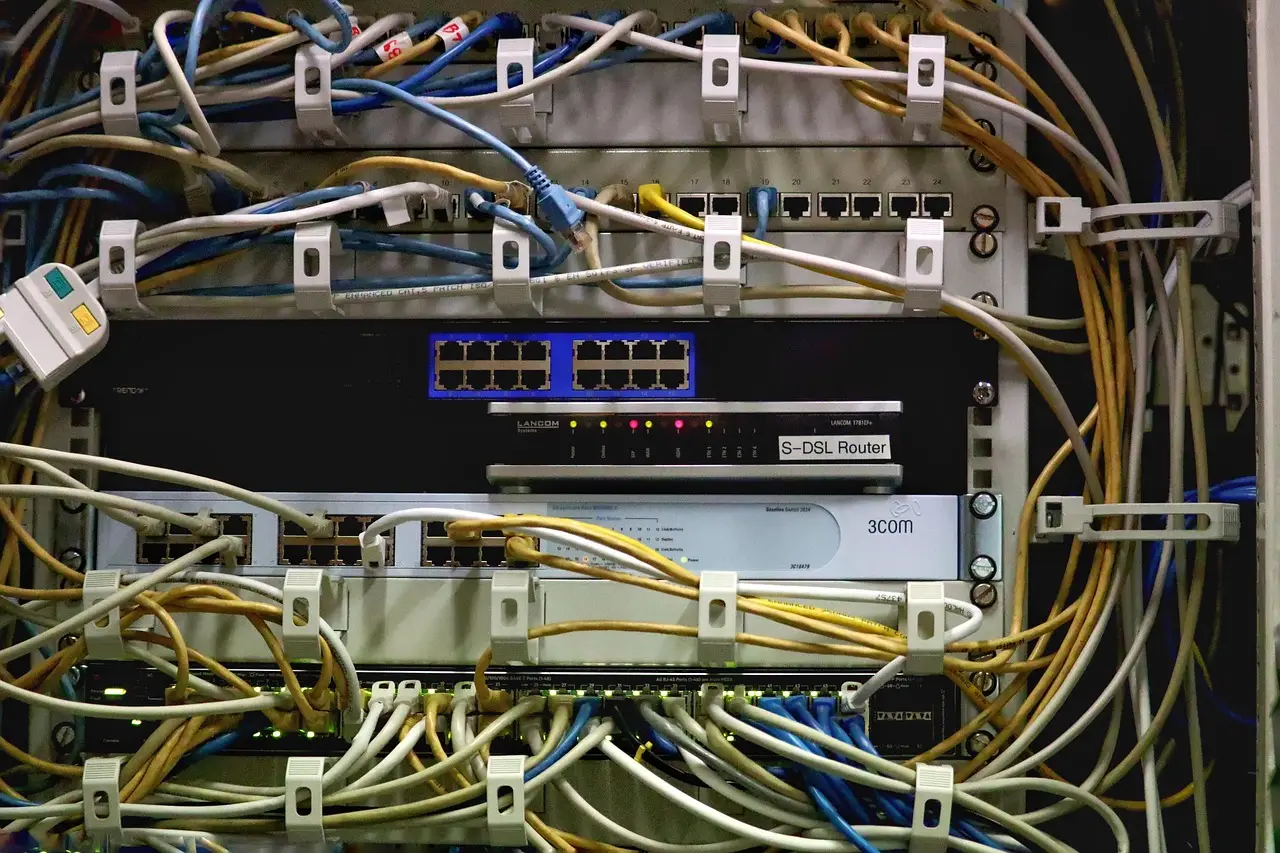
A major grant from Schmidt Sciences, announced November 16, 2026, will establish the Berkeley Science AI Platform — the first academic-philanthropic public-private collaboration in the Department of Energy ecosystem.
The new platform will run on hardware at the National Energy Research Scientific Computing Center (NERSC), a scientific user facility at Berkeley Lab owned by the U.S. Department of Energy. Deployment is scheduled for 2027 on Doudna, NERSC's new flagship supercomputer named for Nobel Prize-winning Berkeley chemist Jennifer Doudna.
Behind the deal is a straightforward bottleneck: new AI tools are rapidly accelerating scientific discovery, but researchers' ambitions often exceed available computing capacity.
What does the grant actually fund?
UC Berkeley and Lawrence Berkeley National Laboratory are joining the Schmidt Science Computing Network (SSCN), a new distributed network of institution-owned computing systems. Its purpose is to help scientists tackle complex challenges at previously unreachable scales.
The SSCN's model pairs institution-owned or institution-operated frontier-class compute infrastructure with three ingredients many academic teams historically lack:
- Expert support
- Durable software
- A shared scientific purpose
Within the AI Platform allocation, dedicated capacity is intended for Schmidt Sciences awardees and for UC Berkeley's own researchers. The SSCN is part of Schmidt Sciences, the philanthropic organization founded by former Google CEO Eric Schmidt and Wendy Schmidt, which has funded researchers worldwide in computer science, astrophysics, biosciences, and climate and science systems.
How powerful will the system be?
Doudna is powered by ORv3 direct liquid-cooled Dell PowerEdge servers combined with NVIDIA's Vera Rubin platform. The system will be engineered to support large-scale high performance computing — in plain English, running calculations and AI workloads far beyond what a typical university cluster can handle.
That scale matters for the science on deck. Doudna will support research across cosmology, genome engineering, earth science, materials science, and computational biology.
NERSC already counts two Berkeley Nobel Laureates among its users: Jennifer Doudna and Saul Perlmutter. Increased compute capacity could let them and others:
- Make massive maps of the universe to study dark matter and dark energy
- Supercharge the modeling and discovery of innovative new materials
- Edit the human genome to prevent and treat a range of health conditions
What are the leaders saying?
"UC Berkeley and Berkeley Lab have been driving discovery together for nearly a century," said Berkeley Chancellor Rich Lyons. "Now, with Schmidt Sciences, our researchers have the computing power they need to cast new light on even more of science's biggest questions. I can't wait to see the discoveries enabled as a result."
Berkeley Lab Director Kathy Yelick tied the platform to a federal mission. "This system will leverage the Doudna system architecture and contribute to the Department of Energy's Genesis Mission by broadening access to advanced computing for current and future machine learning applications," she said. "It will help advance human knowledge and accelerate discovery."
Stuart Feldman, president of Schmidt Sciences, framed the network's philosophy: "Scientific ambition should not be limited by whether a research team already has the massive computing and storage needed to pursue its most important questions," he said. "The SSCN is a bet on the ingenuity of scientists and the strength of research institutions."
Vice Chancellor for Research Richard Allen added: "I'm excited to see how researchers across the disciplines will use this new resource once it comes online."
Why does this matter for biology?
Jennifer Doudna, CRISPR pioneer and founder of the Innovative Genomics Institute at UC Berkeley, offered perhaps the most concrete vision of what the platform enables.
"Biology is becoming as much a computational science as an experimental one, and this partnership puts frontier-scale computing to work in the field," Doudna said. "Paired with the right data, that power lets AI surface more possibilities than any lab could test."
She cautioned that human judgment remains essential: choosing which possibilities to pursue "still takes a scientist's judgment and the kind of curiosity that has always driven fundamental research at Berkeley." Researchers who bring both, she predicted, "will make breakthroughs across medicine, agriculture, and climate, and find answers none of us can see yet."
Who else is in the network?
Other members announced November 16 include the University of Chicago, the University of Illinois Urbana-Champaign, and Johns Hopkins University.
The SSCN's stated goal goes beyond hardware. The network aims to build scientific capability, software, and expertise that endure over time — a hedge against the risk that expensive machines outlast the skills needed to use them well.
Details about the network are available at schmidtsciences.org/sscn.
via news.berkeley.edu (Source)
More from Nathan Brooks
Show full bio
Market editor covering companies, deals and strategy in general science news at SciBeat.
406 articles
Nearby plates
- DOE Budget Proposal Boosts Supercomputers, Cuts Research Funding
- DOE's AI Push Is Squeezing Funding for Research Grants
- NSF Names Three X-Labs Topics, Opens AI-for-Physical-Systems Call
- NSF to invest $290 million in eight U.S. quantum institutes
- NSF Unveils New Metascience Office and $300 Million X-Labs Push