Recorded November 24, 2026
Biology & EvolutionReported finding
Birds in Biodiverse Habitats React Faster to Predators
Hundreds of experiments across 10 reserves in eastern China show birds in species-rich habitats mob predators faster and in larger groups — biodiversity may run nature's early-warning system.
By James Calloway3 min read603 words
In brief
- Study published in PLOS Biology (2026), DOI 10.1371/journal.pbio.3003805
- Several hundred experiments across 10 nature reserves in eastern China
- Playback recordings varied from 1 to 8 species; more species meant larger, faster mobbing responses
- Researchers used flying hawk models and sitting owl models to trigger alarm and mobbing calls
- Authors suggest future work on resource information and insect communities
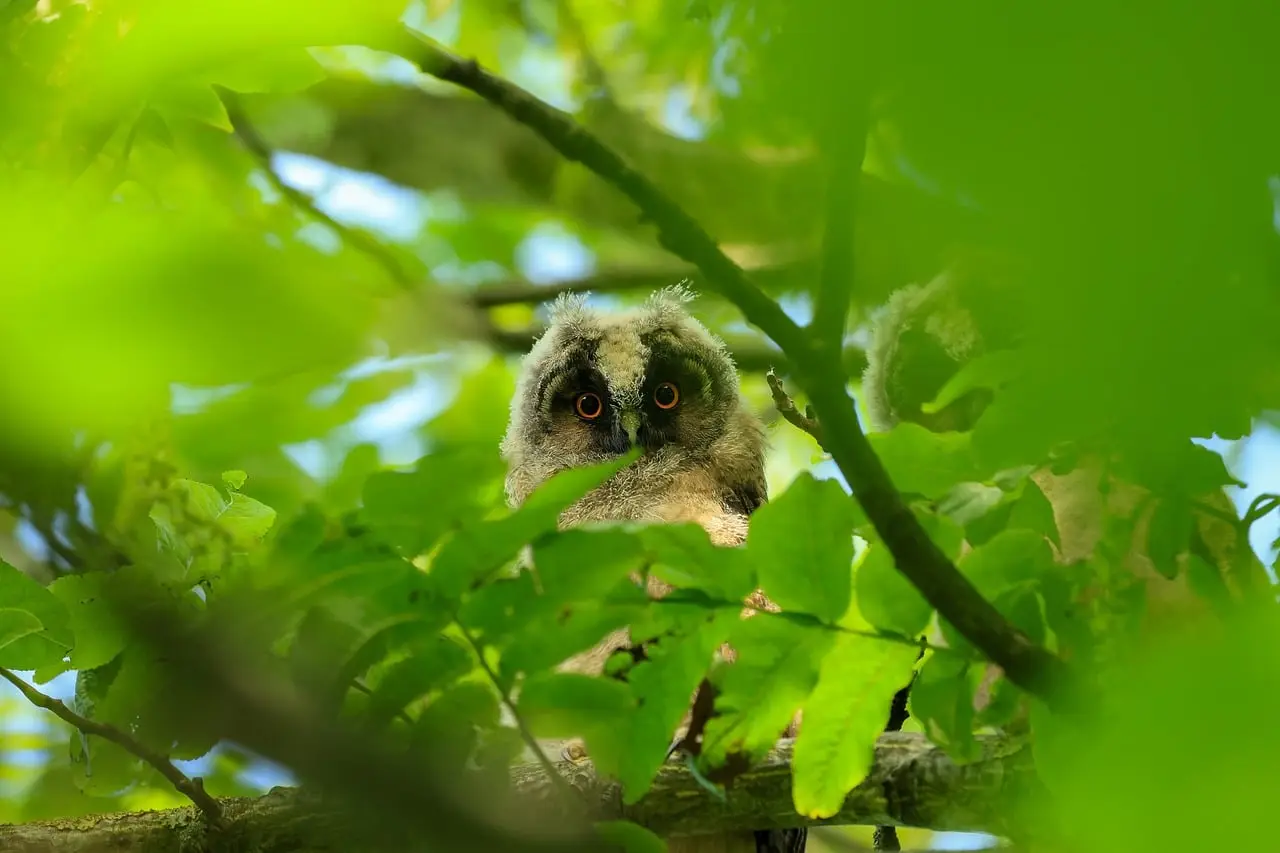
Birds living in species-rich habitats respond faster and in greater numbers to predators, according to a new study published in PLOS Biology. The research, conducted across 10 nature reserves in eastern China, shows that biodiversity shapes not just how many animals live in a place but how quickly information about danger moves through the community.
Kumar and colleagues ran several hundred experiments in two rounds. In the first, they used flying hawk models and sitting owl models to provoke prey birds into two distinct responses: alarm calls, which warn other birds to flee, and mobbing calls, which recruit birds to gather around the predator and drive it off.
What did the playback experiments show?
In the second round, the team played recorded mobbing calls through speakers, varying the number of species in the recordings from one to eight. More species meant bigger crowds. Increased species diversity in the playback correlated strongly with larger mobbing groups and with faster, more numerous response calls from local birds.
That's the mechanism worth spelling out. Alarm and mobbing calls function as ecological information — signals that travel between individuals and species. In diverse habitats, more species are listening, more are signaling, and the warning network simply moves faster. In species-poor habitats, that network thins out.
The authors put it directly: "The number of birds signaling about predation increases with the species diversity of the community, even in the high-risk context of alarm calls. Further, we show using a manipulative playback experiment that the more species that signal in mobbing contexts, the larger the response, demonstrating that species diversity can influence the transmission of information."
What does this change for conservation?
The findings add a functional argument to the usual biodiversity case. Local species diversity already matters for ecosystem services like pollination and pest control. This study suggests it also matters for the flow of community information — and that prey birds in species-poor habitats may show weaker responses to danger simply because fewer voices carry the warning.
But let's stress-test the claim a bit. The playback experiment manipulated the number of species in a recording from one to eight, and the correlation with response strength was strong. A correlation, though, is what it is. The authors themselves flag the limits of current knowledge, noting that future research might identify similar patterns for other kinds of information, such as details about valuable resources or habitat space, and in other influential animal groups, such as insects.
So the study covers birds, in eastern China, in predator-response contexts. Whether insects, mammals, or resource-related signals behave the same way remains untested. And the paper does not claim that slower predator responses reduce bird survival rates in the wild — that causal link is a plausible next question, not a demonstrated result.
Still, the core experimental finding is hard to dismiss. A manipulative playback design, several hundred trials, ten reserves, and a clear dose-response pattern: the more species in the mix, the stronger and quicker the community's reaction. Conservationists now have evidence that biodiversity loss may quietly degrade an animal community's early-warning system, well before any species disappears entirely.
Study details
- Publication: Species diversity increases information flow about predation in bird communities, PLOS Biology (2026)
- DOI: 10.1371/journal.pbio.3003805
- Field sites: 10 nature reserves in eastern China
- Methods: hawk and owl predator models; speaker playback of mobbing calls with one to eight species
The next question researchers will face is whether the pattern holds beyond birds. If it does, the cost of losing species will look steeper than we thought.
via phys.org/rss-feed/ (Source)
More from James Calloway
Show full bio
Staff writer covering regulation, policy and their impact on general science news at SciBeat.
594 articles
Nearby plates
- Tracking 4,581 Animals Reveals a Hidden Human Effect on Wildlife
- Outside forests may matter more to birds than habitat within parks
- Two Birds Shatter 120 Decibels — Louder Than a Chainsaw
- Elephants synchronize rumbles during group decisions, study finds
- Fish Evolved Schooling 60 Times—and Lost It 320 Times