Recorded November 19, 2026
Earth & ClimateReported finding
Climate Change and Habitat Loss Raise Risk of Deadly Bat Viruses
An Adelaide University review in The BMJ links climate change, heat waves and habitat loss to a higher risk of bat-borne viruses like Ebola, Nipah and Hendra reaching humans.
By Nathan Brooks4 min read825 words
In brief
- Adelaide University review published in The BMJ (2026), DOI 10.1136/bmj-2026-100560
- Covers Ebola, Marburg, Nipah, Hendra and Australian bat lyssavirus
- A sprinkler system 15 meters up in Adelaide's tree canopy cools a flying fox colony during heat waves
- Australia's eastern states are seeing mass flying fox mortality, likely tied to starvation and weather
- Hendra virus passes from bats to horses to humans; pigs have transmitted Nipah in parts of Asia
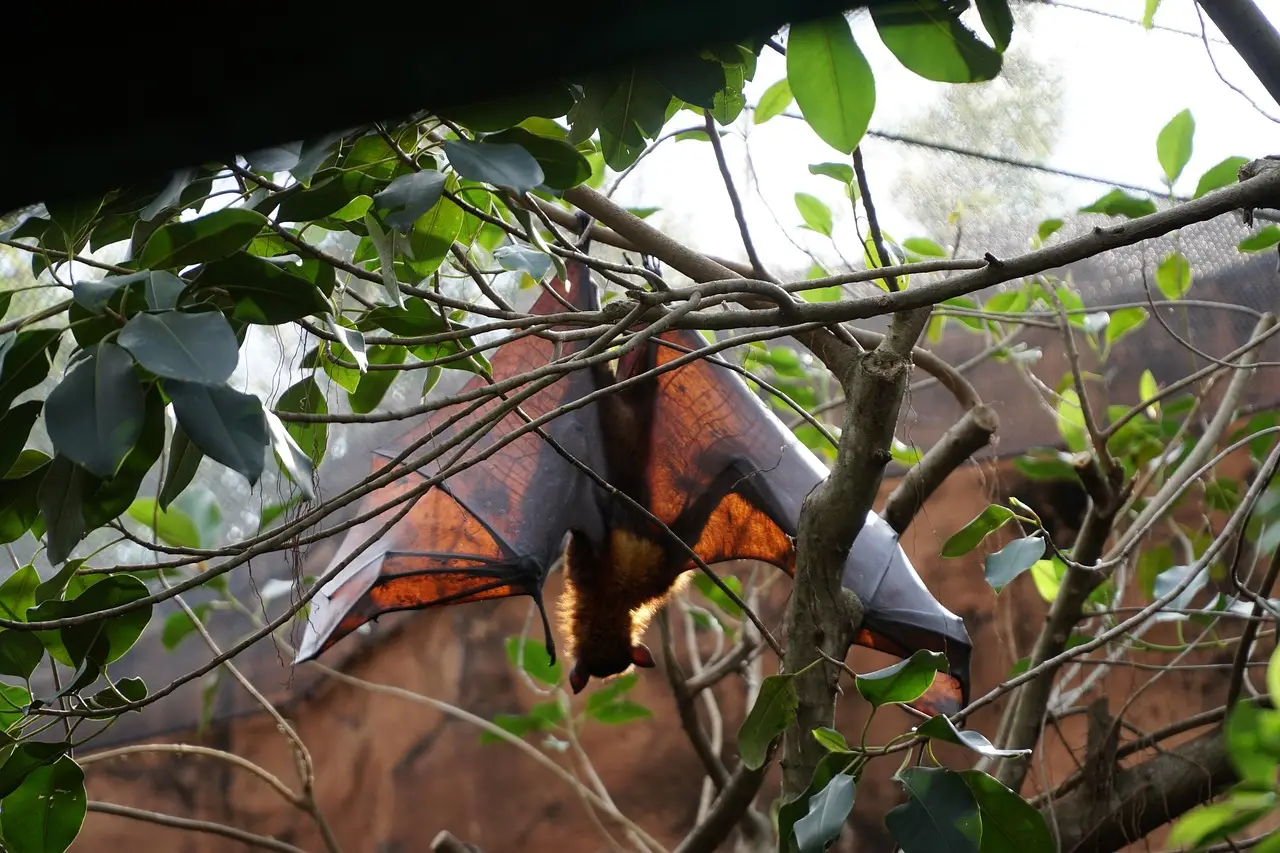
Bats carry some of the world's deadliest viruses, and new research from the University of Adelaide warns that climate change, extreme heat and habitat destruction could increase the chances of those diseases spreading to humans.
The international review, published in The BMJ in 2026 (DOI: 10.1136/bmj-2026-100560), examines the transmission, prevention and management of some of the most dangerous bat-borne diseases, including Ebola, Marburg, Nipah, Hendra and Australian bat lyssavirus. It focuses on pathogens the American Public Health Association has flagged as significant public health concerns.
The timing is stark. Australia's eastern states are currently experiencing a mass mortality of flying foxes, most likely caused by starvation and weather conditions linked to habitat loss and climate change.
How does environmental change spread disease?
The mechanism, in plain terms, works like this. Rising temperatures, deforestation and biodiversity loss are disrupting natural ecosystems. That changes where bats live and find food, which increases opportunities for contact between bats, humans and domestic animals. More contact means more chances for a virus to jump species.
Lead author Dr. Jessica Stanhope, from Adelaide University's School of Medicine, said the findings highlight the growing connection between environmental destruction and emerging infectious diseases.
"Climate change and habitat loss are putting increasing pressure on bat populations around the world, forcing them to adapt to shrinking natural habitats and potentially bringing them into closer contact with people," Stanhope said.
The review notes that diseases such as Ebola and Nipah have high fatality rates and can cause long-term health complications among survivors.
Why is urban tree clearing part of the problem?
Habitat destruction isn't confined to remote rainforests, according to co-researcher emeritus professor Philip Weinstein, from Adelaide University's School of Public Health. It's happening inside cities too — including his own.
"Adelaide is currently losing mature trees to urban development, yet these are precisely the kinds of natural habitats we need to protect if we're serious about safeguarding biodiversity and reducing the risk of emerging infectious diseases," Weinstein said.
Livestock add another route. As agricultural development expands into natural habitats, bats come into closer contact with farm animals, giving viruses a bridge between species.
"We've seen this with Hendra virus in Australia, where infections can pass from bats to horses and then to humans, and with Nipah virus in parts of Asia, where pigs have played a role in transmitting the disease," Weinstein said.
What does extreme heat do to bats?
As Australia heads into another hot summer, co-researcher associate professor Wayne Boardman, from Adelaide University's School of Animal and Veterinary Sciences, points to a second climate-driven risk: heat stress can make bats shed more virus.
"Extreme heat places enormous stress on bats, potentially increasing the amount of virus they shed," Boardman said. "Heat waves can also cause bats to become sick or die from heat exhaustion, increasing the likelihood of people coming into contact with infected animals."
His advice is blunt: never touch sick or dead bats. Anyone who encounters a bat in distress should contact a wildlife rescue organization or the relevant local authority.
There's already a practical fix in Adelaide. A large sprinkler system has been installed roughly 15 meters (49 feet) above the ground in the tree canopy near the city's flying fox colony, keeping bats cool during heat waves.
"This not only helps protect bats from heat stress and death but may also reduce the likelihood of sick or dying animals coming into contact with people," Boardman said. "It's a practical example of how protecting wildlife can also help protect human health."
Can bats be part of the solution?
The researchers are careful not to frame bats as villains. As pollinators and seed dispersers, bats help sustain woodlands and forests. They also eat large numbers of insects, including mosquitoes and agricultural pests.
"So, while bats can carry diseases, they generally do more good than harm," Stanhope said. "The irony is that the changes humans are making to these environments could ultimately have serious consequences for our own health."
The review points to opportunities for new drugs and vaccines to prevent and treat bat-borne diseases. But the researchers agree that prevention starts with the environment itself. Weinstein says protecting and restoring natural habitats, reducing human contact with infected animals and developing better vaccines and treatments will be critical to reducing the risk of future outbreaks.
"Ultimately, we need to conserve and restore the habitats bats depend on, reduce the pressures driving them into urban areas and tackle climate change," Stanhope said. "Protecting bats and their natural environments is also about protecting human health."
The findings are preliminary in the sense that they're a review of existing evidence rather than a trial, and the spray-cooling measure hasn't been formally evaluated. Still, the direction of the evidence is consistent: what harms bat habitats tends to circle back to human health.
via phys.org/rss-feed/ (Source)
More from Nathan Brooks
Show full bio
Market editor covering companies, deals and strategy in general science news at SciBeat.
563 articles
Nearby plates
- Bats Carry a Double Antibody System No Other Mammal Has
- Rainfall Predicts Lassa Fever Outbreaks, 30-Year Rodent Study Finds
- Tracking 4,581 Animals Reveals a Hidden Human Effect on Wildlife
- Madidi Park confirms 99 bat species, seven first records in Bolivia
- COVID-19 immunity may shield against other bat coronaviruses