Recorded November 19, 2026
Earth & ClimateReported finding
Stonehenge's six-ton Altar Stone narrows its origin to northeast Scotland — but exact source still eludes scientists
The most detailed geological study of Stonehenge's six-ton Altar Stone rules out several suspected Scottish sources while refining the fingerprint needed to find its true origin, overturning a century-old Welsh theory.
By Marcus Bennett4 min read799 words
In brief
- The Altar Stone weighs about six tons and measures 4.9 meters (16 feet) long.
- The study was published in the Journal of the Geological Society on November 18, 2026 (183, issue 6).
- A century-old theory placing the stone's origin in Wales was overturned; northeast Scotland is now the leading candidate.
- Stonehenge's bluestones traveled roughly 225 km (140 miles) from western Wales; the monument was built between about 3000 and 1600 BC.
- No examined location in the Orcadian Basin has yet matched the stone's geological fingerprint.
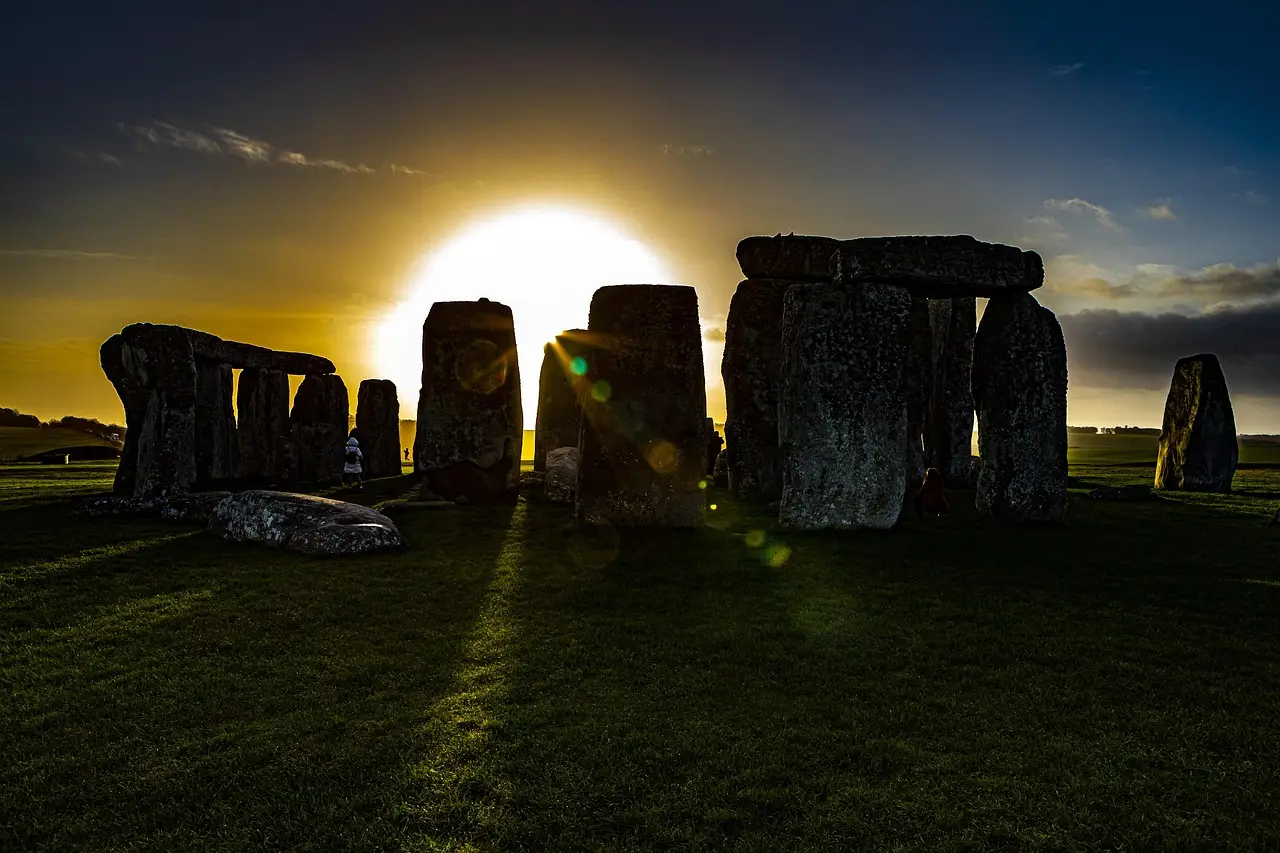
A six-ton sandstone slab at the heart of Stonehenge did not come from Wales, and it has now failed to match every candidate rock formation scientists have tested so far in northeastern Scotland — the region currently considered its most likely birthplace.
That is the headline result of a study published in the Journal of the Geological Society on November 18, 2026, described by its authors as the most comprehensive geological investigation of the Altar Stone ever undertaken. The international team combined fresh observations of the monument with detailed examinations of stone fragments held in museum collections.
The result cuts two ways. The search has not produced an answer, but it has eliminated several suspects and given researchers a sharper toolkit for the next round of fieldwork.
What did the researchers actually do?
The team applied multiple analytical techniques to the Altar Stone and to fragments removed from it over the decades. They studied four things at once: the sandstone's physical structure, its mineral content, its chemical composition, and its isotopic signatures — measurable variants of chemical elements that act like a rock's birth certificate.
Together, these characteristics form a distinctive geological fingerprint. Researchers can compare that fingerprint against rock formations across Britain, much as a forensic team matches evidence against a database. The scientists paid particular attention to the Orcadian Basin in northeastern Scotland, an area earlier work had flagged as promising.
So far, no examined location has produced rock with the same combination of characteristics as the Altar Stone.
Professor Duncan Pirrie, Emeritus Professor at the University of South Wales and leader of the study, said: "So far, none of the locations examined have the same set of characteristics as the Altar Stone. That tells us the search is not over, but we are now far better equipped to focus on the areas most likely to yield an answer."
In short: the Scottish lead survives, but the smoking gun remains unfound.
How did a century-old theory collapse?
For almost 100 years, archaeologists and geologists assumed the Altar Stone came from western Wales, alongside the monument's famous bluestones. Recent research overturned that assumption and pointed instead to northeastern Scotland.
The new study builds on that reversal by establishing precise geological criteria for a match — in effect, a checklist future teams can apply to candidate formations.
Professor Richard Bevins, Honorary Professor in the Department of Geography and Earth Sciences at Aberystwyth University, said: "This latest study significantly refines the search by identifying the specific geological characteristics we need to look for, allowing future investigations to be targeted more effectively. With each new piece of evidence, we move closer to solving one of Stonehenge's most enduring mysteries."
The slab itself measures 4.9 meters — about 16 feet — and lies at the center of the monument on Salisbury Plain in southern England.
Why does ruling places out count as progress?
The stakes go well beyond the birthplace of one rock. Stonehenge was built in stages between roughly 3000 and 1600 BC, and its builders demonstrably moved heavy stones over long distances. The smaller bluestones traveled about 225 kilometers (140 miles) from western Wales.
If the Altar Stone came from northeastern Scotland, its journey to Salisbury Plain would have been far longer still. Pinpointing its source would offer direct evidence about the transport methods, organization, and engineering capability of the prehistoric communities involved.
Professor Nick Pearce, Emeritus Professor of Geochemistry at Aberystwyth University, framed the elimination of candidate sites as genuine forward motion: "In a geological detective story such as this, ruling out potential source areas is just as important as identifying new ones. Every location eliminated narrows the search and brings us closer to discovering where the Altar Stone originated."
He noted the stone is unique among those at Stonehenge, and tracing its source would provide new insight into its remarkable journey.
What happens next?
The researchers believe the detailed geological fingerprint developed in this investigation will guide future searches and could eventually identify the Altar Stone's original location — a discovery that would illuminate one of prehistoric Britain's most extraordinary engineering accomplishments.
The work carries the usual caveats of an open investigation: the findings are preliminary in the sense that no match exists yet, and the sample of examined Scottish locations, while the largest to date, does not cover every candidate formation.
The team drew on geologists and archaeologists from the United Kingdom, Canada, Italy, and Sweden. Participating institutions included the University of South Wales, Aberystwyth University, University College London, the University of Aberdeen, the University of Plymouth, the James Hutton Institute, the Swedish University of Agricultural Sciences, the University of Milano-Bicocca, and several industry partners.
Every suspect ruled out narrows the map — and this study has redrawn it more precisely than any before.
via sciencedaily.com (Source)
More from Marcus Bennett
Show full bio
News editor covering regulation, policy and their impact on general science news at SciBeat.
584 articles