Plate Nº 85 · recorded November 10, 2026
Biology & EvolutionReported finding
Half a Million Years Ago, Humans May Have Kept Souvenirs
Colorful pebbles, fossil-studded handaxes and reworked old tools from Israeli sites suggest early humans kept memory objects 500,000 years ago, researchers propose.
By Elena Vasquez3 min read581 words
In brief
- The study proposes keepsake-like objects dating back roughly 500,000 years.
- Researchers from Tel Aviv University and the University of Oxford published the paper in Evolutionary Anthropology.
- Evidence comes from sites in present-day Israel: Qesem Cave, Sakhnin, Revadim and Jaljulia.
- Sakhnin handaxes carry fossils or rock patterns positioned near the center, visible after shaping.
- Alternative explanations — aesthetics, unknown uses, simple practicality — remain possible for any single artifact.
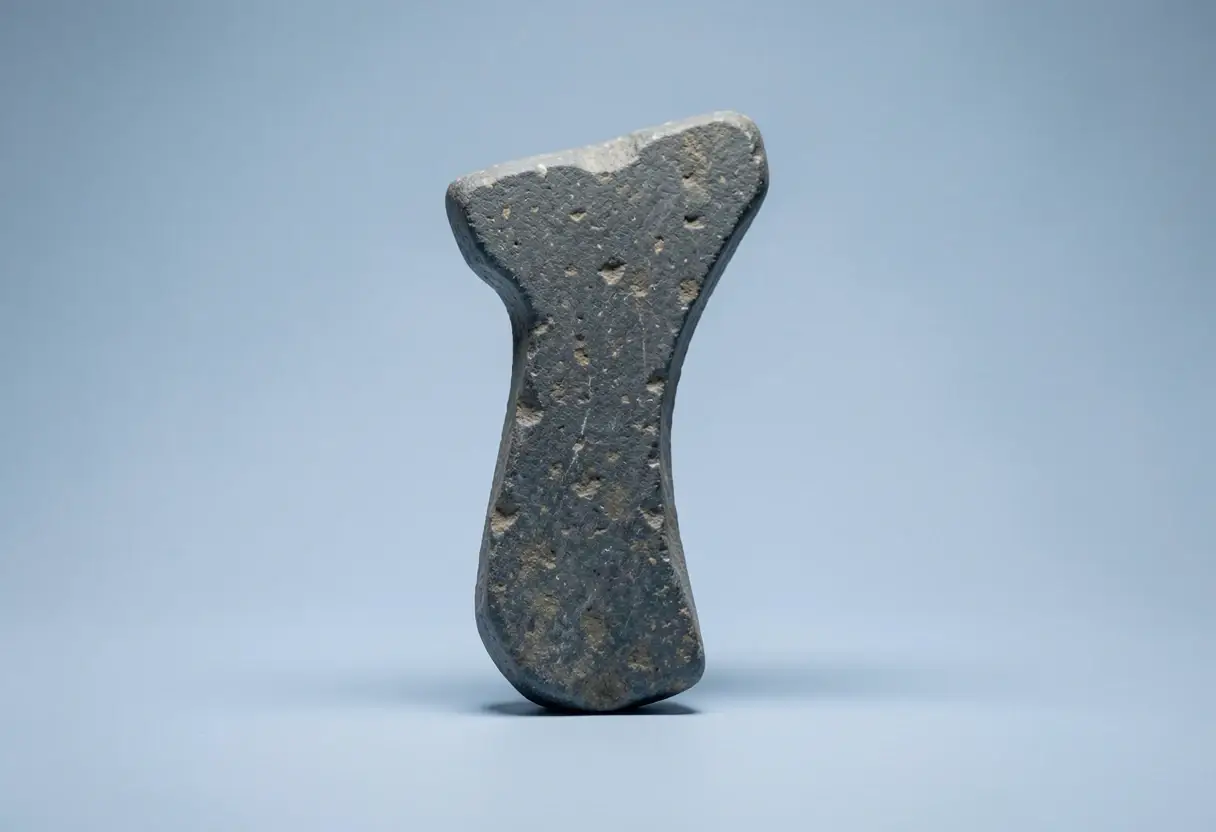
Early humans living roughly 500,000 years ago may have carried home stones and tools that reminded them of people, places or events, according to a new study from Tel Aviv University and the University of Oxford.
The paper, published in the journal Evolutionary Anthropology, argues that unusual stones and carefully kept tools could rank among humanity's earliest keepsakes. It's a hypothesis, not a settled fact. But if it holds up, it pushes the roots of sentimental collecting back deep into prehistory.
The idea gives archaeologists another lens. Some artifacts look puzzling if every object gets judged purely as a tool. A colorful pebble earns no score for cutting or scraping. Yet someone carried it anyway, and that effort demands an explanation.
What did the researchers actually find?
The team draws on several archaeological sites in what is now Israel:
- Qesem Cave: Early humans brought colorful pebbles inside that have no clear practical purpose. Moving them cost effort, and their presence in the cave raises the question of what made them worth picking up.
- Sakhnin: Stone handaxes incorporated fossils or striking patterns in the rock. On some pieces, the feature sits near the center, positioned so it stayed visible even after the stone was shaped.
- Revadim, Jaljulia and Qesem Cave: People worked with older stone tools that already had weathered surfaces. Some were sharpened again while parts of the old surface were left intact, preserving visible traces of the object's history.
That last detail matters. You don't leave an old weathered patch on a reworked tool by accident every time. Someone may have chosen to keep the visible mark of the past.
Why would a memory object help?
The researchers suggest a familiar object could summon a specific memory to mind, much as a souvenir does today. For people living in small groups, that reminder might carry real weight.
Picture it. A stone helps you recall who was present when something happened. Or it distinguishes something you saw yourself from a story you merely heard secondhand.
That distinction could have mattered a great deal. People in these groups depended on each other to share food, cooperate and settle obligations. The paper raises the possibility that objects helped them track shared experiences and lean on those records when making decisions later.
In short: a keepsake may have been a social tool even when it was useless as a physical one.
How solid is the evidence?
Here's where the hedging belongs. The authors themselves flag other ways to read the finds.
A person could simply have liked the look of a fossil. A pebble might have served some purpose that left no trace on the object. An old tool may have stayed in use because it was still handy, history be damned.
And a single artifact can't tell researchers which motive dominated. The study is a hypothesis about what collecting may have meant, with the oldest examples dating back roughly 500,000 years — not a verdict.
Testing it will take pattern work. The researchers suggest looking at where unusual objects turned up and how often people carried or altered them. If keepsake-like items show up consistently across sites and periods, that would support the idea of a wider habit of keeping things with a history. If they stay rare and scattered, simpler explanations gain ground.
The takeaway: some of our ancestors may have treasured objects not for what they could do, but for what they remembered.
via knowridge.com (Source)
More from Elena Vasquez
Show full bio
Correspondent covering money, funding and market shifts around general science news at SciBeat.
384 articles