Plate Nº 78 · recorded November 10, 2026
Biology & EvolutionReported finding
Keepsakes May Date Back Half a Million Years, Study Claims
Tel Aviv researchers claim early humans collected keepsakes some 500,000 years ago, possibly driving the evolution of autobiographical memory and self.
By James Calloway4 min read754 words
In brief
- Tel Aviv University study suggests keepsake-keeping dates back roughly 500,000 years
- Colorful pebbles with no practical use were found at Qesem Cave, Israel
- Handaxes preserving fossils at their center were discovered in the Sakhnin Valley
- Published in Evolutionary Anthropology: Issues, News, and Reviews (2026), DOI 10.1002/evan.70051
- The authors themselves emphasize the claim is a hypothesis, not proof
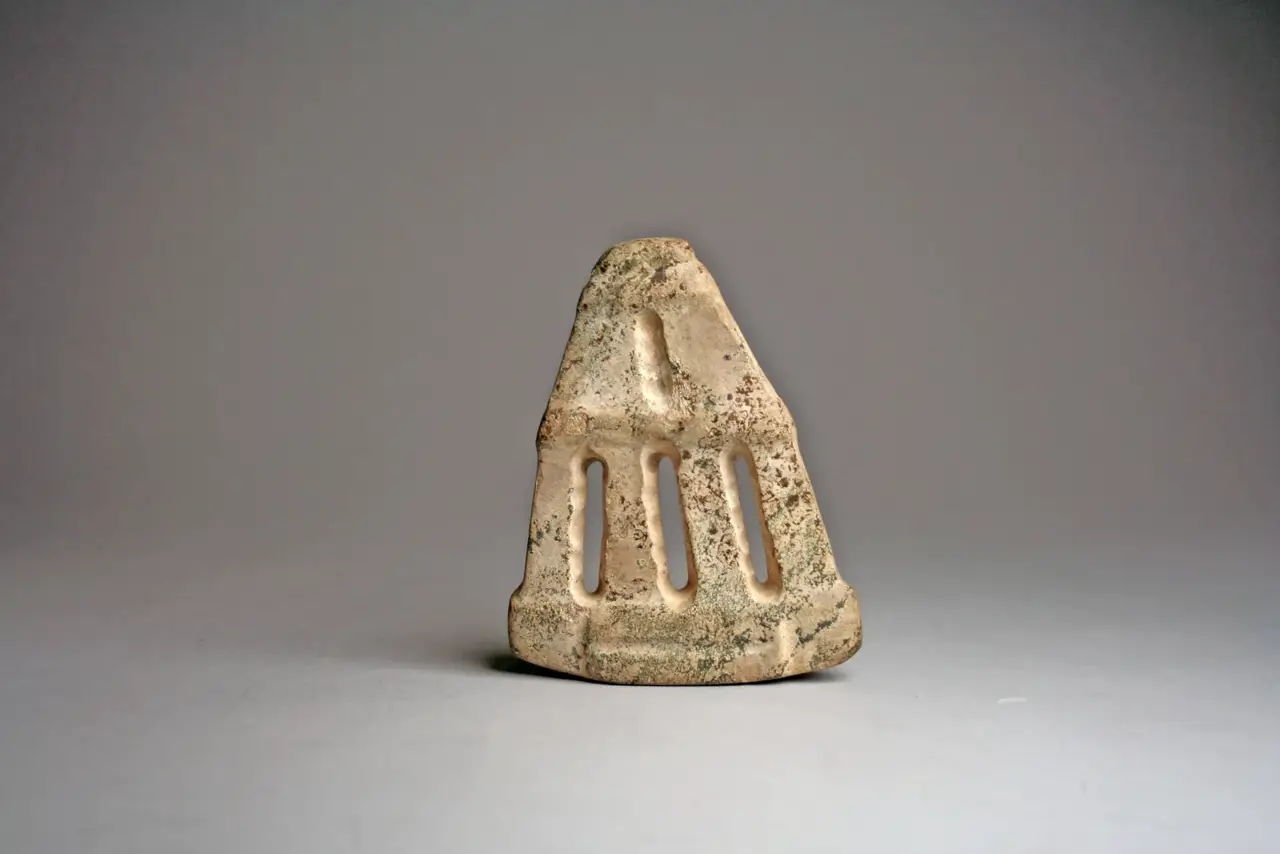
Half a million years. That is how far back the human habit of keeping meaningless-but-meaningful objects may stretch, according to a new study from Tel Aviv University published in the journal Evolutionary Anthropology: Issues, News, and Reviews (DOI: 10.1002/evan.70051).
The researchers argue that early humans collected, carried and kept unusual objects with no apparent practical purpose, and that these objects acted as personal keepsakes. Not tools. Not food. Just reminders.
The team behind the paper includes Dr. Yoav Ram of the School of Zoology, Wise Faculty of Life Sciences; professor Ran Barkai and Dr. Ella Assaf of the Department of Archaeology, Entin Faculty of Humanities; professor Liad Mudrik of the School of Psychological Sciences, Gordon Faculty of Social Sciences; and Dr. Bar Efrati of Oxford University.
What did archaeologists actually find?
The evidence comes from several Israeli sites dating back hundreds of thousands of years:
- Qesem Cave: small, colorful pebbles brought from various locations, with no identified practical use.
- Sakhnin Valley: handaxes made from flint containing fossils or unusual geological formations — with those distinctive features deliberately preserved at the center of the tools, where they could be seen and touched.
- Revadim, Jaljulia and Qesem Cave: old flint tools collected after their surfaces had changed with time. Some were resharpened, but most original surfaces and traces of earlier workmanship were preserved.
That last point is the most intriguing. The researchers suggest the aged appearance itself may have held value for the owners. In a sense, it told the object's story.
How could keepsakes shape memory?
Here is where the study shifts from archaeology to speculation — informed speculation, but speculation. The paper combines archaeological findings with evolutionary theory, psychology and neuroscience.
The authors propose that an object brought back from a particular place could have triggered memories of personal experiences. Its appearance and texture may have helped owners distinguish events they lived through from stories they merely heard or imagined.
That distinction matters. In human societies, remembering encounters, alliances, gifts, mutual obligations and rights tied to specific places is critical. Reliable personal memory, the researchers argue, facilitates cooperation, maintains relationships and builds trust. A keepsake is private, portable and showable — which may have strengthened the credibility of a personal account.
Over many generations, they suggest, keepsake use could have increased evolutionary pressure on brain mechanisms that determine the source and reliability of a memory. Material culture and neurobiology, in this view, shaped each other and jointly drove the evolution of autobiographical memory — the ability to organize personal experiences into a continuous life story that underpins our sense of self.
Note what is not said: nobody found a label on a pebble saying "souvenir." The whole chain — from stone to memory to brain evolution — is a model, not a measurement.
Why this particular period?
Barkai offers one possible trigger: environmental change. "The disappearance of large animals, particularly elephants, required early humans to develop new hunting methods and become familiar with hunting grounds inhabited by animals such as fallow deer and wild cattle. Objects taken from these places may have helped them maintain a personal connection with the places that would henceforth provide their livelihood," he said.
Again, hedging is warranted. This is a connection to climate and ecology, not a demonstrated cause.
What does this change for the rest of us?
For now, not much in practical terms — but it reframes a familiar question. If the hypothesis holds, the seashell in your pocket is the latest entry in a half-million-year-old practice, one that may have helped build the brain machinery behind personal identity.
The authors themselves stress this is a hypothesis, not proof that every unusual stone was a keepsake. Still, the archaeological record shows memory-laden objects accompanying humans from half a million years ago to today, which makes it reasonable, they write, to assume the behavior carried meaning and affected human evolution.
Ram puts it plainly: "When early humans brought a colorful stone or an old tool they had found in the landscape back to their cave, that object may have helped them remember a significant event or encounter for the rest of their lives. In this way, keepsakes may have become a kind of 'external memory device,' supporting the evolution of brain mechanisms responsible for autobiographical memory, which is so characteristic of us as humans and so important in shaping our identity."
A stone as an external hard drive. The metaphor is appealing. The evidence, so far, is circumstantial — and the authors mostly admit it.
via phys.org/rss-feed/ (Source)
More from James Calloway
Show full bio
Staff writer covering regulation, policy and their impact on general science news at SciBeat.
346 articles
Nearby plates
- Half a Million Years Ago, Humans May Have Kept Souvenirs
- Clay figurines from 15,000 years ago rewrite Middle East prehistory
- Child Fingerprints on 15,000-Year-Old Clay Figurines
- Child Fingerprints on Ancient Clay Figures Suggest a Shared Craft
- 700,000-Year-Old Elephant Tooth Rebuilds a Lost Levant Ecosystem