Plate Nº 40 · recorded November 9, 2026
Earth & ClimateReported finding
New Study Narrows the Search for Stonehenge’s Altar Stone
A 2026 analysis rules out several Scottish regions but cannot identify the source of Stonehenge’s 6-ton Altar Stone, challenging a century-old West Wales theory and narrowing the hunt.
By Elena Vasquez4 min read837 words
By Elena Vasquez
The 6-ton, 4.9-metre Stonehenge Altar Stone still has no confirmed source. A 2026 geological analysis has weakened the leading Scottish proposal without ruling it out. Its exact origin remains unresolved.
University of South Wales Professor Duncan Pirrie and colleagues found no tested location with the stone’s full set of characteristics. “So far, none of the locations examined have the same set of characteristics as the Altar Stone,” Pirrie said.
Richard Bevins of Aberystwyth University said: “This latest study significantly refines the search by identifying the specific geological characteristics we need to look for, allowing future investigations to be targeted more effectively.”
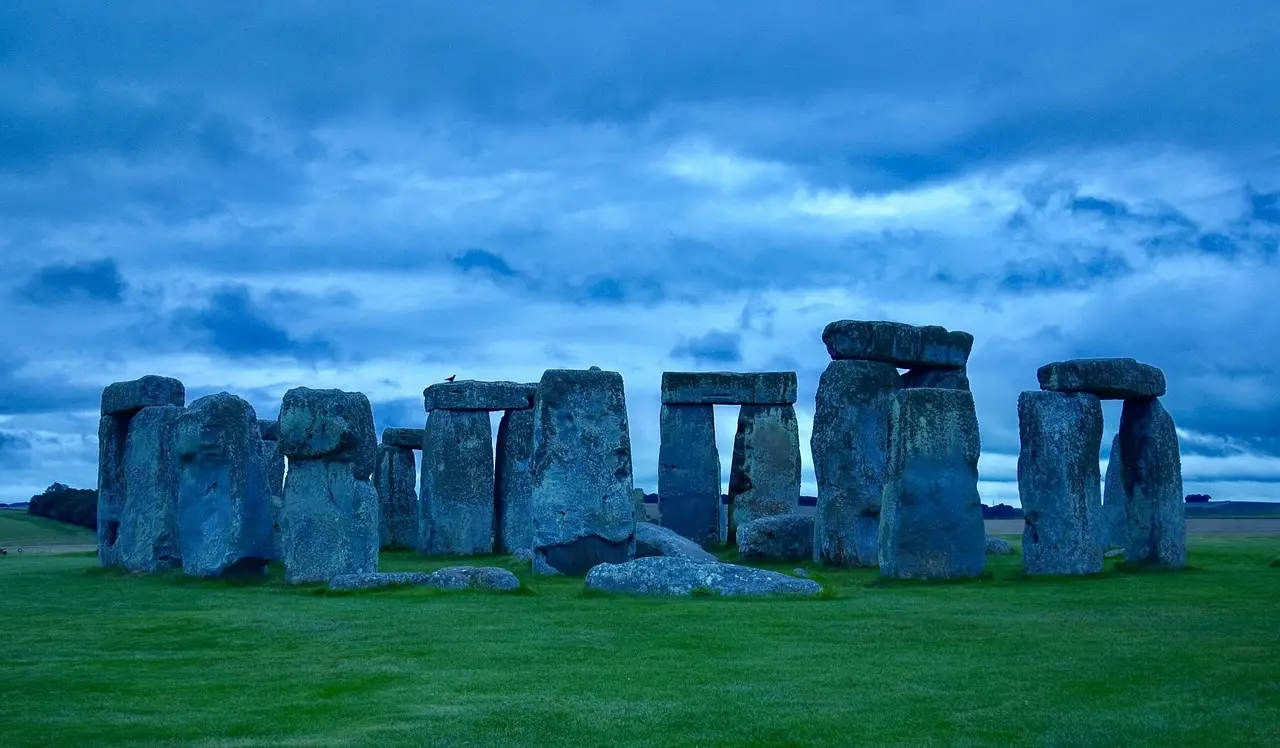
It lies mostly buried beneath two fallen sarsen stones at the monument’s center. The study excludes Caithness, Orkney, the Southern Uplands and Scotland’s Midland Valley, but leaves other parts of the Scottish search open.
The paper by Duncan Pirrie et al., “Searching for the origin of the Stonehenge Altar Stone: new sedimentological, petrographical, mineralogical, geochemical and isotopic constraints,” appeared in 2026 in volume 183 of the Journal of the Geological Society. Its DOI is 10.1144/jgs2026-090.
What does the new analysis show?
For decades, researchers thought the Altar Stone came from West Wales, like most of Stonehenge’s smaller bluestones, or smaller stones at the monument. Geologists showed that assumption to be wrong in 2020.
In 2024, a team led by Curtin University researcher Anthony Clarke used the ages of tiny mineral grains in fragments to place the source in the Orcadian Basin of northeastern Scotland. That would mean a journey to Stonehenge of some 700 km or more.
The 2026 team did not dispute that dating work, which points to a Laurentian origin—ancient crust associated with the Scottish Highlands—for the stone’s heavy minerals. Pirrie and colleagues argue, however, that age data alone cannot identify the source.
Pirrie called the work the most comprehensive geological investigation of the Altar Stone to date. He said a wide range of techniques produced the clearest picture yet of its composition and tested the leading origin theories.
He also said the search was not over and that the team could now focus more effectively on areas likely to yield an answer.
Takeaway: The study narrows possible sources, but it does not turn the Scottish lead into a confirmed answer.
How did the team test a stone it could not sample?
Because the Altar Stone itself cannot be sampled, the team worked from eight museum fragments confidently linked to it. It also used portable X-ray measurements, which examine elements without taking a sample, on the stone’s three small exposed patches at Stonehenge.
The tests exposed a distinctive combination of minerals and structures:
- Baryte: A scatter of this barium mineral cements the sandstone grains and gives the stone unusually high barium readings.
- Chrome spinel: This heavy mineral is scarce in Old Red Sandstone from much of the Orcadian Basin, including Orkney, Caithness, the Moray Firth and Shetland.
- Expandable clay: The stone’s mixed-layer illite/smectite clay has about 20% expandable layers, a sign it has not been deeply buried or heated. Rocks in Caithness and Orkney show values below 10%, excluding those areas.
- Rare clay and alteration: The stone contains tosudite, a rare clay mineral, and shows no low-grade metamorphism—rock alteration by heat and pressure—found in Scotland’s Southern Uplands. That absence excludes the region.
- Water and burial: Ripple laminations are consistent with deposition by flowing water. The stone’s calcite cement—a mineral that binds grains—formed during burial rather than near the surface.
Takeaway: Together, these traits form a geological fingerprint, and no tested source area matches all of them.
Where does the search stand now?
Earlier work had excluded West Wales and the wider Anglo-Welsh Basin. The current study also rules out the Midland Valley of Scotland because of its abundance of rock fragments, while Caithness and Orkney fail the clay test and the Southern Uplands fail the metamorphism test.
Carboniferous-period sandstones from southern and central Britain offer a poorer isotopic match than Old Red Sandstone. Isotopic matching compares chemical fingerprints based on isotope ratios. But the Old Red Sandstone record lacks strontium data—measurements of an element used in those comparisons—so the evidence cannot settle the source question.
Professor Richard Bevins of Aberystwyth University said the West Wales view had prevailed for almost a century. He said his group’s earlier work overturned it and pointed to Scotland as the most likely source, and he expects each new piece of evidence to move researchers closer.
Professor Nick Pearce, also at Aberystwyth, said eliminating possible areas matters as much as finding new ones because every exclusion narrows the search. He noted that the stone is unique among those at Stonehenge and said tracing its source could shed light on its journey to Salisbury Plain thousands of years ago.
Takeaway: Scotland remains a plausible lead, but the study narrows the hunt rather than naming a final origin.
via sci.news (Source)
More from Elena Vasquez
Show full bio
Correspondent covering money, funding and market shifts around general science news at SciBeat.
384 articles