Plate Nº 49 · recorded November 11, 2026
Earth & ClimateReported finding
Ancient Rocks Mark a Shift Toward Modern Plate Tectonics
Rock samples spanning nearly 4 billion years show a chemical fingerprint vanishing after 2.5 billion years ago, marking a shift toward large-scale plate recycling.
By Marcus Bennett4 min read782 words
In brief
- Researchers place a major transition toward modern-style plate tectonics at about 2.5 billion years ago.
- The study examined thousands of rocks from around the world spanning almost 4 billion years.
- Rocks older than 2.5 billion years preserve a fingerprint from an ancient crustal reservoir formed about 4 billion years ago.
- The fingerprint disappears after 2.5 billion years ago and does not return in the sampled record.
- The study was published in 2026 with DOI 10.1098/rspa.2026.0587.
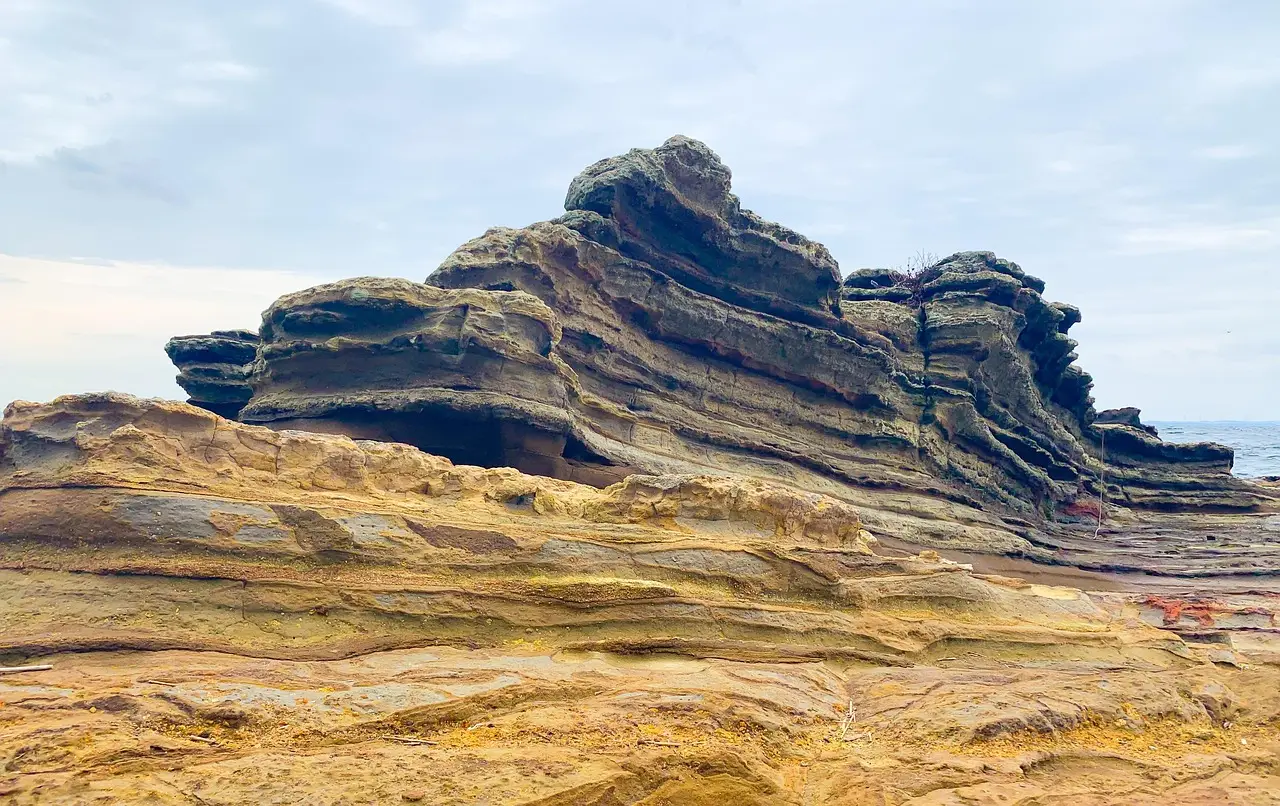
About 2.5 billion years ago, Earth’s crust-formation system shifted toward plate tectonics—the movement and recycling of Earth’s crust—according to a 2026 Curtin University study.
The researchers interpret a vanished chemical signal in ancient rocks as evidence of a major change in tectonic behavior. The signal persists in rocks older than 2.5 billion years, then disappears and never returns in the sampled younger record.
What did the rocks reveal?
Curtin University researchers published the study “Loss of ancient crustal reservoirs marks a shift in Earth’s geodynamic regime” in Proceedings of the Royal Society A: Mathematical and Physical Sciences in 2026. The DOI is 10.1098/rspa.2026.0587. A “geodynamic regime” means the overall pattern of how Earth’s interior and crust evolve.
Lead author Dr. Janne Liebmann is a research fellow in the Timescales of Mineral Systems Group at the Curtin Frontier Institute of Geoscience Solutions. Study co-author Professor Chris Kirkland is from the Timescales of Minerals Systems Group in Curtin’s School of Earth and Planetary Sciences.
The team searched thousands of rocks from around the world, covering almost 4 billion years of Earth history. Liebmann said: “We found it consistently in rocks older than 2.5 billion years, showing they were derived from a pool of ancient crust that formed about 4 billion years ago. But after 2.5 billion years ago, that fingerprint disappears from the geological record—and despite examining thousands of rocks, we never see it again.”
Takeaway: The rock record shows a chemical break at about 2.5 billion years ago.
How did the chemical fingerprint work?
New crust often forms by melting older rock, which leaves a distinctive chemical trace. Researchers used that trace as a chemical proxy—an indirect marker—for identifying older crust incorporated into newly formed rock and tracing where that new crust came from.
The rocks older than 2.5 billion years point to a reservoir, or long-lived pool of crust, that formed about 4 billion years ago. After 2.5 billion years ago, the researchers did not find the same fingerprint again in the thousands of younger rocks they examined.
That absence suggests that crust formation no longer repeatedly drew on and reworked the same ancient reservoir in place. Kirkland said: “It marks the transition from an early Earth where ancient crust could be repeatedly melted and reworked in place to a system capable of moving and recycling crust on a much larger scale. This gives us our clearest geological evidence yet for when the tectonic engine that drives the modern Earth ‘switched on.’”
Takeaway: The vanished signal indicates a shift from local crustal reworking to recycling on a much larger scale.
Why does the shift matter for Earth?
Modern plate tectonics continually reshapes continents and oceans. It also influences the atmosphere and climate and helps regulate Earth’s magnetic field over deep time, making the timing of this transition relevant to broader questions about planetary evolution.
The findings help explain when Earth acquired large-scale movement and recycling of its crust, one feature that sets it apart from planets treated in the comparison as tectonically inactive, including Venus and Mars. Kirkland said plate tectonics is fundamental to the way Earth has evolved over billions of years.
The date concerns the transition toward today’s dynamic tectonic system, not the appearance of every feature of modern plate tectonics in a single instant.
Takeaway: The timing links Earth’s tectonic activity to its long-term climate, atmospheric and magnetic evolution.
How certain is the 2.5-billion-year marker?
Plate tectonics is difficult to date because the process destroys much of its own evidence. Moving crust carries rocks deep inside Earth and recycles them, erasing much of the history before those rocks can preserve a complete record. The surviving chemical fingerprint therefore offers a rare window into how Earth’s earliest crust evolved.
The researchers did not observe ancient moving plates directly. Their case rests on a consistent signal in older rocks, its disappearance after 2.5 billion years ago, and the absence of any return across a worldwide collection of samples.
For researchers reading the rock record, the chemical boundary offers a practical way to separate an older reservoir history from the younger record that lacks it. “About” 2.5 billion years ago remains the appropriate level of precision: the study identifies a transition in crust formation and transformation rather than reconstructing every step between the two systems.
Takeaway: About 2.5 billion years ago is the strongest current marker for Earth’s shift to modern-style crustal recycling, not the instant when every feature of today’s system appeared.
via phys.org/rss-feed/ (Source)
More from Marcus Bennett
Show full bio
News editor covering regulation, policy and their impact on general science news at SciBeat.
370 articles
Nearby plates
- Hidden 100-Million-Year-Old Volcanic Arc Discovered in Iran
- 3.1-Billion-Year-Old Rocks Show Water Fueled Early Volcanoes
- Mantle Motion Explains the Grand Canyon's Missing Billion Years
- A Famous 2-Billion-Year-Old Signal From Early Earth May Be Local, Not Global
- A Lost Kilometer-High Cliff May Explain the Grand Canyon's Missing Billion Years