Plate Nº 97 · recorded October 30, 2026
Earth & ClimateReported finding
Hidden 100-Million-Year-Old Volcanic Arc Discovered in Iran
Rocks dated 101–97 million years old reveal a hidden volcanic arc in NW Iran, filling a gap in the story of the vanished Neo-Tethys Ocean.
By Marcus Bennett4 min read702 words
In brief
- The newly named Azerbaijan Continental Magmatic Arc was active roughly 101 to 97 million years ago in northwestern Iran.
- The study was published in Geoscience Frontiers on October 28, 2026, by a team led by Istanbul Technical University.
- Researchers used zircon U-Pb dating, Hf isotope analysis, and whole-rock geochemistry to identify the arc.
- The finding adds a third arc to Iran's known record, alongside the Sananda-Sirjan and Urumieh-Dokhtar arcs.
- The Siah Cheshmeh-Khoy-Misho-Tabriz Fault may mark a major tectonic boundary linked to the Neo-Tethys Ocean's changes.
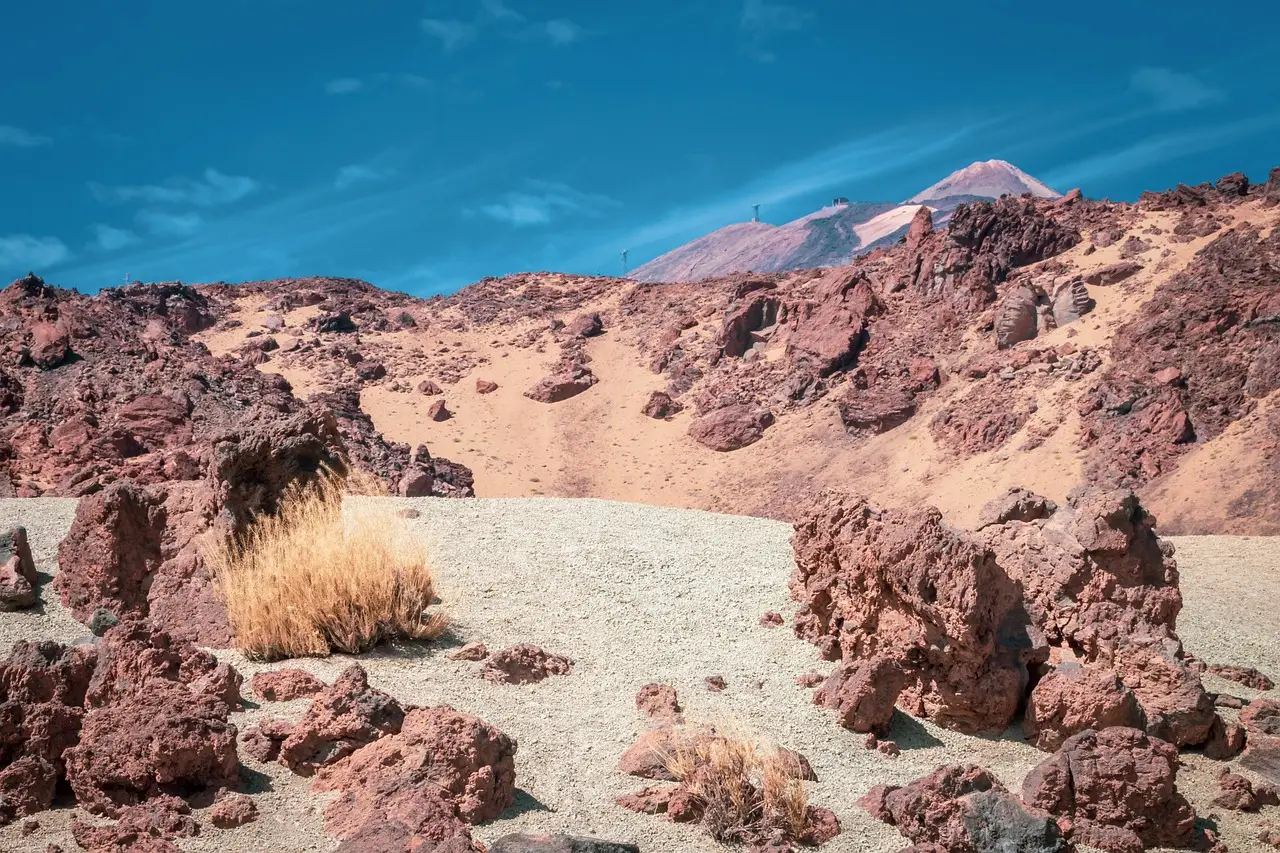
Rocks between 101 and 97 million years old have revealed a previously unknown volcanic system in northwestern Iran, according to a study published October 28, 2026 in Geoscience Frontiers.
An international team led by Istanbul Technical University (ITU) identified remnants of an ancient continental magmatic arc — a chain of volcanoes and magma chambers that forms where one tectonic plate sinks beneath another — in a region that now sits inside the Arabia-Eurasia collision zone. The researchers named it the Azerbaijan Continental Magmatic Arc.
The finding adds a missing chapter to the geological history of the Middle East and offers new clues about the disappearance of the ancient Neo-Tethys Ocean, a once-vast body of water whose closure helped shape the modern landscapes of the Eastern Mediterranean, the Middle East, and Western Asia.
Why did geologists miss it for so long?
Mountain ranges preserve records of vanished oceans and shifting continents, but those records are hard to read. Later tectonic deformation can break ancient formations apart, erosion strips away exposed rocks, sediment buries what remains, and younger volcanic episodes overwrite the older record.
That is precisely what happened here. The researchers report that tectonic deformation, erosion, burial beneath sedimentary basins, and a younger Eocene episode of volcanic activity — roughly 40 million years after the arc went silent — obscured most traces of the system.
How did the team reconstruct it?
The researchers examined volcanic and plutonic rocks (plutonic meaning magma that cooled slowly underground rather than erupting) collected from multiple sites across northwestern Iran. Much of the fieldwork concentrated on formations along the Siah Cheshmeh-Khoy-Misho-Tabriz Fault.
They applied three analytical techniques:
- Zircon U-Pb geochronology, which measures radioactive decay in the mineral zircon to date rock formation with precision
- Hf isotope analysis, which traces where the original magma came from within the Earth
- Whole-rock geochemistry, which charts the chemical composition of the samples
Together, the results showed signatures consistent with continental arc magmatism — the process by which a sinking tectonic plate generates magma that rises through the overlying continental crust.
"This study shows that the magmatic history of northwestern Iran is more complex than previously recognized," said Dr. Ali Mohammadi of Istanbul Technical University, the study's corresponding author. "By integrating geochronological, isotopic, and geochemical evidence, we identified a Late Cretaceous continental arc that was subsequently obscured by later tectonic processes."
The team also included scientists from the Institute of Tibetan Plateau Research and the Xinjiang Institute of Ecology and Geography (Chinese Academy of Sciences), ETH Zurich in Switzerland, Karadeniz Technical University in Türkiye, and Damghan University in Iran.
What does the discovery change?
Previous reconstructions of Iran's ancient magmatic activity rested largely on two features: the Sananda-Sirjan Magmatic Arc and the Urumieh-Dokhtar Magmatic Arc. The newly identified arc means northwestern Iran experienced a separate episode of continental arc volcanism during the Late Cretaceous, expanding the known picture of how the region developed.
The findings also elevate the status of the Siah Cheshmeh-Khoy-Misho-Tabriz Fault. The researchers suggest it may mark a major tectonic boundary tied to changes in the Neo-Tethys Ocean system.
Those changes may have included slab rollback — a process in which a descending tectonic plate retreats as it sinks into Earth's interior — along with the migration of volcanic arcs to new locations. Such movements, the authors propose, could explain why this magma-forming episode lasted only about four million years, a relatively short window in geological terms.
What does this mean for practitioners?
For geologists working in the region, the message is cautionary: ancient magmatic arcs do not always survive as continuous, easily recognizable formations. Recognizing surviving fragments allows scientists to reconstruct how plates descended beneath one another, how volcanic arcs shifted, and how continental crust grew.
The study carries the usual caveats of a single-region reconstruction, and the slab-rollback interpretation remains a proposal rather than a settled conclusion. Even so, the arc offers fresh constraints for models of the Late Cretaceous Neo-Tethyan region — an area shaped by repeated episodes of ocean closure and continental collision.
A volcanic system erased from the record for 100 million years has now been read back out of the rocks.
via dx.doi.org (Original)
More from Marcus Bennett
Show full bio
News editor covering regulation, policy and their impact on general science news at SciBeat.
370 articles
Nearby plates
- Ancient Rocks Mark a Shift Toward Modern Plate Tectonics
- Kneaded Like Dough for 200 Million Years: The Making of Iran and Afghanistan
- Mantle Motion Explains the Grand Canyon's Missing Billion Years
- A Lost Kilometer-High Cliff May Explain the Grand Canyon's Missing Billion Years
- 3.1-Billion-Year-Old Rocks Show Water Fueled Early Volcanoes