Plate Nº 70 · recorded November 11, 2026
Earth & ClimateReported finding
Nudge or Boost? Both Cut Student Electricity Use, Study Finds
Weekly comparison feedback and practical appliance tips each trimmed winter electricity use among 140 Stockholm student households, saving a combined 7 MWh over 24 weeks.
By James Calloway3 min read668 words
In brief
- 140 student households in Stockholm took part in a 24-week field experiment comparing 'nudging' and 'boosting'.
- Both interventions together saved 7 megawatt-hours of electricity; a single-person German household uses about 1.2 MWh per year.
- Among initially high-consumption participants, boosts cut use by 3.97 kWh per week and nudges by 3.12 kWh versus controls.
- The study appears in Scientific Reports (2026), DOI: 10.1038/s41598-026-69386-6.
- Results may not generalize beyond student residence halls, the authors caution.
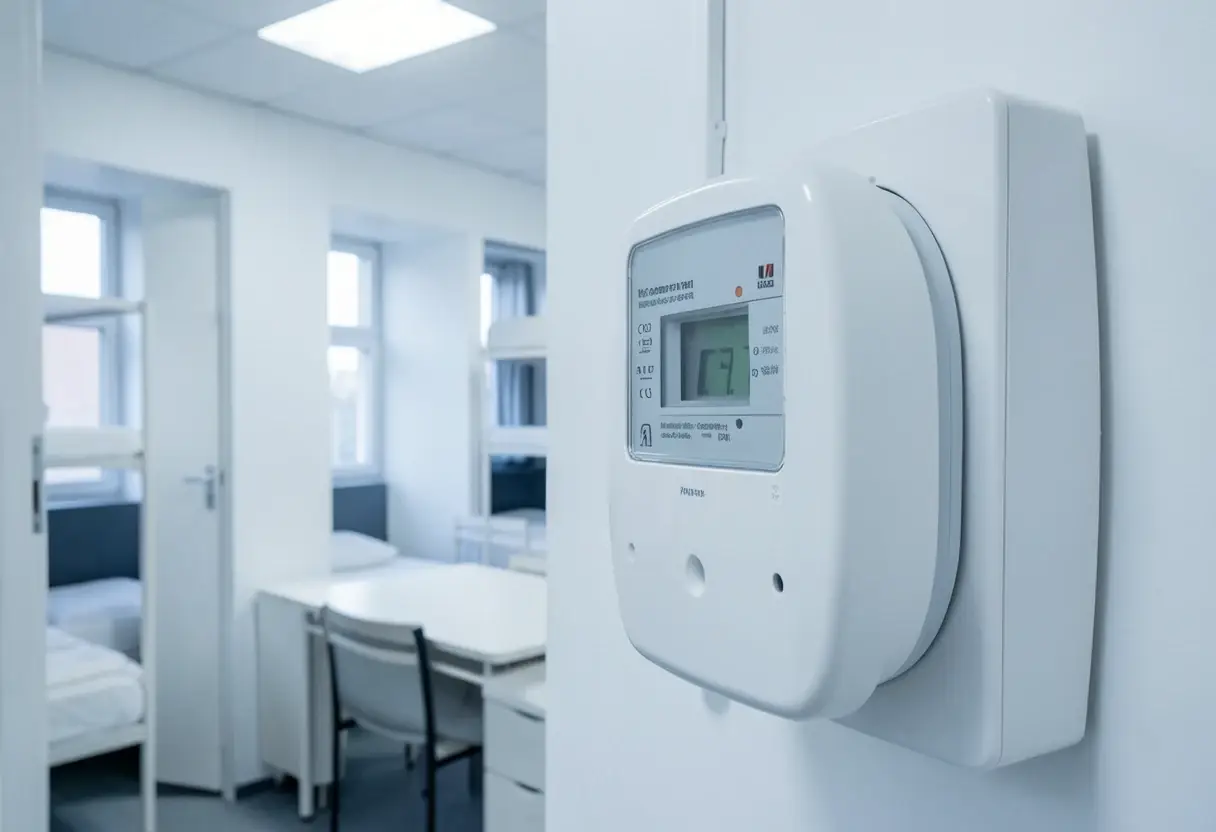
Two simple psychological tricks — telling people how their electricity use stacks up against the neighbors, and handing them practical appliance tips — curbed winter electricity consumption among 140 student households in Stockholm. Over a 24-week field experiment, the two approaches combined saved seven megawatt-hours (MWh) of electricity. For scale: a single-person household in Germany uses roughly 1.2 MWh in an entire year.
That is the headline finding of a new study led by Dr. Yavor Paunov, a consumer psychologist at the University of Mannheim, and published in the journal Scientific Reports. Paunov collected the data while working at the KTH Royal Institute of Technology in Stockholm, then wrote the paper in Mannheim.
Nudge, boost, or both?
The researchers pitted two behavioral-science workhorses against each other. A "nudge," in plain terms, gently steers people toward a choice — think of the calorie count printed next to a menu item. A "boost" instead teaches people a concrete skill so they can make the choice themselves.
Here is how that played out in the residence halls:
- The nudge group received weekly feedback showing how their electricity consumption compared with that of other households.
- The boost group received appliance-specific energy-saving tips — practical instructions tied to the devices in their rooms.
- A control group received neither.
Both measures blunted the seasonal climb in electricity use during the winter months. The surprise, at least to the researchers, was the tie. "We had assumed that participants in the boost group would consume less electricity during the study period than those in the nudge group," Paunov said. "Instead, both measures significantly reduced electricity consumption compared to the control group. The effects of the two approaches did not differ significantly from one another statistically."
That null difference matters. When two cheap interventions perform equally, policymakers can pick whichever is easier or cheaper to deploy at scale — though this study alone cannot settle that question.
Who saved the most?
Not everyone benefited equally. The biggest savings landed among participants who started the study with high electricity consumption. In that group, the boost intervention cut use by 3.97 kilowatt-hours (kWh) per week relative to controls. The nudge group's corresponding reduction was 3.12 kWh per week.
Those numbers suggest something practical: households that burn through a lot of power respond especially well to specific, immediately actionable tips — a washing-machine setting here, a standby-setting change there — rather than vague appeals to save energy.
Does the evidence hold up?
The study has genuine strengths, and the authors deserve credit for them. It tracked actual meter readings, not self-reports, over a comparatively long 24 weeks. Earlier research in this space leaned on simulated online scenarios, self-selected participants, or much shorter observation windows. Head-to-head comparisons of different energy-saving strategies remain rare.
Now the caveats, because there are several. All participants lived in student residence halls, so the results do not transfer automatically to families, retirees, or suburban homeowners. The halls also sat close together, meaning participants may have compared notes on the interventions — which could have blurred the lines between the two groups and shrunk any real difference between them. And a tie between nudges and boosts in one Swedish winter is a single data point, not a verdict.
What does this change for your electricity bill?
For now, not much directly. But if you run a utility, a university housing office, or any program trying to trim energy use, the lesson is encouraging: a weekly comparison letter or a short list of appliance tips — cheap, low-tech, no smart-meter overhaul required — appears to move real consumption in the right direction. Households with the highest usage seem the best target for the tip-based approach.
Whether the effects last beyond 24 weeks, or hold in ordinary households, is the question the next study will have to answer. This one, like all good preliminary work, tells us what to test next rather than what to conclude for good.
via phys.org/rss-feed/ (Source)
More from James Calloway
Show full bio
Staff writer covering regulation, policy and their impact on general science news at SciBeat.
346 articles
Nearby plates
- Each extra degree in the bedroom cost sleepers half a sleep point
- Germany's 2020 VAT Cut Raised Consumption Spending 4.4%, Study Finds
- Winter Could Cut Electric Air Taxi Range by 22%
- X's Algorithm Pushes Posts That Conflict With Your Values, Study Finds
- Strict blood sugar targets may quietly erode daily well-being