Plate Nº 62 · recorded November 9, 2026
Earth & ClimateReported finding
The Stern Review's $2.8 Trillion Miss, 20 Years On
Twenty years after the Stern Review promised rapidly escalating disaster losses, Roger Pielke Jr. calculates a $2.8 trillion miss and traces it to a misread workshop paper.
By Marcus Bennett4 min read736 words
In brief
- The Stern Review on the Economics of Climate Change turns 20 on Friday.
- Roger Pielke Jr. calculates the review's failed disaster-loss projections as a $2.8 trillion miss.
- Pielke's peer-reviewed critique appeared in Global Environmental Change, 17(3-4), pp. 302-310, in 2007.
- The LSE anniversary event featured Nicholas Stern and Energy Secretary Miatta Fahnbulleh.
- The Guardian's Fiona Harvey wrote the review 'has been found sound – if anything, he underestimated' heating and economic consequences.
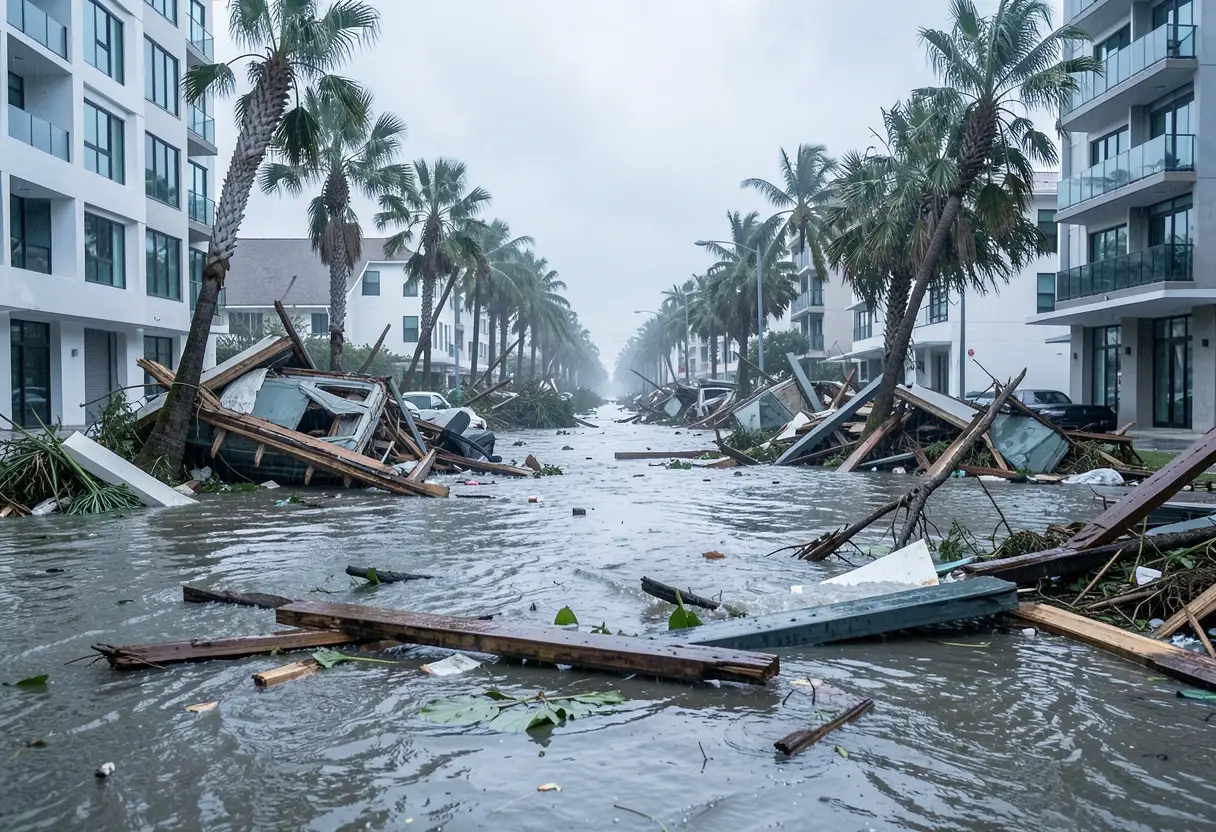
Twenty years ago this Friday, the Stern Review on the Economics of Climate Change projected rapidly escalating economic losses from extreme weather. Roger Pielke Jr., the University of Colorado researcher who has spent two decades auditing those numbers, says the projected escalation never happened — a miss he puts at roughly $2.8 trillion.
The anniversary has not passed quietly. On Thursday evening, the London School of Economics marked the review's twentieth birthday with an event featuring Nicholas Stern himself and a keynote from Miatta Fahnbulleh, the current Secretary of State for Energy Security and Net Zero.
The celebration came with a defense. Writing in The Guardian on the eve of the anniversary, journalist Fiona Harvey argued that Stern's analysis, "has been found sound – if anything, he underestimated both the rapidity of heating and economic consequences."
Pielke's verdict is blunt. "Actually — as this post shows with evidence — no, neither sound nor underestimated," he writes.
What did the Stern Review claim in 2006?
The review, commissioned by the UK government and led by Stern, became one of the most cited economic documents on climate change ever published. Its headline argument: the costs of inaction on warming far outweighed the costs of action.
One strand of that case rested on future losses from extreme weather events — hurricanes, floods and other disasters whose damages the review expected to climb steeply as the climate warmed. Those projections, Pielke argues, were dramatically wrong: observed losses did not escalate in the way the review said they would.
Takeaway: The review bet part of its case on disaster losses rising fast; two decades of data show that bet failed.
Where does the $2.8 trillion figure come from?
The gap between what the review projected and what actually occurred, aggregated over the intervening years, is what Pielke calls the "$2.8 trillion miss." It is his accounting of cumulative projected losses that never materialized.
He flags the figure as an evidence-based reconstruction rather than an offhand jab, and he points readers to the underlying analysis in his own published work.
Takeaway: The number is Pielke's tally of projected disaster losses that history did not deliver.
How did the error happen?
Here the story turns personal. Pielke says the review's flawed prediction grew out of a misreading of a white paper that he himself had commissioned — a background document prepared for a workshop on extreme weather and climate change.
In other words, the review's authors took a piece of analysis from Pielke's own orbit, misinterpreted it, and built a headline economic claim on the misunderstanding.
Pielke did not wait for the anniversary to object. Soon after the review appeared, he documented the problems in a peer-reviewed paper:
- Pielke Jr, R. (2007). "Mistreatment of the economic impacts of extreme events in the Stern Review Report on the Economics of Climate Change."
- Published in Global Environmental Change, volume 17, issues 3-4, pages 302-310.
He notes that an ungated copy of the 2007 paper is available at the bottom of his post for paid subscribers to his Substack, The Honest Broker.
Takeaway: A misread workshop paper, flagged in peer review in 2007, seeded the review's most consequential error.
Why is this argument resurfacing now?
Anniversaries force reckonings, and this one has produced two competing narratives about the same document. On one side stands Harvey's Guardian assessment that Stern was, if anything, too cautious — that heating and its economic consequences arrived faster than the review predicted.
On the other stands Pielke, who argues the evidence shows the opposite on at least one major dimension: the economics of disaster losses. His position carries a particular sting because the flawed projection, by his account, originated in a document his own workshop produced — and because he published the correction in the peer-reviewed literature within a year of the review's release.
The dispute matters beyond historiography. The Stern Review shaped how governments and economists framed the cost of climate change for a generation, and assessments of whether it was "sound" or "underestimated" inform how much confidence policymakers place in similar models today.
Takeaway: Whether the Stern Review was prescient or badly off still shapes how economic climate projections are judged.
Two decades on, the review's disaster-loss projections stand as a documented failure, not a vindication, according to the researcher who commissioned the paper at their source.
via climatedepot.com (Source)
More from Marcus Bennett
Show full bio
News editor covering regulation, policy and their impact on general science news at SciBeat.
370 articles
Nearby plates
- New Study Ties Major Fossil Fuel Emitters to Extreme Weather Risk
- Nature Reviews a Year of Disruption to US Science Under Trump
- Global warming has accelerated to 0.35°C per decade, study finds
- Researchers Alarmed as New Details of Trump Budget Cuts Emerge
- UK Pledges £86 Billion for Science and Tech — But Where's the Detail?