Plate Nº 71 · recorded November 9, 2026
Earth & ClimateReported finding
Australia and Turkey Seek an Ambitious COP31 Outcome
Australia and Turkey plan a prewritten COP31 decision in Antalya, seeking an ambitious outcome on electrification and keeping global temperature rise within 1.5 C.
By Priya Raman3 min read575 words
In brief
- COP31 is scheduled for Antalya next month.
- The preparatory meeting in Fiji and Tuvalu wrapped up Thursday.
- Australia and Turkey will seek a vote on a presidency-led decision prepared in advance.
- The proposed agenda includes binding agreements toward electrification.
- The summit aims to keep global temperature rise within 1.5 C while minimizing overshoot.
By Priya Raman
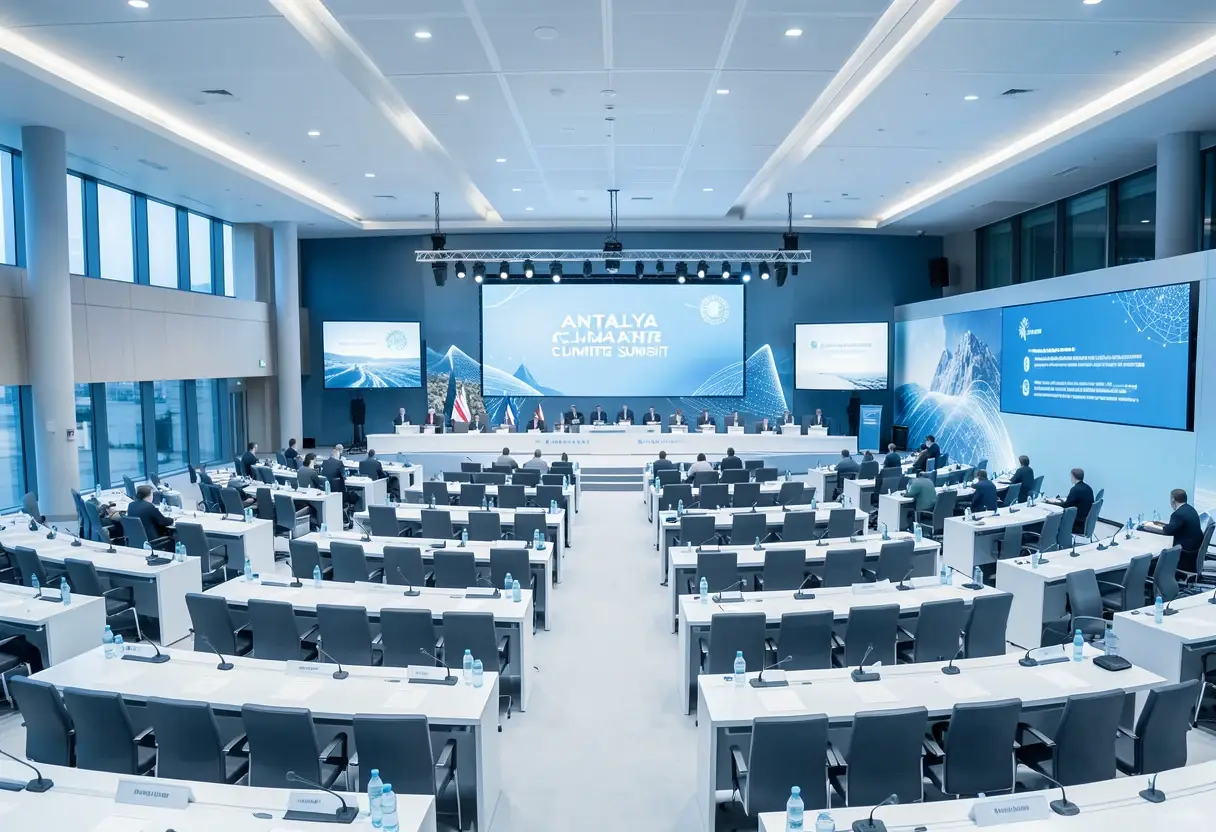
Australia and Turkey will ask country representatives at the United Nations-sponsored COP31 in Antalya next month to vote on a decision prepared in advance, while pushing to keep global temperature rise within 1.5 degrees Celsius.
The announcement followed a “pre-COP” meeting, or preparatory meeting before the summit, in Fiji and Tuvalu that wrapped up Thursday. As co-organisers, Australia and Turkey said they would prepare a summary text for countries to adopt at COP31.
What is a “presidency-led decision”?
The proposed mechanism would place a text prepared under the summit’s leadership before negotiators, meaning country representatives who negotiate the agreements. In principle, the organisers say, that would establish a firm and realistic agenda and reduce lengthy negotiations that often precede votes on individual technical points, or narrow questions within a wider climate agreement.
The approach resembles placing a proposed package of conclusions on the table before debate, rather than assembling every provision during the session. Its preparation and its adoption would be separate steps. The organisers intend to secure a vote on the prepared decision, and countries would then adopt the summary text.
The announcement does not provide the draft text or explain how the vote would be taken. It therefore describes an intended route to an agreement, not an agreement already secured. The proposed decision would give delegates a defined document on which to base their discussions, while reserving the final agreements for the summit.
What would the proposed agreement cover?
The agenda would focus on binding agreements, meaning commitments that participating countries must carry out. One area named by the organisers was electrification, the replacement of technologies that burn fossil fuels directly with electric alternatives.
Bowen cited diesel cars and gas heating as examples of the technologies in that category. The announcement did not specify the form of an electrification agreement, its targets or its timetable. Nor had the organisers announced a binding electrification agreement.
This focus links the proposed negotiating method to a substantive result. A shorter, more structured discussion of technical points could leave more time for countries to resolve the content of agreements. The prepared decision, however, would provide a framework for negotiation rather than settle every question those negotiations would cover.
Why does the 1.5 C goal matter?
The organisers said they wanted an “ambitious” summit outcome that would help keep global temperature rise of 1.5 C within reach. Bowen connected that objective to the scientific evidence in the announcement, including evidence that the world will overshoot the limit. Overshoot means exceeding the stated temperature threshold.
Australia’s climate minister Chris Bowen said: “We feel that a presidency-led decision gives us the best chance of a strong and ambitious outcome at COP31.”
He continued: “To send the signal to follow the science to keep 1.5 degrees within reach, against the backdrop of the scientific evidence that we will overshoot it. We’ve got to overshoot it for as little and as short as possible.”
Those words acknowledge a tension within the proposal. The organisers are seeking both a strong negotiating process and a strong substantive outcome. The first concerns procedure; the second depends on the agreements reached through that procedure.
No draft, voting rules or detailed commitments accompanied the announcement, so its practical effect remains uncertain. The test at Antalya is whether an advance text can deliver the strong and ambitious outcome its organisers say they seek.
via climatedepot.com (Source)
More from Priya Raman
Show full bio
Senior reporter covering people, launches and day-to-day practice in general science news at SciBeat.
342 articles