Plate Nº 32 · recorded October 7, 2026
Health & Medicine ResearchReported finding
Common Mouth Bacterium Trains Lungs to Fight Pneumonia, Study Finds
Mice exposed to the common airway bacterium Prevotella melaninogenica cleared pneumonia bacteria faster, a PNAS study shows. The finding may explain why some people resist lung infections better.
By Priya Raman4 min read705 words
In brief
- The study appeared in Proceedings of the National Academy of Sciences in 2026 (DOI: 10.1073/pnas.2623525123).
- Mice exposed to Prevotella melaninogenica had significantly lower amounts of Streptococcus pneumoniae in their lungs.
- Single-cell RNA sequencing was used to examine thousands of individual lung cells.
- Neutrophils and macrophages in exposed mice were better at engulfing and killing pneumonia bacteria.
- The experiments were conducted in mice, so human effects remain unproven.
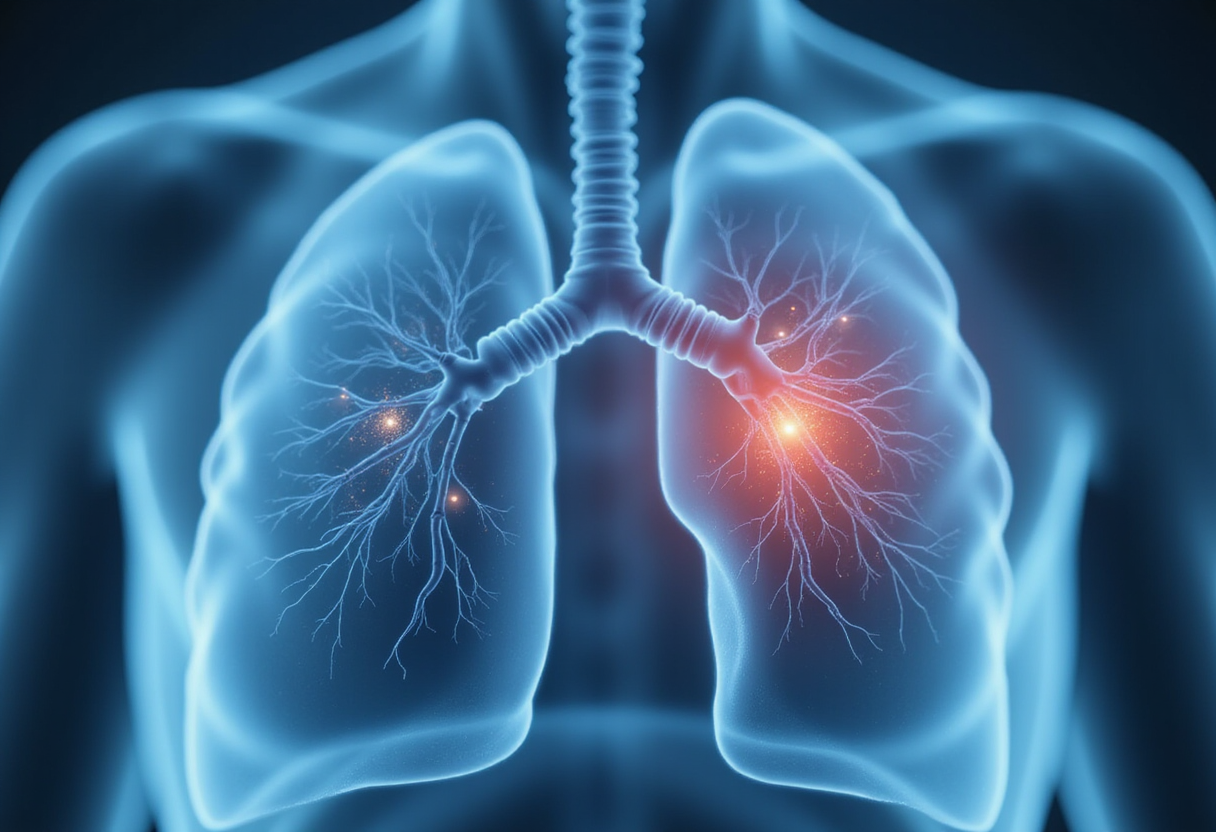
Mice exposed to a common airway bacterium carried significantly lower amounts of pneumonia-causing bacteria in their lungs, according to a new study from the University of Colorado Anschutz published in Proceedings of the National Academy of Sciences (2026).
The bacterium, Prevotella melaninogenica, lives in the mouths and airways of healthy people. Researchers found that prior exposure to it changed the behavior of immune cells in the lungs. When the mice were later challenged with Streptococcus pneumoniae — a leading cause of bacterial pneumonia — their immune systems recognized, engulfed and cleared the bacteria more effectively.
The findings offer a possible explanation for why some people resist respiratory infections better than others, and they could eventually point toward new ways of strengthening the lungs' natural defenses.
"Our lungs encounter bacteria from our mouths and upper airways all the time, and those exposures may actually be helping to educate the immune system," said Sarah Clark, Ph.D., senior author and associate professor at the University of Colorado Anschutz School of Medicine. "We found that exposure to P. melaninogenica changes the way immune cells respond, essentially putting them in a better position to fight a bacterial infection."
Why don't all exposures to pneumonia bacteria cause disease?
Streptococcus pneumoniae is a major cause of pneumonia, yet encountering the bacterium does not always lead to serious illness. Scientists have increasingly suspected that the respiratory microbiome — the community of microorganisms living throughout the airway — helps determine how well someone fights an infection.
Prevotella is one of the most common groups of bacteria in the healthy mouth and respiratory tract. Earlier research found that higher levels of Prevotella correlate with better outcomes in people with respiratory infections. What scientists did not know was how the bacterium might actually protect against pneumonia.
How did the researchers test it?
Clark and her colleagues exposed mice to P. melaninogenica, then challenged them with S. pneumoniae. To see what changed inside the lungs, the team used single-cell RNA sequencing — a technique that measures gene activity in individual cells one by one — to examine thousands of lung cells and track how their behavior shifted.
The results showed that Prevotella exposure essentially reprogrammed several types of immune cells involved in fighting infection. Two cell types stood out:
- Neutrophils — immune cells that quickly swarm infection sites — became better at engulfing and killing the pneumonia bacteria.
- Macrophages — the lungs' resident "garbage-eating" cells — showed the same improved bacteria-killing capacity.
The mice exposed to Prevotella also carried significantly smaller amounts of S. pneumoniae in their lungs than unexposed mice.
"The immune cells were present in greater numbers and behaving differently," Clark said. "They had been functionally reprogrammed to do a better job of clearing bacteria."
Is the lung microbiome part of the body's first line of defense?
The study adds to growing evidence that bacteria normally living in the respiratory tract are not simply passive passengers. They may actively shape how the immune system responds to disease.
The researchers note that clinical studies have already linked greater respiratory microbial diversity — and the presence of anaerobic bacteria such as Prevotella, which grow without oxygen — with better outcomes in people with severe respiratory illness. The new mouse data provide a possible biological explanation for those earlier observations.
"We're interested in understanding whether we can harness this natural interaction between the microbiome and the immune system," Clark said. "If we can figure out how these bacteria educate immune cells to respond more effectively, it could open up entirely new approaches to preventing respiratory infections."
What are the limits?
The findings come from experiments in mice, so they do not yet prove that the same immune-cell reprogramming happens in human lungs. Whether Prevotella exposure could be turned into a practical pneumonia-prevention strategy — through probiotics or another intervention — remains an open question that will require further research, including clinical studies in people.
Still, the work gives researchers a concrete mechanism to investigate: commensal bacteria training the immune system, cell by cell, before disease strikes.
Publication details: Sara N. Stoner et al., "Myeloid cell reprogramming drives enhanced defense against Streptococcus pneumoniae lung infection following exposure to commensal Prevotella," Proceedings of the National Academy of Sciences (2026). DOI: 10.1073/pnas.2623525123
via Medical Xpress (Source)
More from Priya Raman
Show full bio
Senior reporter covering industry trends and analytics at SciBeat.
59 articles
Nearby plates
- Scientists Map Three Weak Points in Antibiotic-Resistant Bacteria
- Scientists Find a Way to Kill a Drug-Resistant Deadly Fungus
- Skipping Sweets During Antibiotic Treatment May Protect Gut Microbiome
- Why a Food Poisoning Bacterium Can Also Cause Severe Wound Infections
- Computer-Designed Protein Targets Immune Receptor at New 'Undruggable' Site