Plate Nº 74 · recorded November 11, 2026
PhysicsReported finding
Construction starts on DUNE, the giant underground neutrino hunt
Construction of DUNE's cryostats has begun a mile underground in South Dakota. UK teams, having built half of their 137 detector panels, will help probe why the Universe holds more matter than antimatter.
By Marcus Bennett4 min read896 words
In brief
- UK teams completed half of their 137 Anode Plane Assemblies for DUNE in October 2026
- The UK committed £79 million in 2017, the largest international investment outside the US
- DUNE will beam neutrinos 1,300 km from Fermilab to detectors holding ~17,000 tonnes of liquid argon at -184°C
- Underground space is due for completion by 2029, detectors by 2030, and the beam by 2031
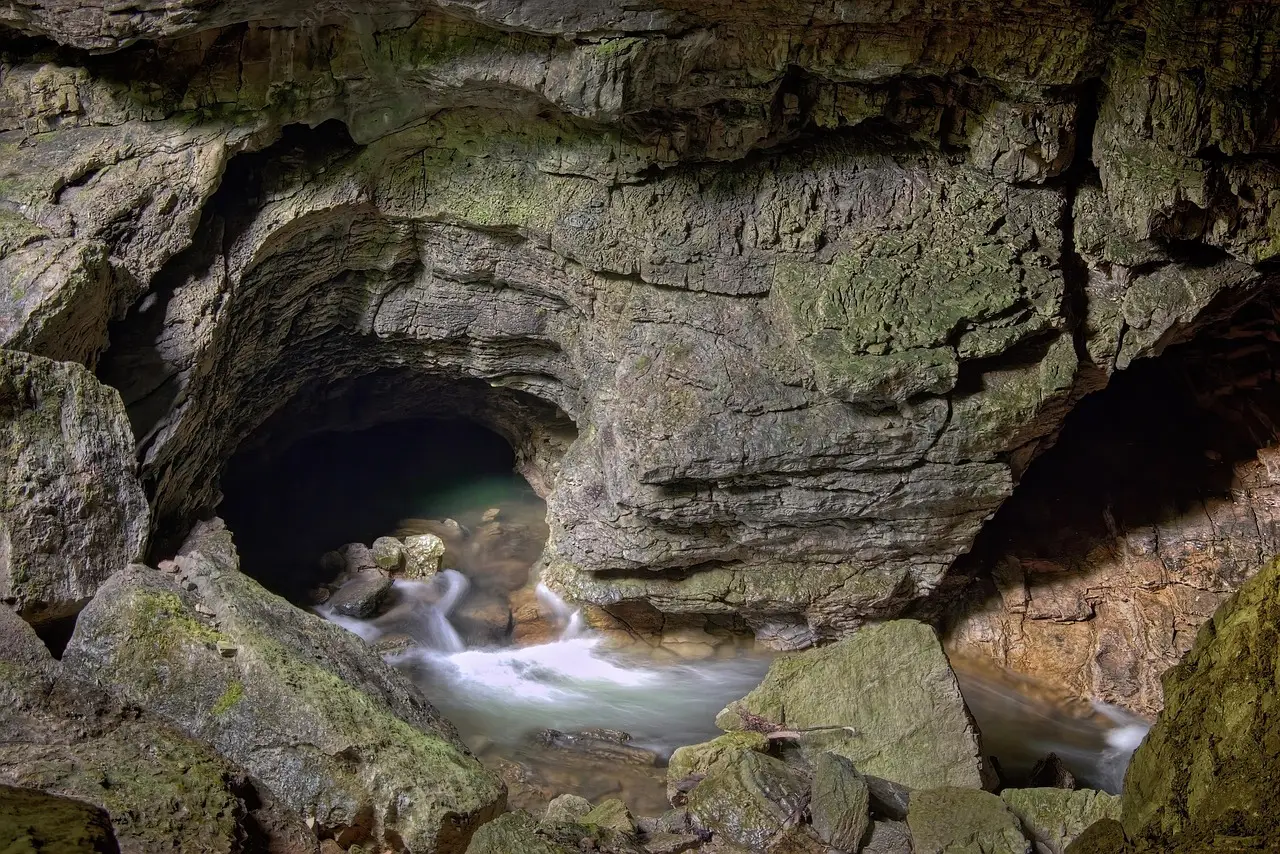
Construction has begun nearly a mile underground in South Dakota on the Deep Underground Neutrino Experiment (DUNE), a particle physics project bringing together more than 1,500 researchers — with the UK as its largest international partner.
Teams from the Fermi National Accelerator Laboratory (Fermilab), CERN and the Sanford Underground Research Facility (SURF) have started building DUNE's massive cryostats: the giant insulated steel vessels that will house the experiment's detectors. The project aims to answer some of the biggest open questions in physics, including how the Universe evolved after the big bang and why it contains far more matter than antimatter.
What is the UK actually building?
The UK effort, led by the Science and Technology Facilities Council (STFC) through the DUNE-UK collaboration, spans 15 universities plus Daresbury Laboratory and Rutherford Appleton Laboratory. In 2017 the UK committed £79 million to DUNE and its supporting infrastructure, making it the largest country investor in the project outside the US.
The biggest hardware contribution is detector hardware. Daresbury Laboratory, working with six UK universities, is producing 137 of the 150 Anode Plane Assemblies (APAs) the experiment needs. Each panel stands about 6.3 metres tall and 2.3 metres wide — roughly the height of a two-storey building — and carries around 24 kilometres of hair-thin wire that picks up tiny electrical signals when neutrinos interact inside the detector.
In October 2026 the team completed half of its 137-panel production run, a milestone on the path to installing detectors underground and taking physics data.
How will the experiment work?
Neutrinos are among the most abundant particles in the Universe, but they interact with matter so rarely that they are extremely hard to detect. DUNE's answer is scale. Two enormous detectors, filled with liquid argon held at approximately -184°C, will record the faint signals produced when neutrinos strike.
A beam of neutrinos and antineutrinos, generated at Fermilab near Chicago, will travel 1,300 kilometres to the underground detectors in South Dakota. A smaller detector at Fermilab will measure the particles close to their source, so scientists can compare what arrives at each end. By studying how the particles change in transit, researchers hope to learn:
- why the Universe contains so much more matter than antimatter
- how neutrinos behave and transform as they travel
- what neutrinos can reveal about exploding stars, including supernovae
The deep underground location shields the detectors from cosmic rays and other background radiation. CERN is leading the construction of two cryostats at SURF, each built from thousands of steel support beams transported underground, and each holding around 17,000 tonnes of liquid argon. The Illinois and South Dakota facilities together form the Long-Baseline Neutrino Facility (LBNF), the infrastructure backbone for DUNE.
Who is powering the beam?
DUNE's neutrino beam depends on a major Fermilab accelerator upgrade called PIP-II (the Proton Improvement Plan-II). Daresbury Laboratory is delivering three superconducting accelerator modules and components for a fourth, helping accelerate the protons that generate the beam. Rutherford Appleton Laboratory researchers have contributed specialist expertise to the target system: when the proton beam strikes the target, it produces the neutrinos that head toward South Dakota.
RAL also plays the leading international role in DUNE's data-acquisition system — the hardware and software that must capture and record the enormous data volumes the detectors will produce.
What did the scientists say?
Professor Gary Barker of the University of Warwick, Principal Investigator for DUNE-UK, said: "The UK neutrino community is making a major contribution to DUNE, providing unique expertise to the international project across precision engineering, advanced software and physics analysis deliverables. We are well advanced to completing our production runs, and this milestone is a key step towards our goal of having detectors installed underground and taking physics data."
Professor Dave Newbold, Executive Director of National Laboratories at STFC and recently elected co-spokesperson of the DUNE collaboration, said: "The DUNE experiment has the potential to change our understanding of the universe." He added that the UK contributions have come "not only from academics and students, but also from engineers and technicians in our national laboratories and in British industry."
CERN director general Mark Thomson said: "Collaboration is in CERN's DNA, and our contribution to DUNE is a brilliant example of cross-organisational partnership. After years of planning and careful coordination, I am thrilled to see that we are ready to start installation."
When will data start flowing?
The underground space is planned for completion by 2029, with the detector apparatus installed by 2030. From that date, an 1,800-strong worldwide team will begin observing particles from the Sun and outer space. The terrestrial neutrino beam from Fermilab's PIP-II upgrade is expected to reach the South Dakota detectors by 2031, launching DUNE's long-term scientific programme.
Professor Ryan Nichol of University College London said: "Once they are built, the DUNE detectors will be some of the most precise scientific instruments ever constructed. They will be capable of detecting particles from stars exploding on the other side of our galaxy, and of using quantum physics to measure the difference in mass between two of the lightest particles in the universe."
A mile of rock, 17,000 tonnes of cold argon and 137 British-built wire panels now stand between physicists and some of nature's oldest questions.
via dunescience.org (Original)
More from Marcus Bennett
Show full bio
News editor covering regulation, policy and their impact on general science news at SciBeat.
370 articles
Nearby plates
- UK Reaches Halfway Mark in Global Push to Explain Matter's Existence
- CERN and Mistral to Build First Foundation Model for Collider Physics
- UKRI Confirms Major Science Facilities Will Be Scaled Back
- UK researchers join NASA-selected mission to study Universe's history
- UK Puts £50 Million Into Quantum Tech — and the People to Run It