Plate Nº 80 · recorded November 10, 2026
PhysicsReported finding
Solved: Why Power Grids on Five Continents Pulse Every 60 Seconds
Power grids on five continents pulse every 60 seconds. Physicists traced the decade-old mystery to synchronized battery self-tests in uninterruptible power supplies.
By Marcus Bennett4 min read728 words
In brief
- Power grids on five continents show a frequency pulse recurring every 60 seconds, documented since at least 2014.
- The cause is routine battery self-tests in uninterruptible power supplies, per a study in Nature Energy led by Dirk Witthaut of the University of Cologne.
- The fluctuations are small, typically a few millihertz, and pose no immediate threat to grid stability.
- One manufacturer has already issued a software update relaxing the strict timing of its system checks.
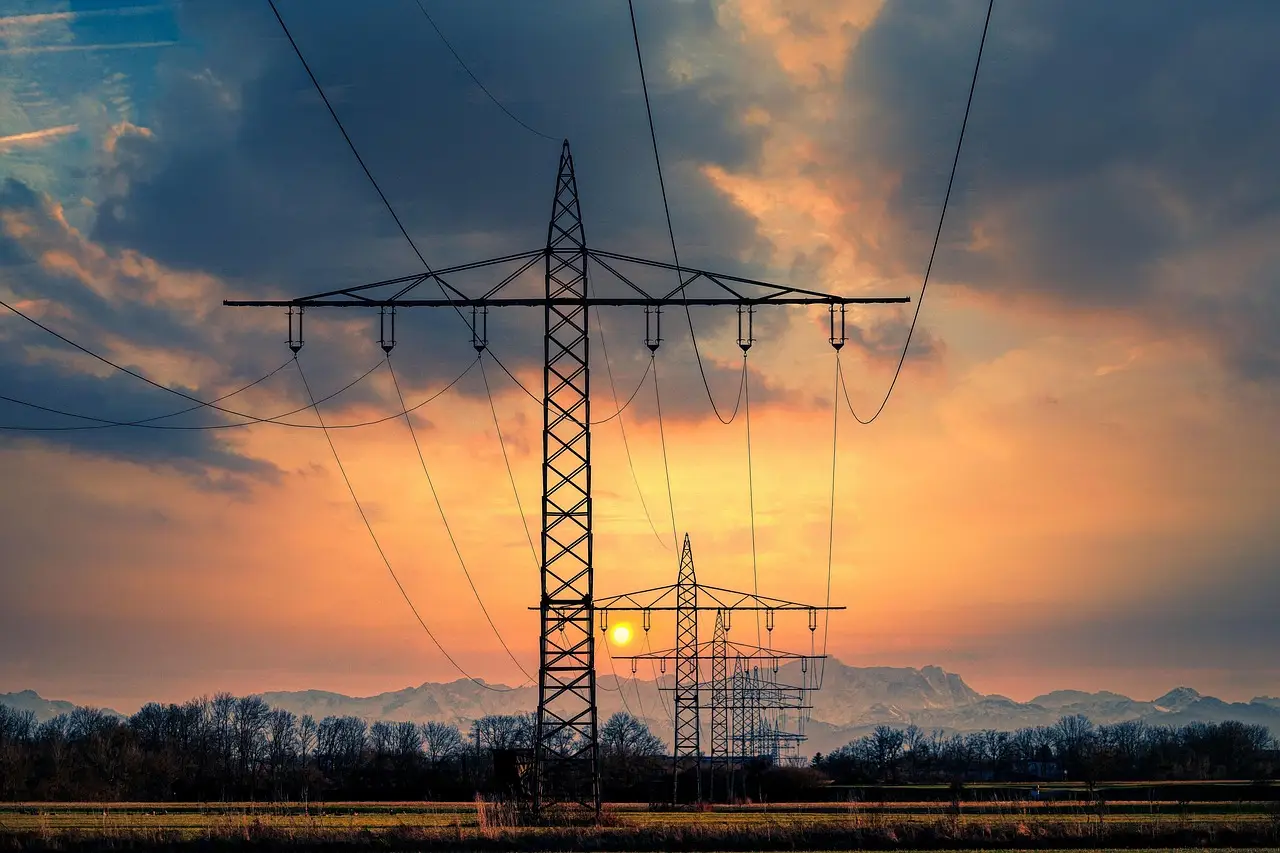
Every 60 seconds, power grids on five continents pulse in near-perfect synchrony — and a team led by physicist Dirk Witthaut of the University of Cologne says it has finally traced the cause: automatic battery checks in uninterruptible power supplies, the backup systems found in hospitals, data centers and research facilities.
The finding, published in Nature Energy, ends a puzzle that has persisted for more than a decade. Grids that are physically isolated from one another — continental Europe, Britain, Scandinavia, Australia and the United States — all show the same tiny frequency fluctuation, repeating once a minute, year after year, with extraordinary precision.
"Even benign control routines can become systemically relevant when many devices act coherently," Witthaut and his colleagues write. "Unintended synchronization can generate recurrent and potentially amplified oscillatory behavior in large-scale cyber-physical energy systems."
What is the pulse, exactly?
An electrical grid performs a constant balancing act. Power generated must match power consumed at every moment. When demand exceeds supply, the frequency of the alternating current — 50 or 60 hertz depending on the region — dips. When supply exceeds demand, it rises.
Britain's grid operators have a famous name for one extreme case: "TV pickup," the surge in demand when millions of viewers switch on their kettles during commercial breaks in popular broadcasts such as football matches and royal events. Streaming has softened the effect, but it illustrates how collective behavior moves grid frequency.
Most frequency fluctuations are small and irregular, and operators work continuously to control them. A fluctuation that recurs every 60 seconds, across disconnected grids of vastly different sizes and configurations, was another matter entirely.
Hints of the phenomenon date back to at least 2014, when researchers in Scandinavia documented unusual minute-scale fluctuations. Those oscillations were initially linked to hydropower systems — but the same patterns turned up in grids with no meaningful hydro connection, so hydropower alone could not explain them.
How did the researchers crack it?
Witthaut's team analyzed high-resolution electricity measurements from buildings at the Forschungszentrum Jülich research campus in Germany. The 60-second pattern appeared in four buildings. Every one of them contained uninterruptible power supplies. None of the buildings without these systems showed the pattern.
Following the signals more closely, the researchers detected tiny bursts of current from batteries at precisely one-minute intervals. They traced the resulting fluctuations through one building's electrical system all the way to its connection with the public high-voltage grid.
The manufacturer then confirmed the culprit: routine battery self-tests, run automatically by the systems' management software.
Why do devices act at the same time?
The synchronization comes down to clocks. Digital devices can align their internal clocks to external time signals, so independently operating systems end up running their scheduled tasks at the same moment.
Each individual battery check is insignificant. But when thousands of devices draw power in unison, their combined demand produces a measurable effect across an entire grid.
The explanation still needs testing at other locations to confirm the same mechanism is at work elsewhere — a caveat the researchers themselves flag. For now, the fluctuations pose no immediate threat to grid stability: they typically measure just a few millihertz in amplitude.
What changes for grid engineers?
The signal matters less for its size than for its trajectory. As networks depend more on digitally controlled equipment — battery storage systems, data centers, internet-connected devices — the number of synchronized demands on the grid is growing.
Even small oscillations can be amplified by the grid's own dynamics, the researchers note, contributing to wear and tear on equipment such as hydropower turbines.
The fix, at least for large batteries and backup systems, is straightforward: manufacturers can vary the timing of software schedules so thousands of devices no longer perform the same task at the same second.
"Our results indicate that coherent cyber-physical oscillations can be mitigated directly at their source through improved control design," the team writes.
That is not just theory. The researchers contacted the manufacturer of one system they identified, and the company issued a software update that relaxed the strict periodicity of its self-tests.
For grid operators, the takeaway is that the smallest embedded routines — a battery check nobody designed with the grid in mind — can scale into a continent-wide signal; the sooner device schedules are desynchronized, the cheaper the fix.
via sciencealert.com (Source)
More from Marcus Bennett
Show full bio
News editor covering regulation, policy and their impact on general science news at SciBeat.
370 articles
Nearby plates
- Heart-Wiring Pacemaker Cuts Serious Events in 702-Patient Trial
- Nuclear Clock in Vienna Hits One-Second-in-30-Million-Year Precision
- Hidden 'funnels' could rewrite tipping-point predictions
- Astronomers Detect Most Distant Fast Radio Burst, 10 Billion Years Old
- Vienna hosts world's first self-stabilizing nuclear clock